
Choosing a denim manufacturer is not only about finding someone who can sew jeans. It is about building a low MOQ Manufacturing path that lets you test, learn, and reorder without getting trapped in dead inventory.
At the same time, premium quality is not a vibe. It is a system you can measure: sampling speed, QC checkpoints, AQL targets, and a Transparent Supply Chain with Real-Time Data Tracking.
This how-to guide shows how to vet OEM and ODM partners for small batch launches, quick response replenishment, and Sustainable Denim standards, while keeping your Custom Private Label needs protected.
Guide to Selecting the Right Partner
Choose OEM vs ODM scope
Before you contact factories, define whether you need OEM, ODM, or a hybrid.
- OEM works best when you have a tech pack and you want strict execution control.
- ODM helps when you want the factory to contribute design development, pattern solutions, or fabric and wash suggestions.
To protect IP and reduce rework, set clear boundaries in writing:
- Who owns the pattern files and graded size specs.
- Whether the factory can reuse your wash recipes or trim selections.
- Whether you can move production later without losing your fit block.
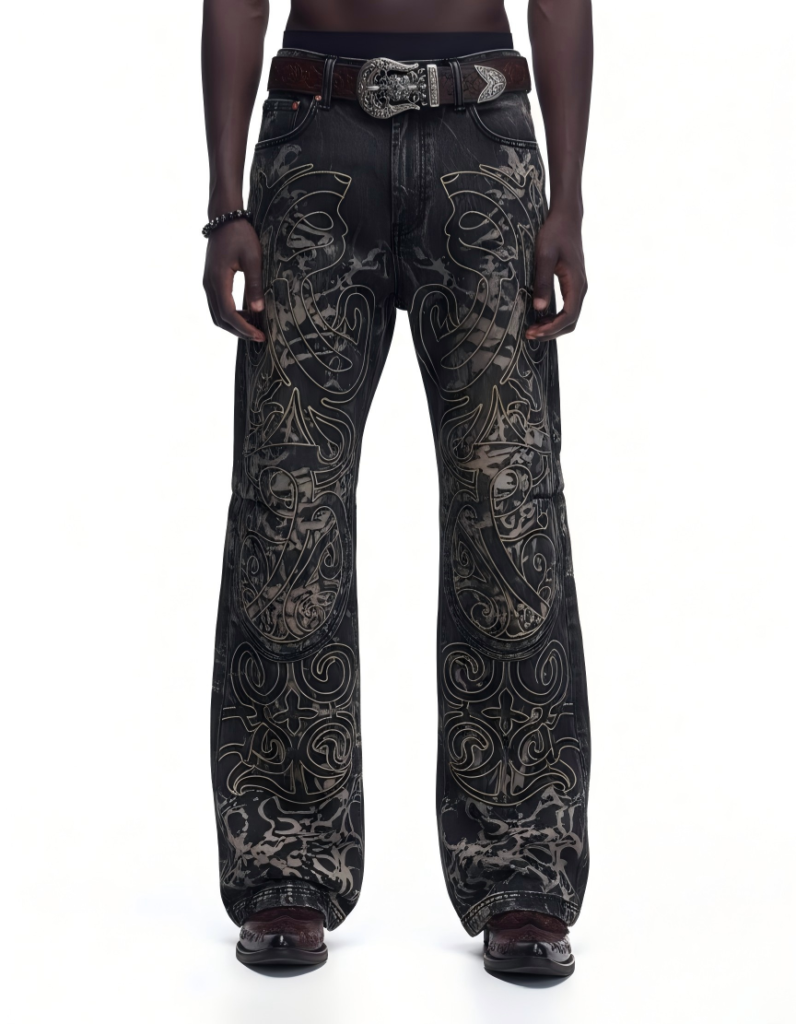
If you plan to experiment with Avant-Garde Trousers, complex distressing, or unusual panel lines, an ODM-capable team can help you solve construction and wash feasibility earlier.
SkyKingdom markets itself as a precision OEM/ODM partner for denim and woven apparel, with scale and a defined quality assurance system.
Audit QC system and AQL
Premium quality comes from process control, not final inspection luck. When you audit a manufacturer, ask for:
- AQL targets for bulk (and whether they use different AQL levels for major vs minor defects).
- Inspection stages (incoming fabric, inline, final audit).
- Measurable checkpoints tied to denim risk areas: leg twist, shade banding, skew, pocket placement, bartack security, and wash consistency.
ISO 2859-1:2026 defines acceptance sampling plans indexed by AQL for lot-by-lot inspection, which helps standardize how suppliers set sample sizes and acceptance thresholds.
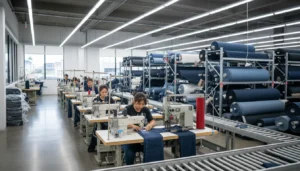
SkyKingdom states it follows AQL 2.5 standards with a 5-stage QC system, and describes inline inspection checkpoints after every 5 sewing operations plus final audit to AQL targets.
Check traceability and real-time tracking
If you want quick response without chaos, you need production visibility. A Transparent Supply Chain is not just a weekly email update. Ask what the factory can show you in real time:
- Time-stamped milestones (pattern complete, fabric booked, cutting start, sewing start, wash in, wash out, finishing, final QC, packing).
- Exception alerts (delay reasons and revised ETA).
- Batch-level traceability for fabric and wash lots.
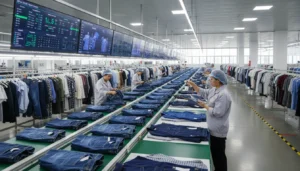
SkyKingdom describes digitalized operations and Real-Time Data Tracking across the production process, including real-time ERP tracking and a digital workflow intended to reduce response time surprises.
Verify sustainable denim claims
Sustainable Denim needs proof, not marketing words. Request a compliance packet that includes:
- Restricted substance management approach (especially for washes, sprays, and finishing).
- Certifications and audit coverage.
- Evidence that the factory can reproduce wash effects with lower chemical load.
SkyKingdom describes an eco-washing direction and a “zero chemical” ambition supported by processes like laser and ozone washing, plus claims of OEKO-TEX Standard 100 and BCI cotton certification as part of its sustainability positioning.
To keep your Circular Fashion goals realistic, also ask what happens to offcuts, rejected garments, and wash sludge. A factory that can talk clearly about waste handling and process control is usually the factory that can keep quality stable.
Confirm capacity for scaling
Low MOQ is only valuable if you can scale the winners. Therefore, map your ramp path from test to bulk:
- What happens after the first small batch sells out.
- Whether the factory can reserve capacity for restocks.
- Whether fabric is stocked or needs fresh booking each time.
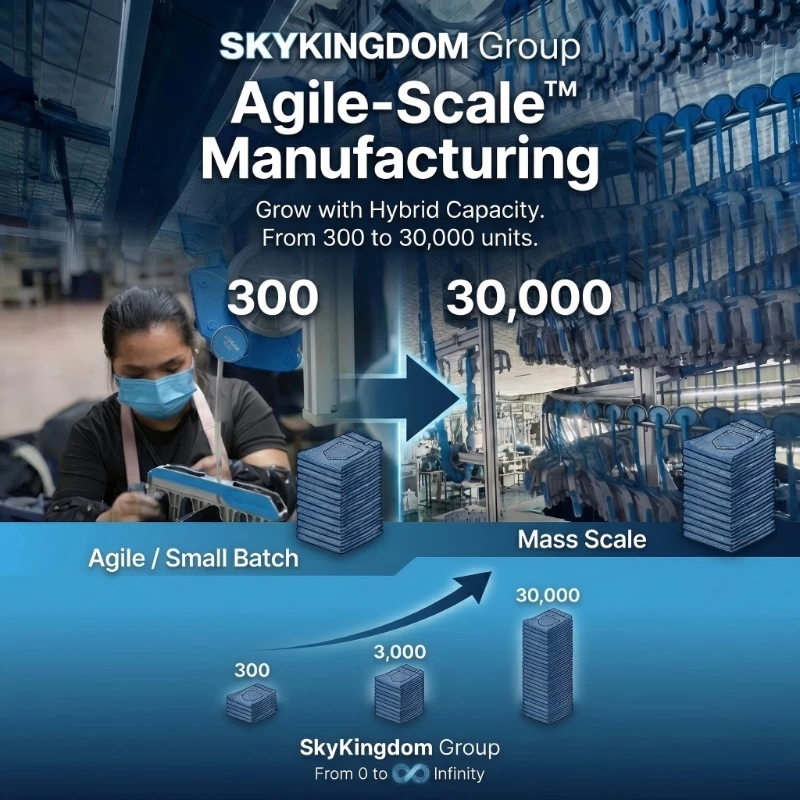
SkyKingdom frames scaling through an Agile-Scale approach, including a Hybrid Capacity System that allocates 30% fast-response lines to test runs and 70% intelligent production lines to scale winning styles, and it positions Micro-Run OEM as starting at 30 units with a path to larger reorders.
Adapting Your Approach in Different Scenarios
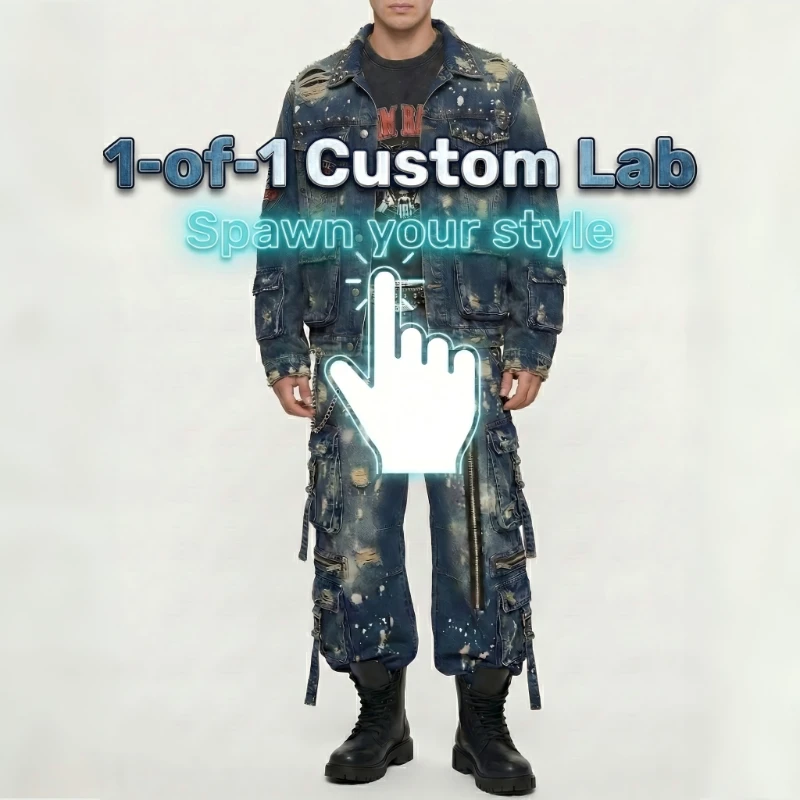
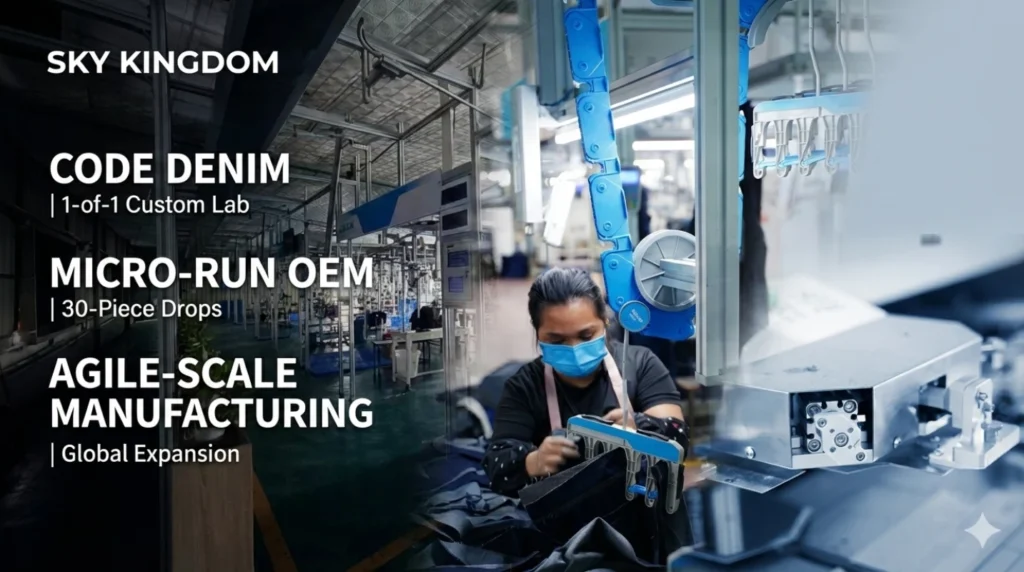
- Creator 1-of-1, no tech pack: Prioritize ODM-like support and a workflow that can convert a design visual into production-ready outputs. SkyKingdom positions CodeDenim as a 1-of-1 custom lab with QA/QC support and traceability for one-off builds.
- Influencer drop, MOQ 30 launch: Optimize for Low MOQ Manufacturing, sample speed, and photo-ready consistency. SkyKingdom markets Micro-Run OEM as 30-piece drops with AI virtual sampling to enable pre-orders.
- Amazon seller, rapid reorder cadence: Put Real-Time Data Tracking and QC (returns risk) first. SkyKingdom highlights Amazon top-seller grade QC and a data-alert-driven inspection approach in its scaling solution description.
- DTC scale-up, 300 to 30,000 units: Ensure capacity allocation is explicit so your fast response does not get deprioritized behind larger clients. SkyKingdom frames scaling from 300 to 30,000 and describes a Smart Line style capacity approach on its manufacturing page.
Troubleshooting Guide
| Problem | Cause | Solution |
|---|---|---|
| MOQ too high for a custom wash | Setup time and wash minimums make tiny runs expensive to schedule | Start with a stock wash option for the first small batch, then add the custom wash once sell-through proves demand |
| Samples miss fit | Incomplete graded measurements, unclear tolerance, or no reference garment | Lock a measurement spec with tolerances, provide a reference garment, and request a measurement sheet with every sample round |
| Delays and silence | No tracking cadence and unclear owners for approvals | Require milestone updates with timestamps, confirm who owns each approval step, and set response SLAs (for example, 24 to 48 hours) |
| Shade variation between batches | Fabric lot changes or wash inconsistency | Require fabric lot tracking, keep wash recipe records, and run a small pre-production wash test before bulk |
| Bulk differs from sample | Production line substitutions or uncontrolled process steps | Request pre-production sample sign-off, inline QC checkpoints, and a final audit tied to your AQL target |
Conclusion
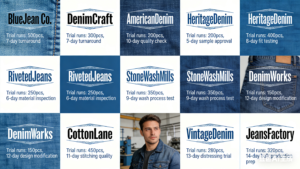
To select a denim manufacturer that truly supports low MOQ and premium quality, you need a repeatable evaluation method. Define your MOQ and reorder logic, decide OEM vs ODM boundaries, and validate sampling speed with a real calendar.
Next, treat QC and AQL as non-negotiable, and demand Real-Time Data Tracking so you can manage fast response without guesswork. Finally, verify Sustainable Denim claims with documents and process clarity.
FAQ
Compare denim factories that allow small batch production with fast turnaround?
Look for a factory that can state sample timelines in days, not weeks, and can explain what makes a sample “complex.” Ask for a defined QC system with named checkpoints like incoming inspection, inline checks, and final audit. A strong candidate can also explain how small batch transitions into reorders without restarting sourcing. Finally, ask how they communicate delays and how often they provide progress updates.
How do I find a manufacturer that accepts small orders for custom denim designs?
Start by asking for the minimum units per style, per color, and per wash, because the wash often drives the real MOQ. Then confirm whether trims and labels have their own minimums, which can quietly raise your total commitment. If you do not have a tech pack, ask whether they can develop patterns from a mockup or reference garment. You should also confirm how many sampling rounds they expect before locking production.
What should I consider when choosing a manufacturer that specializes in small denim orders?
You should prioritize pattern accuracy, wash repeatability, and communication speed, because small orders fail most often at fit and finishing. Ask how they control critical denim issues like skew, leg twist, and pocket placement. Confirm what tolerance they use for key measurements like waist, rise, and inseam. Also confirm whether they can hold core fabric options to support quick response restocks.
What should I expect during the sampling process for custom denim orders?
Expect an intake phase where the factory checks your design details and clarifies missing measurements and construction notes. Next, sourcing happens for denim, pocketing, trims, and wash references, followed by a first sample build. You should receive QC photos and a measurement sheet, then you approve or request changes for a second round. Plan for at least one revision loop, especially if the fit block is new.