
Your denim jacket just popped on TikTok, you finally found a winning ad, and then the size run sells out in a weekend. Now you are staring at a restock request email thread while your factory says sampling is still in queue, bulk will start next month, and the wash house is backed up. That gap is where momentum dies and copycats take your demand.
If you get replenishment wrong, the cost is not only missed revenue. You can lose search ranking, paid media efficiency, and repeat customers, especially when fit and wash inconsistency triggers returns.
This guide shows you how to evaluate an alternative denim jacket supplier for fast response, quick response, low MOQ, and reliable OEM and ODM workflows, so you can restock in a 15–22 day bulk production window and scale without chaos.
Lead-Time Map for 15–22 Days Fast Response
A 15–22 day bulk promise is only useful if you can see the critical path. Your job is to remove hidden queues, because queues create the real lead time.
Parallelize what typically blocks brands
You speed up by running tasks in parallel, but only where risk is controlled.
- Start trim booking once artwork and hardware are final
- Pre-approve wash recipe families (for example, clean rinse vs heavy acid effect)
- Lock labels and hangtags early so packing does not wait
- Use pre-production meetings to catch stitch and pocket issues
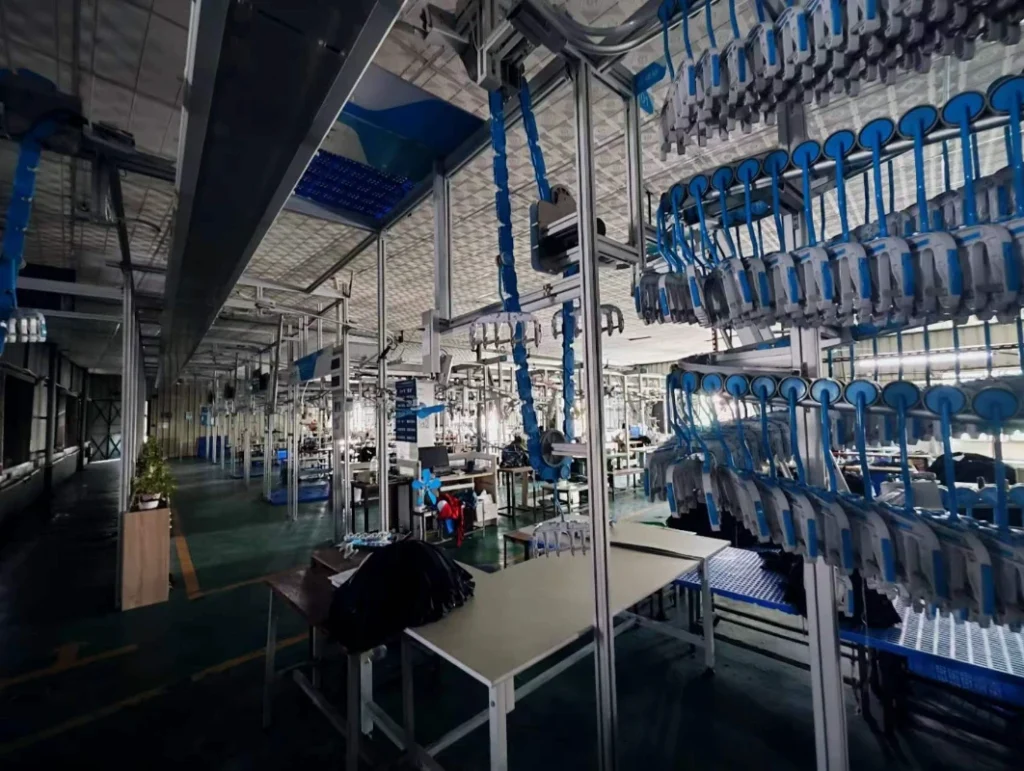
Sky Kingdom highlights AI-integrated systems that make reorders faster than traditional factories and positions real-time tracking as part of a digitalized workflow.
How this protects ranking and paid media efficiency
If you sell out, your listing often loses momentum. Restocking quickly keeps:
- ad sets stable (no forced pauses)
- reviews accumulating on the same listing
- marketplace ranking signals healthier
This is also where quality matters. A fast restock that increases returns is not a win. The National Retail Federation reported that retailers estimated 15.8% of annual sales would be returned in 2025, and 19.3% of online sales would be returned, which is why stable specs and wash repeatability are part of replenishment strategy, not just QC. (nrf.com)
Small Batch Launch With Low MOQ Small Batch MOQ 30
Small batch is how you buy information. Instead of guessing demand, you run a controlled test that answers: which wash, which fit, which price tier, and which audience angle converts.
How to structure a 30-piece drop
A low MOQ drop should be designed to reduce variables.
- Use one jacket block and vary wash or artwork
- Keep hardware consistent (buttons, rivets)
- Limit size range to your proven sizes
- Use one packaging spec to simplify
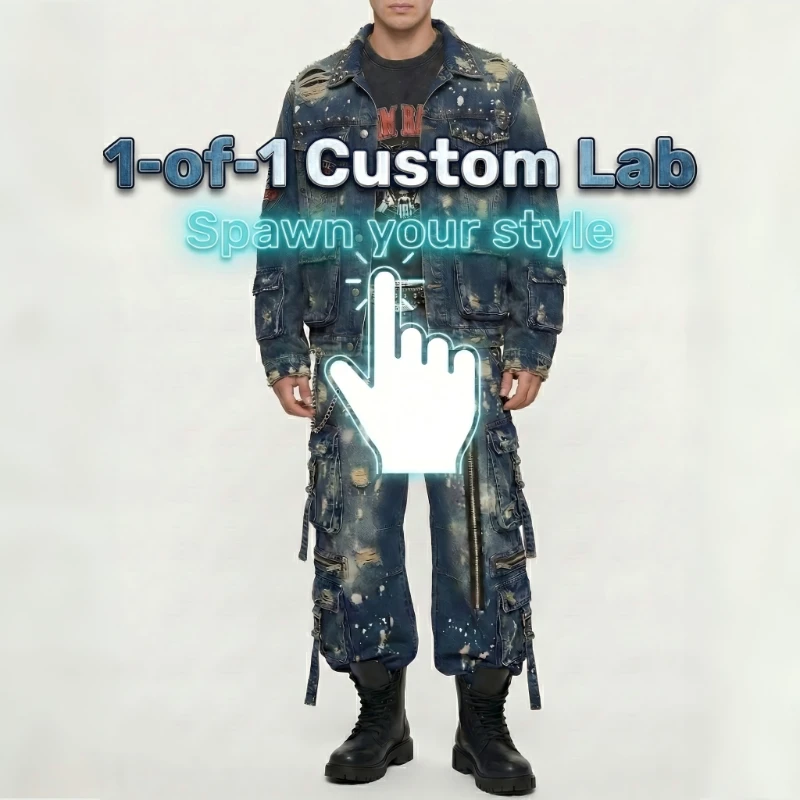
Sky Kingdoms Micro-Run OEM solution is positioned for creators and emerging brands with MOQ 30, with AI virtual sampling used for lookbook visuals before production to support a sell-first, make-later workflow.
What you should measure in the first run
You are not only measuring sales. You are measuring production repeatability.
- measurement variance by size (chest, length, sleeve)
- shrink after wash (length and width)
- shade consistency across the run
- defect types and where they occur
When you treat the first 30 as a learning batch, you can write better SOPs for the next reorder, and that is what makes fast response sustainable.
OEM and ODM Workflow Setup for Quick Response
Your fastest factory will still be slow if approvals bounce between ambiguous files. OEM and ODM speed is an information problem first.
Decide your input format: tech pack vs design assist
For OEM, you should ship a tech pack that includes:
- measurement spec with tolerances
- construction details (stitch type, SPI)
- trim list and placement
- wash target references
For ODM, you need clear design intent:
- front/back artwork or mockups
- fit goal (boxy, cropped, oversized)
- wash direction (clean, heavy vintage, distressed)
Sky Kingdoms solutions page claims that for CodeDenim, a system can convert design visuals into production-ready outputs and that no tech pack is required for that workflow.
Approval rules that prevent remake loops
Approvals get slow when every change is open-ended. Set rules that keep the line moving.
- One owner for fit comments
- One owner for wash comments
- Freeze BOM before sample sewing starts
- Allow only one revision round per milestone
If you do this, you will stop turning every sample into a negotiation.
Where ODM helps most in denim jackets
ODM value is highest when you do not have strong internal technical capability.
- pattern corrections that preserve style intent
- grading rules for oversized fits
- wash recipe selection that matches your imagery
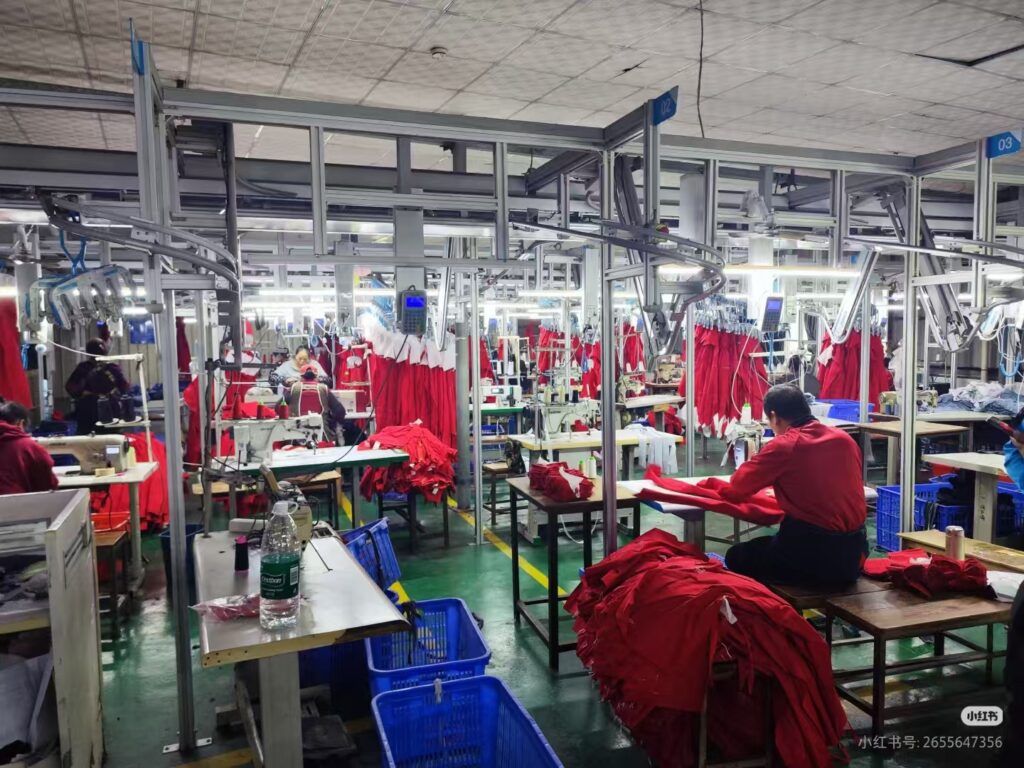
This is also where a factory with a structured sample process matters. Sky Kingdom outlines a multi-step sample customization process including sourcing, sample sheet confirmation, production, quality check, and shipping, which is the type of structure that reduces rework in OEM and ODM projects.
Scale Path From 300 to 30,000 Without Lead-Time Blowups
When a jacket wins, your risk shifts. Now the risk is not whether you can sell it. The risk is that scaling breaks quality or lead time.
Use a test-run vs winner allocation model
Scaling works best when you protect capacity for two streams:
- test stream: new washes, new fits, seasonal variants
- winner stream: stable reorders for proven SKUs
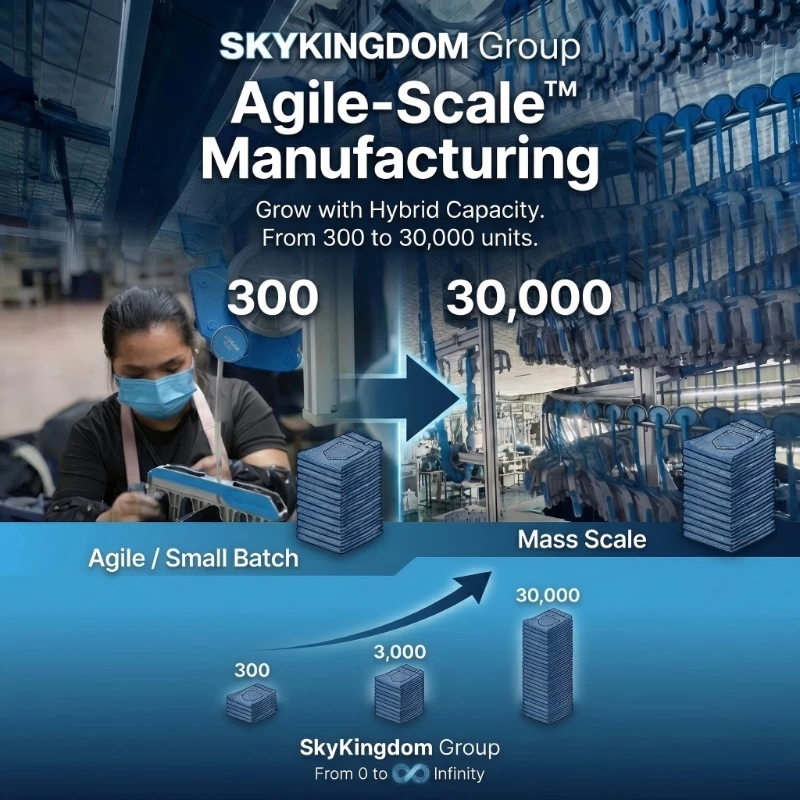
Sky Kingdoms Agile-Scale Manufacturing describes a hybrid capacity system that allocates 30% of fast-response production lines to fragmented test runs and 70% of intelligent production lines to scaling winning styles.
Pre-booking and predictive sourcing
The fastest brands are not only fast in sewing. They are fast in material readiness.
- reserve core denims pre-season
- pre-approve hardware vendors
- standardize labels and care content
Sky Kingdom describes predictive sourcing by locking fabric inventories with core suppliers three months in advance, reducing procurement lead time when orders are placed.
What to standardize before you scale
If you want quick response at 3,000 units, you need stable standards.
- measurement tolerances by size
- acceptable shade range by wash
- packaging spec and carton plan
- re-order trigger rules by SKU
A useful external lens is the 2025 State of Fashion report from McKinsey & Company which highlights inventory as an ongoing industry challenge and notes increasing regulatory attention in Europe around excess stock. That pressure is one reason agile replenishment and smaller initial buys have become operationally strategic, not only trendy.
Traceability and QA data visibility
Fast response becomes safer when you can see quality signals early.
| Decision factor | What to ask for | Why it matters |
|---|---|---|
| Inspection standard | AQL level used | Predicts defect risk |
| In-line QC cadence | Checkpoint frequency | Catches drift early |
| Wash shade control | Tolerance definition | Prevents photo mismatch |
| Measurement control | Tolerance by point | Reduces fit returns |
| Tracking visibility | WIP status updates | Prevents surprise delays |
Sky Kingdom describes raw-material traceability identification, quality traceability, warranty availability, and real-time tracking as part of its manufacturing positioning.
Conclusion
Fast replenishment is not only about finding a factory that promises quick response. It is a system that links demand signals, a realistic lead-time map, and OEM or ODM workflows that prevent approval loops. When you build those pieces, a 15–22 day bulk production window becomes something you can plan around instead of a lucky exception.
Start by auditing suppliers against turnaround definitions, low MOQ support, and QC traceability. Then run a small batch pilot, lock what works into repeatable specs, and scale with a capacity model that protects both test runs and winners.
FAQ
Compare denim factories that allow small batch production with fast turnaround?
Prioritize whether the factory has dedicated quick-response capacity rather than treating your order as an interruption to large runs. Ask for written sample and bulk timelines, and clarify exactly when the lead-time clock starts, such as after BOM freeze or fabric readiness. Compare the factories QC gates, especially in-line measurement checks and a wash shade approval step, because speed without repeatability increases returns. Finally, verify the path from small batch to larger reorders so you do not have to switch suppliers when a jacket wins.
Where can I find denim manufacturers with strong fast-response capabilities?
Start with manufacturers that publish realistic sampling and bulk timelines and can explain their critical path from pattern to wash to final QC. Strong fast-response factories usually have clear intake formats, such as tech packs for OEM work or structured design assist for ODM work. Ask for examples of how they parallelize trims, fabric readiness, and sewing so the bulk window stays stable. Also confirm how they handle time zones and communication cadence, because slow approvals can erase the benefit of fast production.
Which denim suppliers can quickly restock to avoid lost sales?
The best restock suppliers combine speed with consistency, especially for wash shade and measurements, so each restock matches your product page. Ask how they define tolerances for shade and fit, and what happens if a production gate fails mid-run. Confirm that they support reorder triggers, such as stable patterns and standardized trims, so repeat orders do not restart development. A supplier that can restock fast but cannot repeat the same wash outcome often increases returns and customer complaints.
Which denim suppliers provide urgent production for small fashion brands?
Small brands usually need urgent production because cash is tied up and trends move fast, so low MOQ and fast response are both critical. Look for suppliers that can deliver rapid sampling, provide clear approval milestones, and run a small batch program that reduces inventory risk. Ask if they support both OEM and ODM, because the bottleneck for small teams is often tech pack quality and revision speed. Choose a partner that can also scale, so your urgent first run does not trap you in a supplier that cannot handle the next reorder wave.