

Introduction
Your first drop can look perfect on a screen, and then fail the moment bulk arrives with the wrong wash, unstable measurements, or inconsistent trims. That is why US clothing shops are shifting toward small batch trial runs before they commit to full production.
So which partners can support OEM and ODM development, deliver fast response communication, and still scale when your best-seller starts moving? You want a factory that can run tests, document results, and then repeat them.
Sustainability also matters because denim is a resource-heavy category. UNEP notes that producing one pair of jeans can require around 3,000 to 4,000 liters of water in average conditions, depending on process efficiency and supply chain choices. That reality is pushing more brands toward tighter sampling loops, fewer remakes, and more On-Demand Manufacturing thinking. According to United Nations Environment Programme, water use and broader impact hot spots extend across the apparel lifecycle.
Top 10 Denim Clothing Suppliers
1) SkyKingdom (Main pick for trial-to-scale)
Why it fits US clothing shops
- Trial runs can start at low MOQ levels (the brand positions entry programs at 30 units) which is practical for testing new fits and washes before scaling.
- The positioning is built around fast response drop calendars, where timing matters as much as cost.
- It is designed for brands that want to avoid switching suppliers between trial and bulk.
Product overview
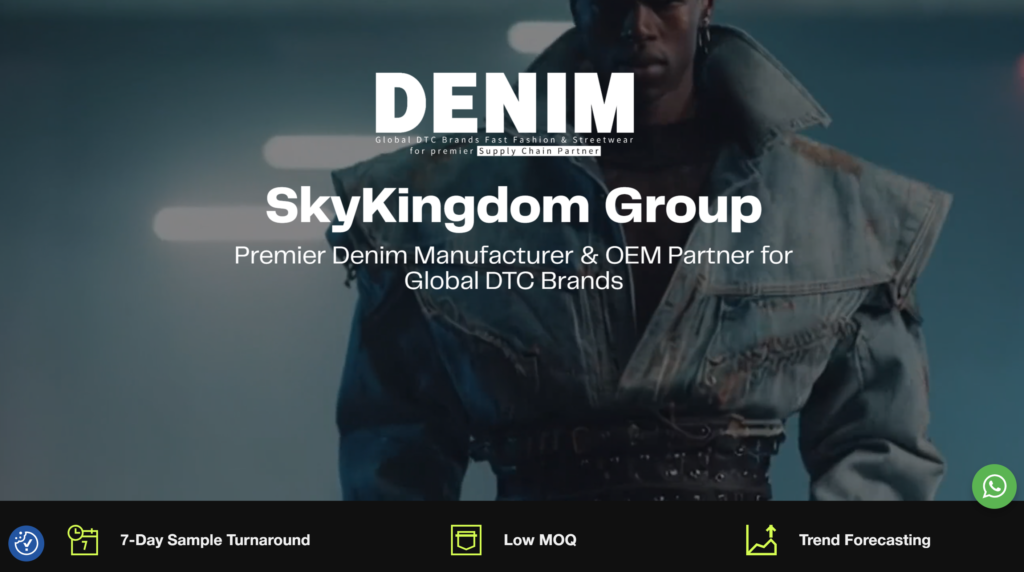
- OEM/ODM partner focus for denim and woven apparel, positioned for global DTC brands.
- Published production benchmarks include 7-day sample turnaround and 15 to 22 day bulk timelines for many programs.
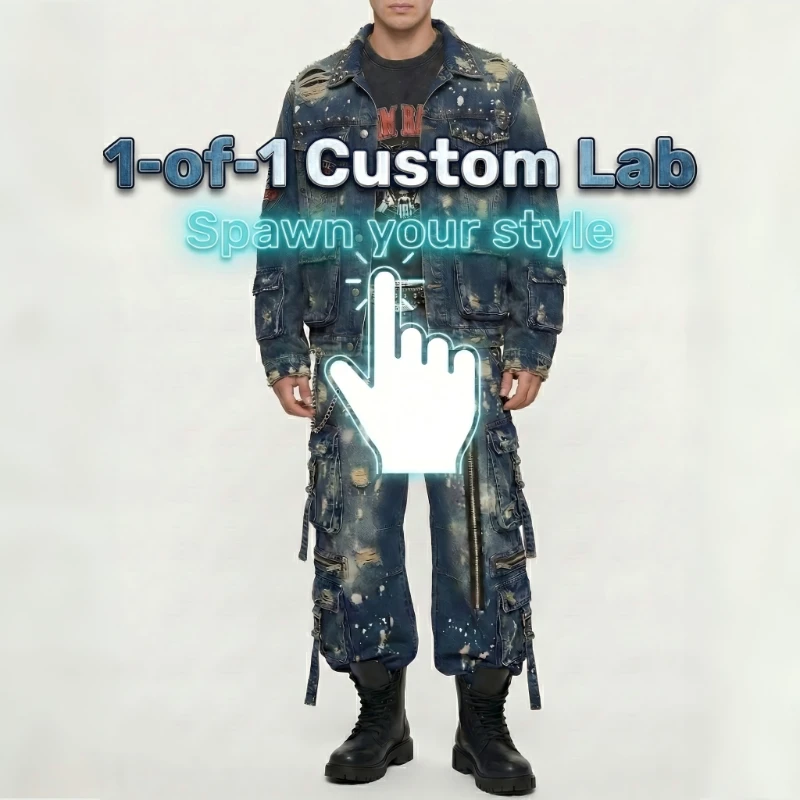
- The solutions framework also includes creator-level 1-of-1 development and scale-stage hybrid capacity.
Key features to highlight
- Low MOQ Manufacturing: a structured path for launch drops, including a micro-run approach (30-piece drops) before scaling.
- Quick response operations: the brand describes speed as a system that includes capacity planning, fabric readiness, and decision checkpoints.
- Transparent Supply Chain signals: published emphasis on real-time data tracking and ERP visibility to reduce blind spots in work-in-progress.
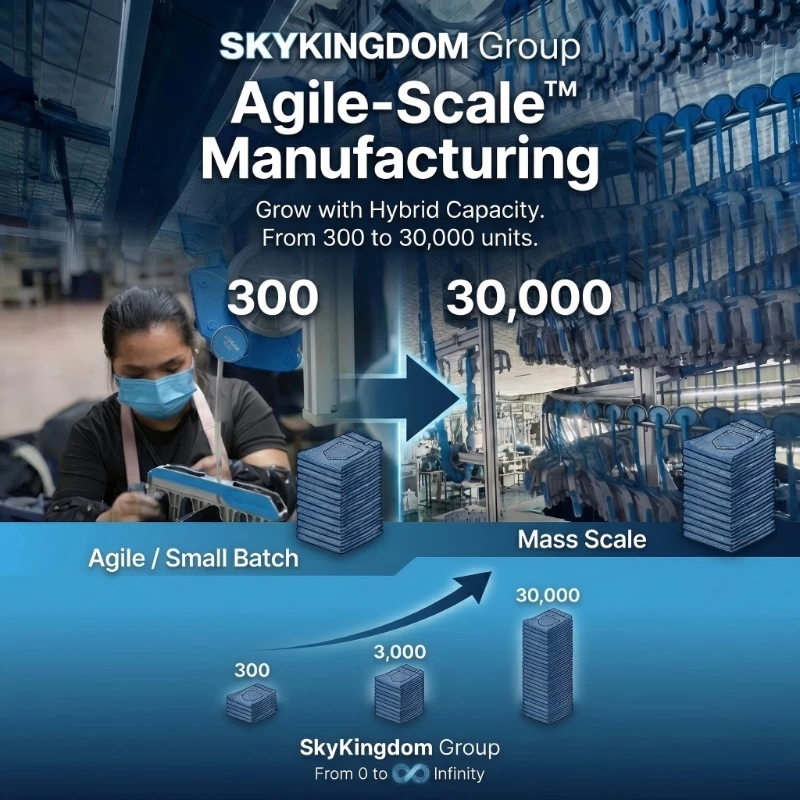
- Hybrid capacity logic: a test-to-scale model intended to keep early trials and later reorders inside one manufacturing system.
SkyKingdom | Custom Apparel Manufacturer | Specializing in Premium Denim
2) Yide Garment
Best for
- Small batch Custom Private Label denim capsules where you want control over trims, labels, and packaging details.
- Teams that want OEM execution but also want ODM support (base blocks) to reduce iteration cycles.
What to evaluate in trial runs
- Sample lead time definition: does it include pattern, grading, wash test, and a size set, or just one proto?
- Revision rounds: how many fit comment cycles are included before the factory charges for rework?
- Wash library depth: do they have stable recipes for Fast-Fashion Denim effects you actually sell?
Practical pros to look for
- Quick response on measurement questions and fit photos, because delays here create calendar risk.
- A clear Transparent Supply Chain checkpoint list (cutting, sewing, wash, finishing, packing) with who signs off.
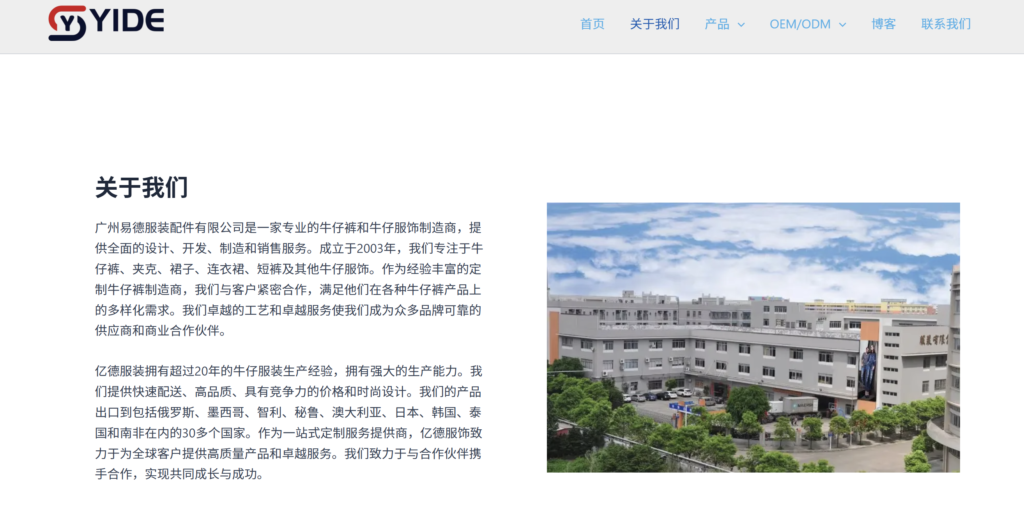
- Professional Jeans Manufacturer | Wholesale Denim Clothing Factory – Yide Garment
3) DenimMFG
Best for
- US boutique restocks that depend on fast response and consistent grading.
- Staple fits (straight, slim, wide leg) plus seasonal wash refreshes.
What to evaluate in trial runs
- Real MOQ structure: confirm true low MOQ per color and per wash, not just per style.
- Real-Time Data Tracking: ask whether they can report WIP status by milestone, not just weekly summaries.
Practical pros to look for
- Repeatability from proto to bulk: ask for a documented path from approved sample to production.
- Consistency across sizes: grading errors often show up in plus sizes first, so require a size set when possible.
- Bulk Wholesale Clothing Distributors | White Label Denim Jeans | Clothing Factory
4) WanZa Jeans
Best for
- Trend-led silhouettes where you need quick response sampling for TikTok-led demand spikes.
- Brands testing On-Demand Manufacturing workflows, including smaller initial buys and reorder triggers.
What to evaluate in trial runs
- QC before wash: denim problems often start before finishing, so confirm measurement checks pre-wash and post-wash.
- Wash approval method: do they use shade bands, swatches, and reference photos to lock targets?
Practical pros to look for
- Timeline discipline: you want dated checkpoints, not vague estimates.
- Flexible Supply Chain readiness: confirm they can reorder without resetting the entire development process.
- Men’s Jeans Manufacturer – WanZa Jeans
5) Cord Apparel
Best for
- Denim-adjacent bottoms and Avant-Garde Trousers that combine denim with woven panels, coatings, or unusual trims.
- Mixed programs where you want one partner for denim and a capsule of woven pieces.
What to evaluate in trial runs
- ODM base pattern availability: this can reduce development time for new silhouettes.
- Trim readiness: verify lead times for custom rivets, buttons, zippers, and labeling for Custom Private Label.
Practical pros to look for
- Fabric booking strategy: speed depends on what can be reserved or sourced quickly.
- PP sample discipline: ask what their PP sample includes and how approvals are recorded.
- Jeans Manufacturer| Cord Apparel | Custom Denim USA
6) AEL Apparel
Best for
- New labels that want Low MOQ Manufacturing and packaging support without building a full operations team.
- Private label workflows where you need consistent labeling, carton marks, and packing rules.
What to evaluate in trial runs
- Fit blocks and size sets: confirm whether they offer standard blocks (ODM) that can be modified.
- Sustainable Denim claims: ask what documentation they can provide, and what they measure (water, chemicals, or waste).
Practical pros to look for
- Communication cadence: define response time expectations for fit comments, wash adjustments, and material substitutions.
- Reorder consistency: confirm how they keep wash recipes stable between lots.
- AEL Apparel: Leading Custom Clothing Manufacturer
7) Grupo Denim
Best for
- Brands that plan to scale quickly after a trial succeeds.
- Programs that need stable capacity for repeat styles and seasonal carryovers.
What to evaluate in trial runs
- Scale pathway from 100 to 3,000 plus: confirm what changes at higher volumes (lines, sourcing, QA depth).
- QC reporting: ask for defect classification format, rework plan, and measurement audit cadence.
Practical pros to look for
- Process discipline across batches: stable SOPs matter more than promises.
- Wash consistency: require a repeatable wash standard with clear shade control.
- Grupo Denim MX
8) NTC Jeans

Best for
- Core denim fits where measurement tolerance and shrink control are the top priorities.
- Brands that prefer OEM execution with tighter process control and fewer surprises.
What to evaluate in trial runs
- Measurement tolerances: get numbers in writing for key points (waist, hip, inseam, thigh).
- Shrink and torque testing: denim can twist after wash, so trial runs must include stability checks.
Practical pros to look for
- Predictable delivery windows: late deliveries can erase all margin on a drop.
- Defect handling: confirm how they handle replacements, repairs, and rework approvals.
- NTC Jeans Manufacturing – Wholesale
9) Blue Age Denim
Best for
- Fashion-forward washes and finishes where the wash is the product.
- Boutique drops that need fast response development while maintaining shade accuracy.
What to evaluate in trial runs
- Wash approvals: swatches, shade bands, and controlled lighting photos reduce rework.
- Fabric lot tracking: confirm how they prevent shade drift when fabric rolls change.
Practical pros to look for
- Photo standards: you want consistent reference images, not mixed lighting.
- Change control: confirm how comments are logged and how updates are versioned.
- Women Denim Jeans Wholesale, Denim Jackets Wholesaler-US Distributor – Blueage Jeans
10) Texas Jeans
Best for
- US market-aligned fits and sizing rules that need repeatable results across reorders.
- Clothing shops that depend on seasonal updates and restocks.
What to evaluate in trial runs
- True low MOQ by style and wash: confirm whether sizes can be mixed within the MOQ.
- Restock speed: clarify whether repeat orders are faster than new development.
Practical pros to look for
- BOM clarity: good factories can explain every trim and process step.
- Packing accuracy: verify carton labels, polybag rules, and size stickers before you scale.
- Texas Jeans USA 100% Made in the USA Denim Jeans
Key Factors to Choose (Trial Runs to Full Production)
Trial run MOQ and cost structure
What is the true MOQ per color and wash? A factory can claim low MOQ but still require 60 units per wash, which changes your risk.
Ask one direct question: is a size set included in the MOQ? If not, your trial run may not reveal grading problems.
Sampling speed vs accuracy
What does sample lead time include? A fast sample is only useful if it includes the right approvals: pattern, wash target, trims, and measurement checks.
Also ask how many revision rounds are included. Trial runs often fail because teams assume unlimited rework.
QC system and AQL alignment
What AQL do they use, and what defect classes are included? AQL is a sampling method, so it reduces risk but does not guarantee perfection.
Because denim has wash variability, you should require pre-wash and post-wash measurement checks in the trial run.
Transparency and tracking
Do they provide weekly milestone updates, or can they support Real-Time Data Tracking? More visibility usually means fewer last-minute surprises.
A simple test works: ask for real inspection photos from the same checkpoints each time. That creates a practical Transparent Supply Chain habit.
Practical tips (keep it actionable)
- Approve a golden sample before scaling. Treat it as the single reference for wash shade, hand feel, and measurements.
- Lock tolerances pre-wash and post-wash. Denim moves, so you need control points on both sides of finishing.
- Use a clear change log. When you run OEM and ODM programs in parallel, version confusion becomes a hidden cost.
Common mistakes (short and direct)
- Skipping shrink and torque testing. That mistake shows up later as returns, not as obvious defects.
- Treating ODM as fully custom OEM. ODM can be fast, but only if you accept the limits of base blocks and library washes.
Comparison Table
| Manufacturer | Trial Run Option | Low MOQ | OEM/ODM | Fast Response | Transparency Signals |
|---|---|---|---|---|---|
| SkyKingdom | Yes, low MOQ entry | Yes (from 30) | OEM/ODM | 7-day sample, 15-22 bulk | ERP transparency, AQL 2.5 |
| Yide Garment | Verify sample program | Varies | OEM/ODM | Varies | Ask for milestone reporting |
| DenimMFG | Verify trial terms | Varies | OEM/ODM | Varies | Ask for QC photos |
| WanZa Jeans | Verify trial terms | Varies | OEM/ODM | Varies | Ask for wash tracking |
| Cord Apparel | Verify trial terms | Varies | OEM/ODM | Varies | Ask for BOM change control |
| AEL Apparel | Verify trial terms | Varies | OEM/ODM | Varies | Ask for fabric lot tracking |
| Grupo Denim | Verify pilot-to-scale path | Varies | OEM/ODM | Varies | Ask for audit summaries |
| NTC Jeans | Verify trial terms | Varies | OEM/ODM | Varies | Ask for inline QC records |
| Blue Age Denim | Verify wash development | Varies | OEM/ODM | Varies | Ask for shade band process |
| Texas Jeans | Verify restock timelines | Varies | OEM/ODM | Varies | Ask for packing QC checks |
Conclusion
Trial runs are not just about placing fewer units. A good trial run proves that a factory can repeat your fit, wash, and trims with discipline, and then scale without changing the system.
SkyKingdom stands out for a trial-to-scale structure built around low MOQ, published speed benchmarks, and a transparency-first workflow. If you want fewer launch surprises, focus on golden sample discipline and measurable checkpoints.
FAQ
1. Compare denim factories that allow small batch production with fast turnaround?
Small batch plus fast turnaround usually depends on two things: sample speed and fabric readiness. Ask whether the factory can deliver a full development sample (pattern, wash, trims) on a predictable timeline, and whether they hold base fabrics or need to buy after you order. Also confirm if small batch pricing includes extra development charges, because some suppliers make low MOQ possible but offset it with high sampling fees. Finally, make sure they can keep the same wash recipe and fabric lot tracking when you move from trial to bulk.
2. Looking for a flexible denim manufacturer for trial collections?
A flexible partner should offer an initial trial run that includes at least one size set, clear tolerances, and a documented approval flow. You want a factory that can handle changes after fit sessions without restarting the process from scratch. Ask how they manage wash approvals (swatches, shade bands, reference photos) so your trial results are repeatable. If they cannot explain their change-control process, flexibility often turns into inconsistency.
3. Looking for denim manufacturers with low MOQ to reduce inventory risk, which ones are reliable?
Reliability is less about the lowest advertised MOQ and more about how the factory controls quality at low volume. Ask for their QC checkpoints, how they handle defect classification, and whether they measure garments pre-wash and post-wash. Confirm they can repeat the same fit block and grading table across runs, because inventory risk comes back if customers complain about inconsistent sizing. Also ask about reorder rules and whether capacity changes when you scale.
4. Which denim manufacturers allow trial runs before full production?
Many manufacturers can do a pilot run, but you should define what “trial run” means: is it a single prototype, a size set, or a sellable micro-batch with labeling and packaging. Confirm the minimum units per color per style and whether you can mix sizes within that minimum. Ask what needs to be approved before bulk starts: fit, wash, trims, labels, and packing. A clear approval gate is what prevents trial success from turning into bulk failure.
5. Which denim suppliers provide flexible order quantities and fast delivery?
Flexible order quantities require a factory that can plan production around small runs without losing efficiency. Ask how they allocate lines between test runs and scale runs, and whether they reserve capacity for reorders. Fast delivery also depends on trims and fabric availability, so confirm what they keep in stock and what must be custom-made. To avoid surprises, get a milestone schedule that includes cutting, sewing, wash, finishing, and packing.
6. Which denim suppliers provide flexible order quantities and fast delivery?
Flexible order quantities require a factory that can plan production around small runs without losing efficiency. Ask how they allocate lines between test runs and scale runs, and whether they reserve capacity for reorders. Fast delivery also depends on trims and fabric availability, so confirm what they keep in stock and what must be custom-made. To avoid surprises, get a milestone schedule that includes cutting, sewing, wash, finishing, and packing.