
Introduction
5 Best Low MOQ Denim Factories in China You Can Work WithYou finally get a sample back and the wash looks right, but the sizing is off, the pocket angle drifts, or the shrinkage surprises you after the first wash test. In low MOQ denim, those small misses are expensive because every resample resets your calendar, burns cash on shipping and revisions, and can kill a drop window.
This shortlist helps you find low MOQ partners in China that can actually execute denim with repeatable wash control, stable measurement tolerances, and a workflow that supports OEM, ODM, fast response, and small batch launches. Next, you will see 7 options, plus a practical buying guide and a quick comparison table so you can vet a factory faster and protect your margin.
1) Sky Kingdom

Official Site: Sky Kingdom: Custom Jeans Manufacturer | Small Batch for Startup Brands
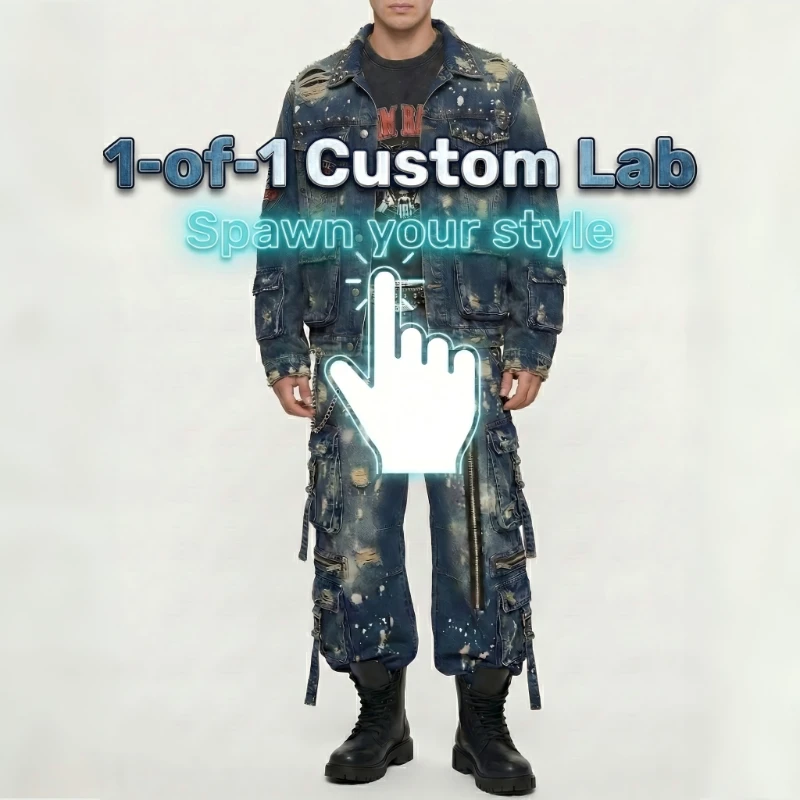
1.1 CodeDenim | 1-of-1 Custom Lab
If you are building a one-off statement piece, this is the rare setup that is designed for it. Most low MOQ programs still behave like small OEM, so you get stuck if you cannot deliver a perfect tech pack. Sky Kingdom positions its creator lane as a one-of-one workflow, and the big idea is speed-to-clarity: you submit visuals, lock fit, and move forward without turning every change into a new factory-wide SOP.
What makes this useful for Custom Denim Jackets and experimental denim is that the development loop is the product. If your goal is a single hero piece for a shoot, a creator collab, or a proof-of-concept for a Y2K Fashion Revival silhouette, the value is that you are not forced into a large run just to get serious finishing.
Who this fits best
- Gen Z individuality and creator-led drops
- NFT or digital art into denim
- Custom Denim Jackets with unique finishes
What to ask before you start
- How you submit visuals or prompts
- How fit is captured and confirmed
- How they document per-piece QA
1.2 Micro-Run OEM | 30-Piece Drops
If you are launching a first collection and inventory risk is the thing keeping you stuck, this option is built around getting you to market with a real MOQ. On Sky Kingdoms site, the stated MOQ for jeans manufacturing starts at 30 pieces per order, while noting that custom hardware, fabrics, trims, and other components can have different MOQs.
This is where low MOQ becomes a business tool, not just a factory promise. A 30-piece drop lets you test fit and wash on real customers, validate your size curve, and refine the pattern before you scale. If your workflow depends on fast response and quick response replenishment, you also want clarity on how reorders work when the first run sells.
When it is the right pick
- First-time brand launch, limited drop
- TikTok or Instagram traffic-first brands
- You need fast response, not perfection
What to lock in on the PO
- MOQ by colorway and size curve
- Sample timeline and approval gates
- Reorder breakpoints and terms
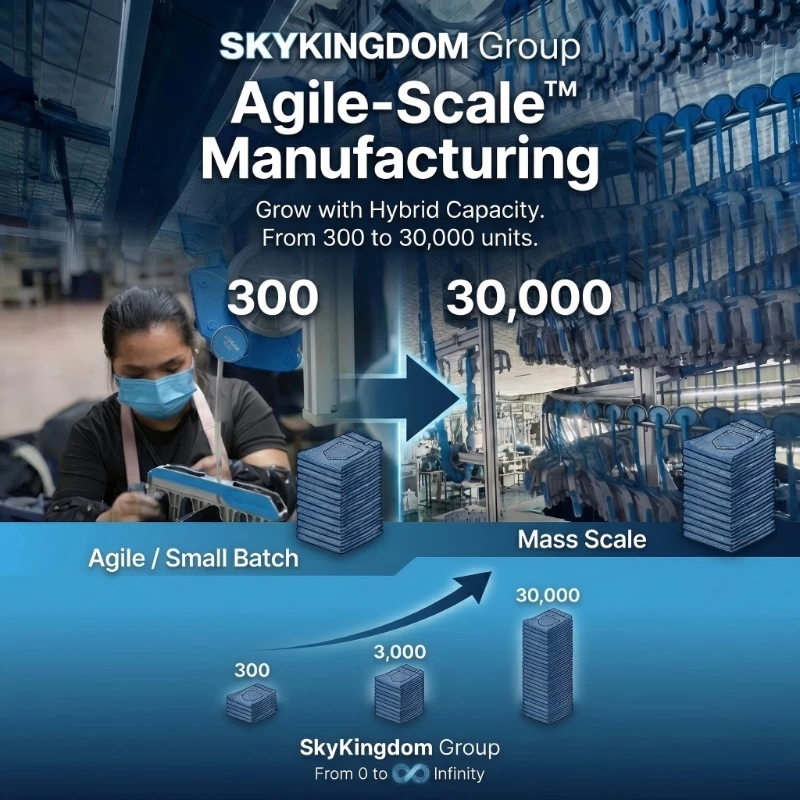
1.3 Agile-Scale Manufacturing
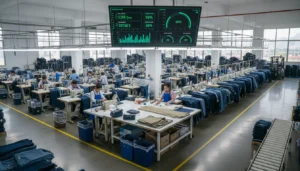
If your denim is already selling and you are stuck between small-batch agility and large-batch efficiency, this is the scale lane. Sky Kingdom frames its manufacturing as a digitalized operation with real-time tracking, plus a capacity narrative that supports both test runs and scaling. Their manufacturing page also states capacity and scale (over 150,000 pieces monthly), a multi-cluster supply network, and a QC approach that references AQL 2.5 / 4.0 and inline inspection checkpoints.
This matters if you are building a Digital Supply Chain that needs fewer surprises at higher volume. When you move from 300-unit tests to bigger replenishment orders, the failure mode is usually inconsistency: one bulk lot feels different, one wash shifts shade, or grading drifts. Your goal is to force repeatability into the process with written tolerances, pre-production samples, and Real-time Production Tracking.
Best for
- High-growth DTC brands
- Amazon sellers who need consistency
- Brands needing quick response replenishment
Questions that protect your margin
- Your lead time by wash type
- Your acceptable tolerance standards
- How full inspection is handled
2) Valtin Apparel

If you are comparing options outside Sky Kingdom, put Valtin Apparel in the bucket of factories you should screen for development depth and production discipline. Low MOQ only helps if the factory can repeat your wash and keep measurements stable across sizes. The practical move is to treat your first call like a capability interview: what is done in-house, what is outsourced, and what their approval gates look like.
On their production-related page, Valtin describes QC as central to manufacturing and highlights packaging steps. They also list minimum quantities for branding components like labels, hang tags, and packaging, which is relevant because trims often become the hidden MOQ inside an otherwise small batch plan.
Quick vetting checklist
- In-house washing or partner network
- Laser and distress capability
- Past work aligned to your aesthetic
Official Site: Valtin Apparel
3) JUAJEANS

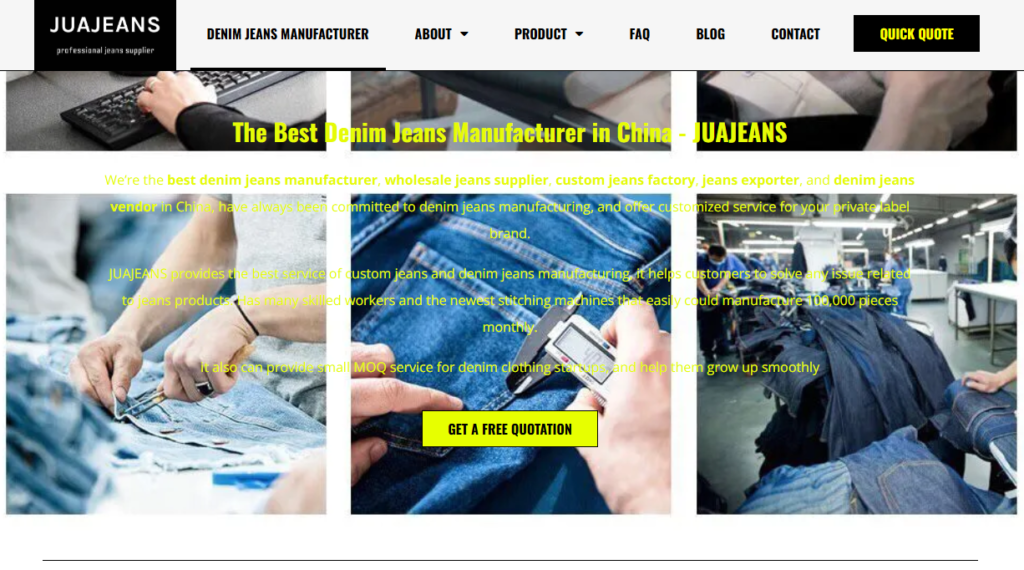
JUAJEANS can be a candidate if you need a straightforward denim execution path and want to move quickly from first sample to production. Your main risk with any low MOQ partner is hidden constraints: limited fabric library, a narrow wash menu, or weak fit engineering. The fastest way to surface those issues is to ask for their standard fit blocks, their measurement control method, and how they handle revisions between sample stages.
On their site, JUAJEANS positions itself as a one-stop jeans factory offering fabric sourcing, sampling, manufacturing, and shipping, while also claiming support for low MOQ and small quantity orders.
What to confirm early
- Fabric sourcing options, including Recycled Cotton options
- Fit block availability (mens, womens, unisex)
- Size grading method and measurement control
Official Site: JUAJEANS
4) ASPOP Denim
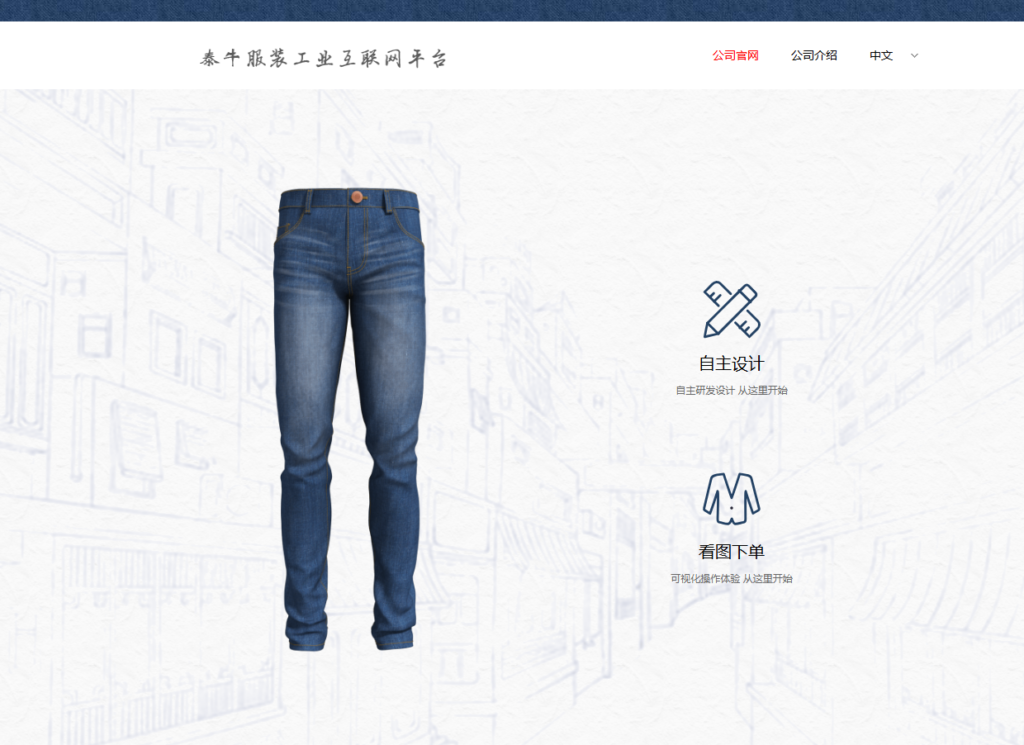
ASPOP Denim is worth considering when you want fashion-forward finishes and a factory that can support trend cycles. For low MOQ, your cost per unit usually rises, so the factory must help you reduce rework: clearer approvals, tighter wash standards, and a disciplined strike-off process.
It is commonly referenced as an integrated denim apparel operation in Shandong in industry-facing writeups and factory lists. Treat that as a prompt to verify directly on your first call: where washing happens, how they handle wash standards, and what their sample timeline is for complex effects.
What to ask for
- Wash swatch book or prior strike-offs
- Lab dip and trim approval workflow
- AQL target and rework policy
Official Site: ASPOP Denim
5)China-Jeans (CJ)

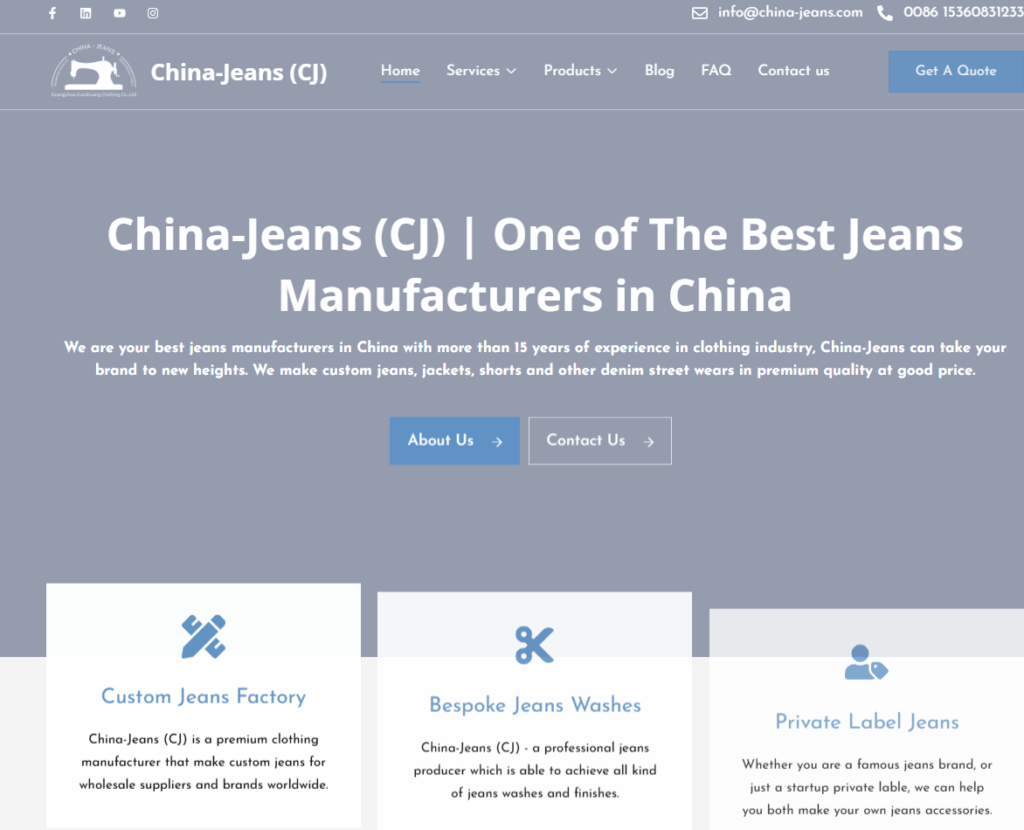
China-Jeans (CJ) can be a practical sourcing option if you need an accessible entry point into denim manufacturing. The main decision tension is speed vs. control: you can move fast, but you need to define your specs and QC gates to avoid drifting measurements and inconsistent handfeel.
On their site, China-Jeans describes OEM and ODM services, notes experience in custom denim jeans manufacturing, and explains that they run separate workshops for larger runs versus low MOQ orders, with an example MOQ shown as 300 pcs per style in one of their service descriptions.
Best way to run a safe first order
- Start with one style, one wash
- Lock fabric GSM and stretch ratio
- Require pre-production sample signoff
Official Site: China-Jeans (CJ)
Comparison Table: quick shortlist view
| Factory or program | Best for | MOQ signal | Speed signal | Key risk to manage |
|---|---|---|---|---|
| Sky Kingdom CodeDenim (1-of-1 Lab) | One-off statement pieces | Single piece | Development-focused | Fit capture and approvals |
| Sky Kingdom Micro-Run OEM (30-piece drops) | First drops and pre-orders | 30 units | Fast sampling windows | Size curve and reorder terms |
| Sky Kingdom Agile-Scale Manufacturing | Growth and replenishment | Test to scale | Real-time tracking | QC tolerances at scale |
| Valtin Apparel | OEM/ODM screening option | Varies by item | Depends on capacity | Outsourced wash control |
| JUAJEANS | Simple denim development | Low MOQ supported | Depends on pipeline | Fabric and grading consistency |
| ASPOP Denim | Trend-driven washes | Low MOQ varies | Sample cycle dependent | Strike-off discipline |
| China-Jeans (CJ) | Accessible sourcing start | Workshop-based | Often faster starts | Spec clarity and QC gates |
Conclusion
If you need true one-of-one creation, start with Sky Kingdom CodeDenim. If you need low MOQ manufacturing for a real drop, the Micro-Run OEM approach is the cleanest way to test demand with less inventory risk, then scale once you have proof.
If you care about Sustainable Denim, Circular Fashion, and credible material claims, bake documentation and traceability into your vetting process from day one. A practical reference point is Textile Exchange, which publishes market-facing materials reporting and helps frame what brands increasingly expect from supply partners.
FAQ
How do I calculate a realistic low MOQ for a first denim drop?
Start from what you can actually sell in 30 to 45 days, then add a small buffer for exchanges and content seeding. If you are running multiple washes or colorways, remember that MOQ often applies to each variation, not just the total. A safer approach is one style, one wash, and a tight size curve for the first run. Once you see sell-through, you can expand washes and fits with clearer demand data.
What files should I send a denim factory if I do not have a full tech pack?
Send clear front and back flats, a measurement spec, and at least one reference garment with notes on what you want changed. Include close-ups of stitching, pocket shape, hardware, and any distress placement with simple measurements (for example, 2.5 cm pocket offset). If you are targeting a specific handfeel, call out fabric weight targets in oz or GSM and the stretch ratio. The goal is to reduce interpretation, because denim construction details are easy to misread from mood boards.
Why do denim samples look good but bulk production comes back different?
Bulk can drift when fabric lots change, wash recipes are not tightly controlled, or shrinkage is not accounted for in pattern making. Another common cause is approving a strike-off that was done on a different fabric than bulk. Protect yourself by locking the fabric spec, requiring a pre-production sample made from bulk-intended fabric, and defining measurement tolerances for key points. Also insist on clear checkpoints: fabric approval, wash strike-off approval, and PPS approval before cutting all sizes.
What is the fastest way to test if a factory can handle complex washes?
Ask for a wash swatch set or prior strike-offs, then request one pilot sample using your chosen fabric and wash direction. Complex effects like acid wash, heavy distress, or laser placement can vary by operator, so you are checking repeatability as much as creativity. Include 3 to 5 must-match photos with close-ups and require the factory to document the wash recipe and process steps used. If they cannot explain how they control shade and placement, expect repeatability problems in bulk.
How can I reduce risk when ordering a small batch run for Custom Denim Jackets?
Keep variables low on the first PO: one fabric, one wash, one trim set, and one fit block. Use a physical reference jacket for the factory to match, and provide a measurement chart with tolerances for chest, sleeve length, shoulder width, and jacket length. Require photo plus measurement confirmation at two stages: after cutting (before sewing) and after washing (before final finishing). Small batch moves fast, so your approval gates must be written and time-boxed.
What should I ask about Sustainable Denim if I want sustainability without greenwashing?
Ask what fiber inputs are available, including Recycled Cotton blends, and what documentation supports each claim at the batch level. Request specifics on finishing methods, chemical management, and wastewater handling, since denim washing is often the biggest impact area. Ask whether they can provide traceability details for fabric lots and trims, not just a general factory statement. Finally, align your marketing claims to what you can prove with documents and repeatable process controls, not what sounds good on a hang tag.
How do OEM and ODM change what you should check in a low MOQ factory?
OEM means you bring the design and specs, so you must check pattern accuracy, measurement tolerances, and execution discipline across size grading. ODM means the factory contributes more design and development input, so you must check originality, IP boundaries, and whether their fit blocks match your target customer. In both cases, confirm your sample stages (proto, fit sample, wash sample, PPS) and who signs off each gate. If you want fast response, also confirm how changes are handled after approval so you do not trigger a full resample loop.