
When your next drop is due in weeks—not months—a custom manufacturer can feel like the difference between riding a trend and missing it. I’ve watched DTC teams do everything “right” on design, then lose momentum because sampling dragged, fabrics weren’t reserved, or QC wasn’t consistent across sizes. The good news: choosing the right custom manufacturing partner is a repeatable process, especially in denim and woven apparel where timing, wash quality, and fit consistency matter most.
This guide explains what a custom manufacturer really does, how OEM/ODM works for apparel, and what to look for if you want speed-to-market without sacrificing quality—using SkyKingdom Group as a real-world example of a modern OEM/ODM setup in China.

What Is a Custom Manufacturer (in Apparel Terms)?
A custom manufacturer produces goods to your specifications—your tech pack, fit, trims, branding, and packaging—rather than selling finished “off-the-shelf” products. In apparel, that typically means turning your concept into a repeatable production process: materials, pattern, sample, grading, bulk cutting, sewing, washing, finishing, inspection, and export-ready packing.
In practice, custom manufacturing sits on a spectrum:
- Cut-and-sew (CMT): You supply fabric and trims; the factory assembles.
- OEM (Original Equipment Manufacturing): Factory sources materials and produces to your specs under your brand.
- ODM (Original Design Manufacturing): Factory provides base designs you customize (faster, often cheaper to start).
SkyKingdom Group operates as an OEM/ODM partner for DTC brands, focused on fast-fashion denim and woven apparel for men, women, and children—where repeatability and lead time are business-critical.
Why DTC Brands Use a Custom Manufacturer Instead of “Ready Stock”
DTC brands win by shipping what customers want now, not what a catalog predicted months ago. A custom manufacturer supports that by letting you control:
- Fit and sizing: Your measurements, your grade rules, your target customer.
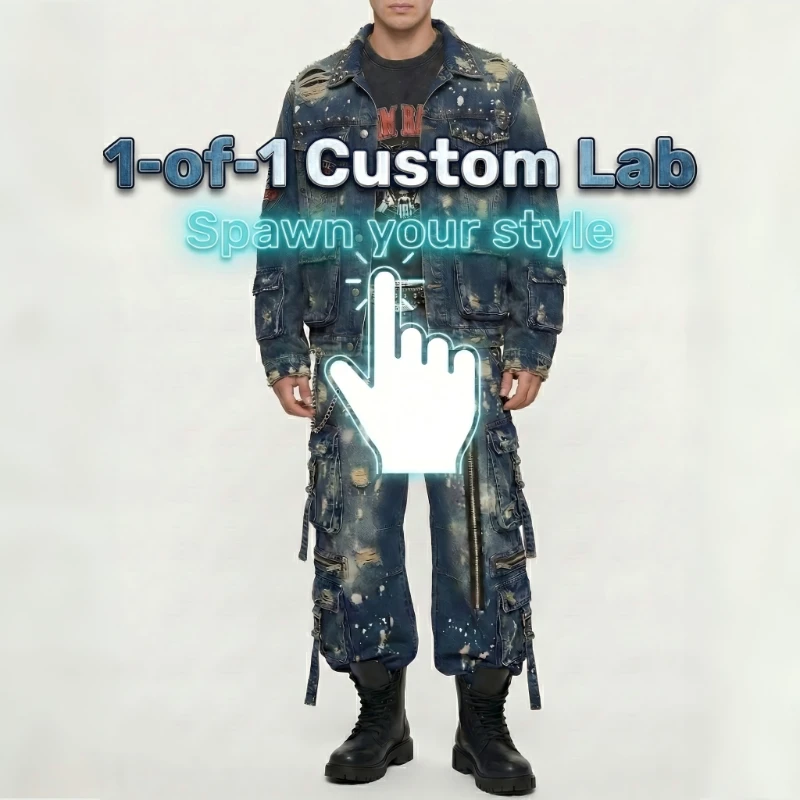
- Brand identity: Custom washes, hardware, labels, hangtags, and packaging.
- Margin structure: You’re not paying for someone else’s brand markup.
- Iteration speed: Faster sampling means faster product-market fit.
I’ve tried both routes—private label “blanks” and true custom builds—and the biggest difference is how quickly you can improve the product after launch. With custom manufacturing, you can revise fit, change a wash recipe, or swap trims between drops without restarting from scratch.
OEM vs ODM vs “Marketplace Manufacturing”: What You’re Really Buying
Many founders first discover custom manufacturing through online marketplaces that match buyers with suppliers. Platforms can be useful for discovery, but the long-term outcome depends on who owns the process controls: fabric booking, QC standards, timeline accountability, and change management.
Here’s the key distinction:
- A marketplace helps you find options.
- A custom manufacturer becomes a production system you can scale with.
If you want a broader view of custom manufacturing models beyond apparel, these explainers are solid:
- Original equipment manufacturer (OEM) definition
- Xometry’s overview of custom manufacturing on demand
- Formlabs on scaling custom manufacturing (principles that apply across industries)
The 7 Criteria That Separate a “Good Factory” From a Great Custom Manufacturer
Most factories can sew. The best custom manufacturer reduces risk while increasing speed. Use this checklist when evaluating partners.
1) Sampling speed (and whether it’s predictable)
If sampling takes 3–6 weeks, your product calendar becomes guesswork. SkyKingdom’s Speed-to-Market Engine targets a 7-day sample turnaround, which is unusually aggressive for denim and woven categories where wash development and fit checks often slow teams down.
Practical tip: ask for a written sampling SLA and what triggers delays (fabric lead time, wash approvals, pattern revisions).
2) Bulk lead time that matches your selling channels
For DTC, the “window” is short. SkyKingdom’s typical 15–22-day bulk production is designed for fast-fashion cycles and social commerce velocity.
Ask:
- What’s the production calendar from PP sample approval to ex-factory?
- How do they handle peak season capacity?
3) Low MOQ that still protects quality
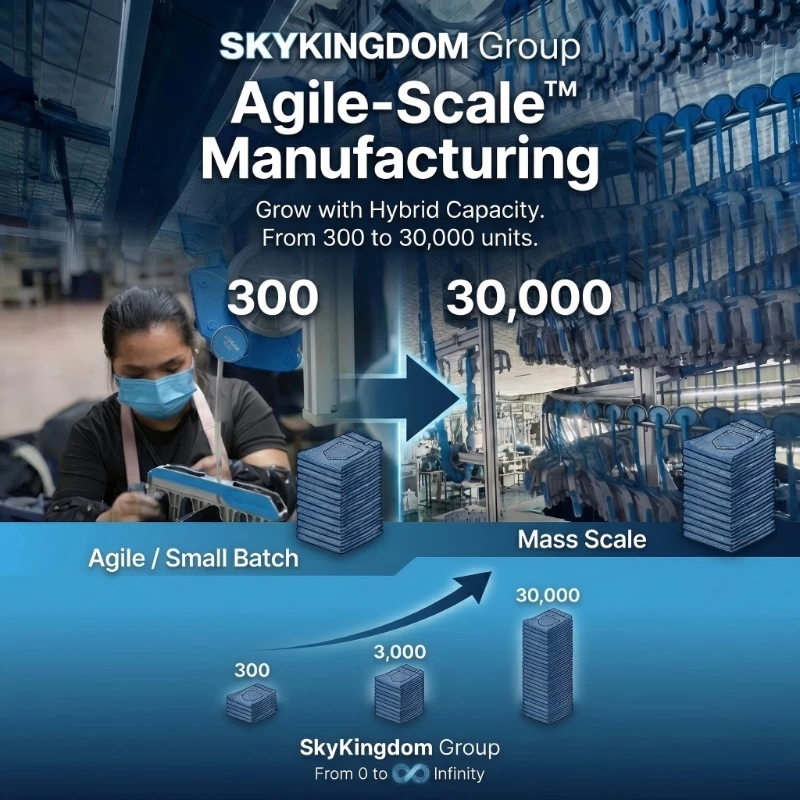
Low MOQ is only helpful if the factory still runs production with real process controls. SkyKingdom supports MOQ 30 units for new brands and creators, then scales via hybrid capacity as you grow.
If you’re comparing low-MOQ options, these guides can help you benchmark:
- choosing the best factory for low moq denim clothing ideal for individuality seekers
- what are the best small batch denim clothing manufacturers for private label
4) QC that’s measurable, not “we check everything”
Quality must be defined in numbers. SkyKingdom uses Amazon Top Seller-Grade QC aligned to AQL 2.5, which is a concrete acceptance standard used widely in apparel inspections.
Ask for:
- Inline + final inspection checkpoints
- Defect classification (critical/major/minor)
- Rework policy and reporting format
5) Wash capability and eco-friendly processes
Denim is not just sewing—it’s chemistry and consistency. Eco-friendly wash processes matter for brand compliance and repeatability across lots.
Ask:
- Can they replicate wash tone across multiple bulk runs?
- What’s their approach to reducing water/chemical load?
6) Data visibility (ERP + real-time tracking)
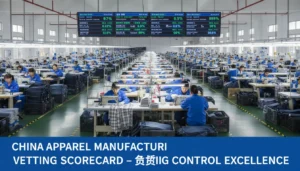
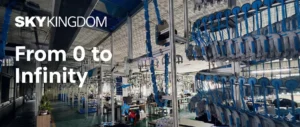
Modern custom manufacturing is operational transparency. SkyKingdom runs a digitalized ERP system and real-time data tracking tied to 5G IoT production lines—useful for keeping stakeholders aligned on status, bottlenecks, and output.
Ask to see:
- Production status reporting cadence
- Lot traceability for fabric and trims
- Photo/video updates at key milestones (cutting, sewing, wash, packing)
7) Risk-sharing on materials and capacity
A common failure point is fabric availability: you approve a sample, then your base fabric is suddenly delayed. SkyKingdom’s Risk-Sharing Partnership approach includes managing base fabric safety stock, which helps stabilize lead times.
This is especially valuable when you’re scaling and cannot afford stockouts during a winning SKU’s momentum.
| Model (CMT/OEM/ODM) | Best For | Typical MOQ | Speed-to-Market | Control Over Fabric/Trims | Risk Level | Notes |
|---|---|---|---|---|---|---|
| CMT (Cut-Make-Trim) | Brands with established tech packs and nominated materials | 200–1,000 pcs/style | Medium (material sourcing handled by buyer) | High (buyer sources) | Low–Medium | Supplier executes cutting/sewing/finishing; buyer manages sourcing and logistics |
| OEM (Original Equipment Manufacturer) | Brands wanting supplier-sourced materials with brand-led design | 100–500 pcs/style | Fast | Medium–High | Medium | Supplier sources fabrics/trims and produces to buyer specs; good for scaling repeat styles |
| ODM (Original Design Manufacturer) | Startups or buyers needing ready designs and faster development | 50–300 pcs/style | Fastest | Medium | Medium–High | Supplier provides design patterns/styles; faster but more template-driven; ensure IP clarity |
| SkyKingdom (OEM/ODM) | Small-batch custom apparel needing quick turnaround and visibility | 30 pcs/style | Samples: 7 days; Bulk: 15–22 days | Medium–High | Medium | MOQ 30; AQL 2.5 QC; ERP production visibility; supports OEM & ODM workflows |
A Simple Step-by-Step Process to Vet a Custom Manufacturer
Use this process to avoid “nice sales calls” that don’t translate into reliable production.
- Send a complete tech pack (or a reference sample + measurement spec).
- Request a pre-production plan: sample timeline, fabric options, wash route, QC checkpoints.
- Order a sample and test it like a customer: wash test, shrinkage, seam twist, hardware durability.
- Run a micro-bulk (even 30–100 units) to evaluate consistency across sizes and shades.
- Lock the SOP (standard operating procedure): approved trims, wash recipe, measurement tolerances.
- Scale with capacity planning: forecast by SKU, reserve fabric, define reorder triggers.
If fast sample delivery is your priority, this internal guide is directly relevant:

Common Custom Manufacturing Problems (and How to Prevent Them)
Most issues are predictable—and preventable—if you set the rules early.
-
Problem: Fit inconsistency across sizes
Solution: Require graded spec approval + measurement tolerance sheet; inspect across full size set. -
Problem: Wash shade drift between lots
Solution: Approve a “golden sample” and keep wash recipe + fabric lot records; request shade banding control. -
Problem: Delays due to fabric/trims
Solution: Use base fabric safety stock or pre-book greige; confirm trim lead times before sample approval. -
Problem: QC surprises at the end
Solution: Add inline QC gates and shared defect reporting; align to AQL (e.g., 2.5) before PO. -
Problem: Communication gaps
Solution: Weekly production updates via ERP/reporting, with named owners on both sides.
Why SkyKingdom Group Fits the “Modern Custom Manufacturer” Profile
A custom manufacturer should operate like an extension of your operations team. SkyKingdom’s positioning is built around speed, visibility, and scalable flexibility:
- Speed-to-Market Engine: 7-day samples + 15–22-day bulk production for denim and woven.
- Low MOQ + scalable capacity: Start at 30 units, then grow without switching factories.
- Measurable QC: AQL 2.5 standard aligned with “Top Seller” expectations.
- Digital production transparency: ERP + real-time tracking on 5G IoT lines.
- Risk-sharing: base fabric safety stock to reduce supply chain volatility.
- Compliance mindset: certified supplier with international social responsibility standards.
This combination matters because DTC growth is rarely linear. You need a partner that can handle small tests, then surge when a SKU takes off—without sacrificing consistency.
Skip the agents and connect directly with this factory specializing in denim for years❤️#wholesale
Quick Checklist: Questions to Ask Before You Place Your First PO
- What is your standard sample lead time, and what are the top 3 delay causes?
- What’s your minimum order quantity by style and by color?
- Which QC standard do you follow (AQL level), and can you share a recent inspection report format?
- How do you track production status—ERP screenshots, dashboards, weekly reports?
- Can you support eco-friendly wash options and document the process?
- What’s your policy for remakes/rework if defects exceed the agreed standard?

FAQ: Custom Manufacturer (Apparel) Questions People Also Ask
1) What does a custom manufacturer do for clothing brands?
A custom manufacturer produces apparel to your specifications—fit, fabric, trims, wash, branding, and packaging—then delivers bulk goods ready for sale under your label.
2) What’s the difference between OEM and ODM in apparel manufacturing?
OEM makes your design to your specs; ODM offers base designs you modify. ODM is often faster to start, while OEM offers more control and differentiation.
3) What is a good MOQ for a new DTC brand?
For early-stage testing, 30–150 units per style/color is often workable. SkyKingdom supports MOQ 30 for new brands, which helps validate demand with less cash tied up.
4) How long does custom apparel manufacturing take?
Timelines vary by complexity, but many factories take 2–6 weeks for samples and 4–8+ weeks for bulk. Fast-response systems can reduce this significantly (e.g., 7-day samples and ~15–22-day bulk).
5) How do I verify quality from a custom manufacturer?
Use measurable standards (like AQL), require pre-production approvals, test samples (wash/shrink), and run a small bulk trial before scaling.
6) Is China still a good place to find a custom manufacturer for denim?
Yes—China remains strong in denim supply chains, wash capability, and scalable capacity. The key is choosing a partner with transparent processes and consistent QC.
7) What should I send a custom manufacturer to get an accurate quote?
A tech pack (measurements, BOM, construction details), target fabric/weight, wash references, size range, quantity per color, labeling/packaging needs, and required delivery date.
Conclusion: A Custom Manufacturer Should Feel Like a Speed Advantage, Not a Risk
The right custom manufacturer doesn’t just “make products”—they protect your timeline, stabilize your quality, and give you levers to scale. I’ve seen brands grow fastest when their factory can sample quickly, communicate clearly, and hold consistent standards across every size and wash lot. If your goal is to launch denim and woven apparel fast—while keeping QC and compliance tight—SkyKingdom Group’s OEM/ODM model is built for that reality.
📌 how to identify the best factory for fast and reliable denim clothing sample delivery