
Jeans are the one product everyone thinks they understand—until the first sample comes back with twisted legs, uneven wash marks, or a fit that “looks right” on paper but feels off on-body. If you’re new to manufacturing jeans, you’ll quickly learn denim is a chain of small decisions that compound: fabric choice affects shrinkage, shrinkage affects pattern, pattern affects wash, and wash affects final measurements. I’ve seen DTC launches hit schedule and margin targets simply by tightening a few early specs—and I’ve also watched great designs miss their ship date because the brand waited too long to lock the wash recipe. This guide breaks down the real steps, typical costs, and the most common pitfalls in manufacturing jeans.

What “Manufacturing Jeans” Really Includes (Not Just Sewing)
In professional terms, manufacturing jeans covers two connected processes: making the denim fabric and making the garment. Many brands only engage with the garment stage (cut-and-sew + wash + finishing), but your outcomes depend heavily on fabric variables like yarn quality, weave, and dye method. Mills such as Cone Denim publish sustainability and innovation updates that highlight how much the fabric stage influences performance in wear and wash.
To avoid surprises, treat jeans production as four systems working together:
- Material system: denim, pocketing, thread, rivets, zipper/button, labels
- Fit system: pattern, grading, shrinkage control, tolerances
- Wash system: desize/soften, abrasion, tint, bleach, resin, drying
- Quality system: inline checks, AQL inspection, measurement audits
Step-by-Step: The Core Workflow of Manufacturing Jeans
Most factories follow a similar path, but the order and controls matter. Below is the high-level flow used in efficient denim programs (including SkyKingdom’s “Speed-to-Market Engine” approach for fast sample and bulk cycles).
1) Tech Pack + BOM (Your Blueprint)
A strong tech pack prevents “factory guessing,” which is the #1 cause of re-sampling. Specify:
- Measurement chart with tolerances
- Construction callouts (stitch type, SPI, seam allowance)
- Trim list (BOM) with placement + approved colors
- Wash artwork references + target handfeel
- Packaging requirements (folding, polybag warning, carton marks)
If you’re optimizing margin while keeping quality stable, this internal guide is useful: how to balance quality and cost in denim clothing manufacturing for e commerce in denim clothing manufacturing for e commerce.
2) Fabric Selection + Testing (Shrinkage Is the Boss)
Fabric decisions drive comfort, durability, and post-wash measurement stability. Typical options include:
- Rigid denim (100% cotton): strong structure, higher shrink variability
- Stretch denim (cotton + elastane): comfort, needs recovery testing
- Selvedge denim: premium story, slower throughput, higher cost
Before cutting bulk, confirm:
- Shrinkage (warp/weft) after intended wash
- Skew/twist tendency
- Colorfastness and crocking (rub-off)
3) Pattern + Grading + Size Set Sampling
Jeans fit is unforgiving because consumers know how denim should feel. In my experience, the fastest way to reduce revisions in manufacturing jeans is to run a size set early (not just one “sample size”), because grading can introduce unexpected hip/thigh issues.
Key checkpoints:
- Front rise/back rise balance
- Knee placement (especially for slim/taper fits)
- Leg twist risk (grain alignment + wash agitation)
4) Cutting + Bundling (Accuracy Starts Here)
Cutting is where small errors become expensive. Factories typically:
- Relax fabric before spreading
- Use markers for yield control
- Bundle by size/shade lot to reduce mismatch
Ask your partner how they control shade variation between panels—shade banding can ruin a premium wash story.
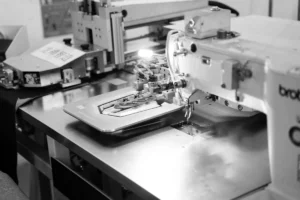
5) Sewing + Core Construction
Sewing in manufacturing jeans is not “just stitch it together.” You’re building stress points that must survive wear:
- Pocket bags, coin pocket, back yoke alignment
- Fly construction (zipper vs button fly)
- Belt loops and waistband tension
- Bar-tacks at pocket corners and fly base
Look for consistent SPI and thread tension. If you need guidance on getting the first sample right quickly, see: how to identify the best factory for fast and reliable denim clothing sample delivery.
How Levi’s JEANS is made I Jeans Manufacturing Process
6) Washing + Drying + Finishing (Where Jeans Become “Your” Jeans)
The wash is your brand signature—but it’s also where measurement drift happens. Common stages:
- Desizing/softening
- Abrasion (whiskers, sanding) or laser effects
- Tinting/overdye or bleach effects
- Drying and optional resin for 3D effects (with safety controls)
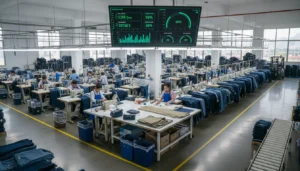
Eco-friendly wash processes matter for compliance and brand reputation. Advanced lines using real-time tracking (like SkyKingdom’s digitalized ERP + data capture) can reduce variation between lots by locking repeatable parameters.
7) Final QC + Measurement + Packing (AQL Matters)
Quality isn’t only “no defects.” It’s consistent fit, wash, and labeling. Many export programs use AQL 2.5 as a practical standard for finished goods inspection. Ensure your QC includes:
- Measurement audit against spec and tolerances
- Wash appearance vs approved standard
- Hardware function tests (zippers/buttons)
- Label/size accuracy and packaging checks
Cost Breakdown: What Drives the Price of Manufacturing Jeans?
Costs vary widely by region, wash complexity, and MOQ. The most useful way to think about manufacturing jeans cost is to separate “fixed” development costs from “variable” unit costs.
Typical cost drivers:
- Denim price & weight (oz): heavier denim often costs more and sews slower
- Wash recipe complexity: more steps = more labor/time/risk
- Trim package: custom hardware, leather patch, special labels
- Fit & construction: extra panels, cargo pockets, double-knee, etc.
- Order size (MOQ): small runs carry higher per-unit overhead

If your goal is to source profitably for online sales, this internal resource aligns well: the most cost effective ways to source jeans for your online store.
Common Mistakes in Manufacturing Jeans (and How to Avoid Them)
Most problems trace back to unclear specs, untested shrinkage, or rushing approvals. Here are issues I’ve repeatedly seen during denim programs—and the practical fix for each.
| Mistake | What It Causes | How to Prevent It |
|---|---|---|
| No shrinkage test before bulk | Size drift after wash | Test fabric with intended wash, lock shrink allowance |
| Approving wash from photos only | Mismatch vs bulk | Approve with physical standard + lightbox |
| Loose tolerance chart | High returns | Define critical points + tighter tolerances |
| Trim spec missing | Wrong hardware/branding | BOM with codes + placement |
| No size set | Grading issues | Run size set early |
Additional quick-prevention checklist:
- Lock your wash standard (a physical “golden sample”) before bulk
- Require shade-lot control for denim rolls
- Confirm needle type/thread spec to reduce seam damage
- Align packaging with channel rules (especially marketplaces)
How SkyKingdom Group Fits into Modern Jeans Manufacturing
For DTC brands, speed and consistency are usually the bottleneck—not ideas. SkyKingdom Group is built for fast-fashion denim and woven programs with:
- 7-day sample turnaround and 15–22-day bulk production
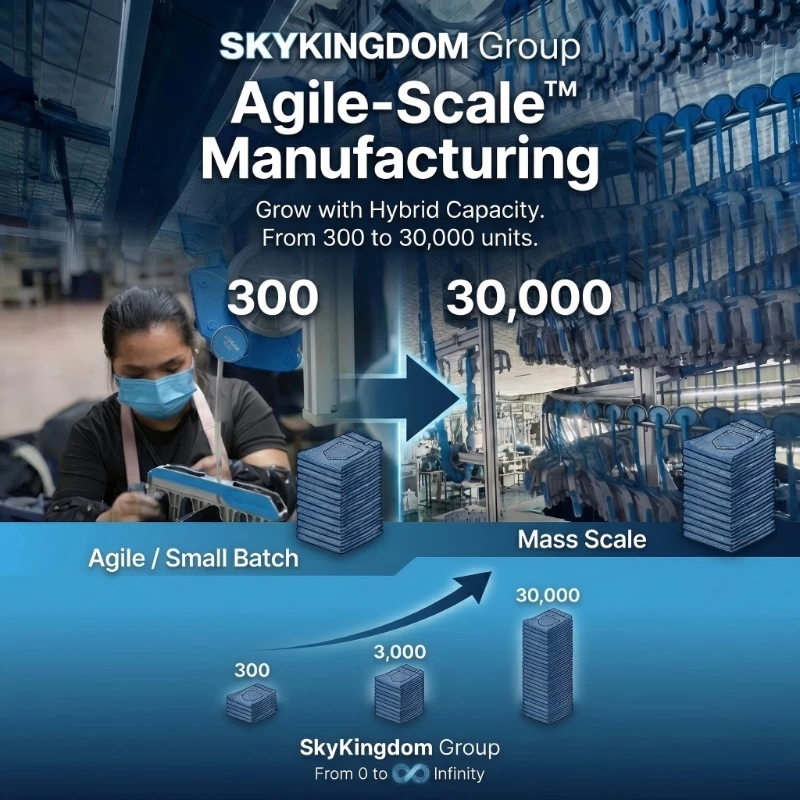
- Low MOQ (30 units) for creators and new brands
- Hybrid scalable capacity for growth phases
- “Amazon Top Seller-Grade QC” using AQL 2.5
- Digital ERP visibility and real-time production tracking
- Eco-friendlier wash processes and certified social compliance
In manufacturing jeans, I’ve found that timeline reliability improves most when the factory can manage fabric planning and production data in one system. SkyKingdom’s risk-sharing approach—holding base fabric safety stock for repeat programs—can reduce delays when a style suddenly performs well and needs a fast refill.

Conclusion: A Cleaner Path to Manufacturing Jeans (Without Expensive Surprises)
Manufacturing jeans is a disciplined process: test shrinkage early, lock a wash standard, run a size set, and treat QC as measurement + appearance + performance—not just defects. When you do that, denim stops being unpredictable and becomes scalable, even for small MOQs and fast drops. If you’re planning your next jeans launch, share your target fit (straight, slim, baggy, flare) and wash inspiration in the comments—then we can map the best development path.
📌 the ultimate guide to quick denim clothing sample production for fashion brands
FAQ: Manufacturing Jeans
1) What is the process of manufacturing jeans from start to finish?
It typically runs from tech pack and fabric testing to pattern/grading, cutting, sewing, washing/finishing, then final QC and packing. Wash and shrinkage control are key to consistent sizing.
2) How much does it cost to manufacture jeans per piece?
Costs vary by denim quality, wash complexity, trims, and MOQ. Fabric and wash/finishing are usually the biggest components of unit cost.
3) What’s the difference between denim manufacturing and jeans manufacturing?
Denim manufacturing is the textile stage (yarn, weaving, dyeing, finishing). Jeans manufacturing is the garment stage (cut/sew, wash, finishing, QC).
4) Why do jeans twist after washing?
Leg twist often comes from fabric skew, grain alignment issues, and aggressive wash/dry settings. Testing fabric and controlling cutting alignment reduces the risk.
5) What is AQL 2.5 in jeans manufacturing?
AQL 2.5 is a common finished-goods inspection level that defines acceptable defect limits in a batch. It helps standardize QC decisions across production.
6) How do I choose the right denim for my brand’s jeans?
Start with fit and wear goal (rigid vs stretch), target handfeel, wash look, and price point—then test shrinkage and recovery with your intended wash recipe.
7) What is a realistic production timeline for manufacturing jeans?
Sampling can take days to weeks depending on revisions; bulk commonly takes a few weeks after approvals and material readiness. Fast-response partners can shorten this with strong material planning and real-time tracking.
Authoritative sources worth reviewing
- Cone Denim (denim mill insights and sustainability updates)
- Candiani Denim – guide to the denim manufacturing process
- Todd Shelton: Made in USA jeans brands and manufacturing context