

Introduction
A trend spike hits, your ads finally work, and then the worst message shows up: “Sold out” with no realistic restock date. In denim, that gap usually is not one mistake.
It is a chain of small delays across sampling, fabric, washing, QC, and packing that turns a 2-week plan into a 60-day wait. Get it wrong and you pay twice: missed sales now, then markdowns later when the trend cools.
This guide shows you how to build a fast response, quick response replenishment system that works with Sky Kingdom, which supports low MOQ and small batch tests, and still protects quality and Sustainable Denim goals.
Diagnose Slow Replenishment
Slow replenishment is rarely fixed by “switching factories” first. Before you change suppliers, you need an end-to-end lead time audit that separates what is slow because of your inputs from what is slow because of capacity or process. Start by pulling your last two seasons of timelines and writing the actual dates for each milestone: design freeze, tech pack ready, first sample request, first sample received, fit comments sent, size set approved, bulk fabric approved, PP sample approved, bulk cut start, wash start, final QC, ship-ready.
Next, classify delays into three buckets:
- Decision delay: approvals, comment cycles, unclear wash intent
- Material delay: fabric availability, trims, wash chemicals
- Capacity delay: sewing lines, laundry slots, QC bandwidth
Finally, make sure you separate sampling vs bulk vs reorder behavior. If sampling takes 3 rounds, your reorder will still be slow even with a fast bulk line, because you never get a stable “approved recipe” for repeat production. The fastest teams keep a “repeatable style packet” that includes post-wash measurements, shrinkage/torque outcomes, wash formula targets, and a defect photo library tied to AQL gates.
Build a Fast Response Sourcing Plan
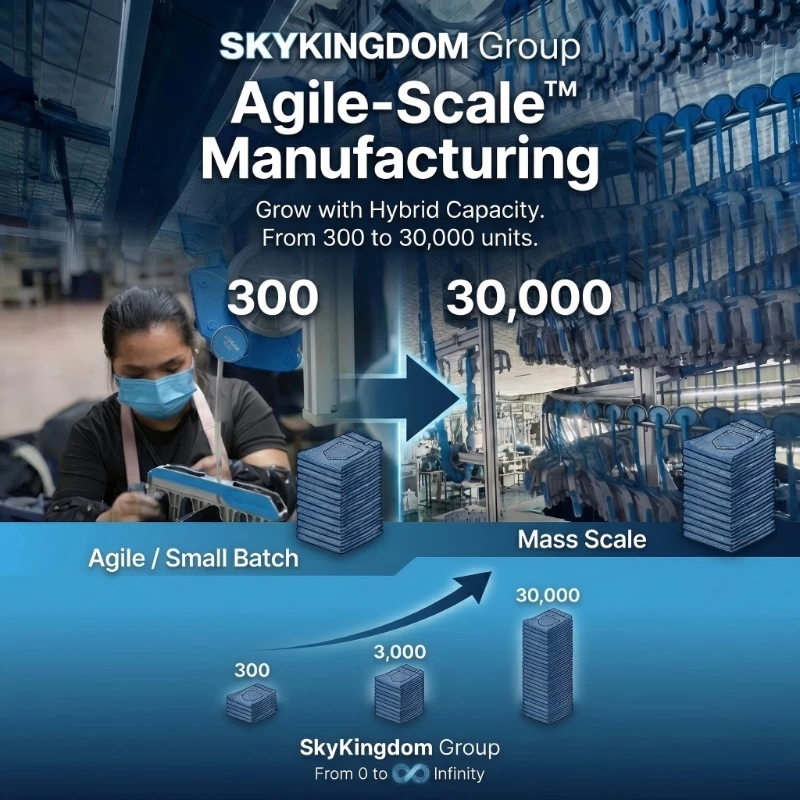
Fast response sourcing is a system, not a vendor list. The goal is to run your test lane without blocking your scale lane, while keeping enough shared components (fabric families, trims, wash recipes) to accelerate reorders. Start with dual sourcing by function, not by brand: one partner or lane optimized for micro runs and sampling speed, and another lane optimized for stable bulk throughput. SkyKingdom describes a “Smart Line” approach and scaling range (for example, 300 to 30,000 pieces) that fits the idea of a scale lane built for repeat production.
Then, lock the real bottlenecks:
- Greige or base denim families: pre-approved weights and stretch
- Trims and hardware: zippers, rivets, labels in safety stock
- Wash capacity: reserved slots for your top styles
To reduce stockouts without overbuying, use reorder triggers tied to your real lead time, not an optimistic goal. A practical rule many DTC teams use is to plan reorder action when 30% to 40% of inventory remains, because production plus inbound logistics still consumes time even in a quick response program.
Micro-Run Drops for Demand Proof
Small batch is most powerful when you treat it like an experiment with a scorecard. Your drop should answer a specific question: does a new fit block convert, does a wash story reduce returns, does a creator audience buy at your target size curve, does a TikTok Shop Fulfillment window justify a faster calendar. Because denim is fit-sensitive, your micro run needs extra discipline: a clear measurement table, a post-wash measurement plan, and a size-set approval step even when the quantity feels “too small to bother.” Otherwise you only prove that your marketing works, not that your product is repeatable.
Use virtual sampling assets to sell before you scale. SkyKingdom describes AI virtual sampling and lookbook-ready visuals as part of its brand launch positioning, which pairs naturally with a pre-sell or waitlist drop model.
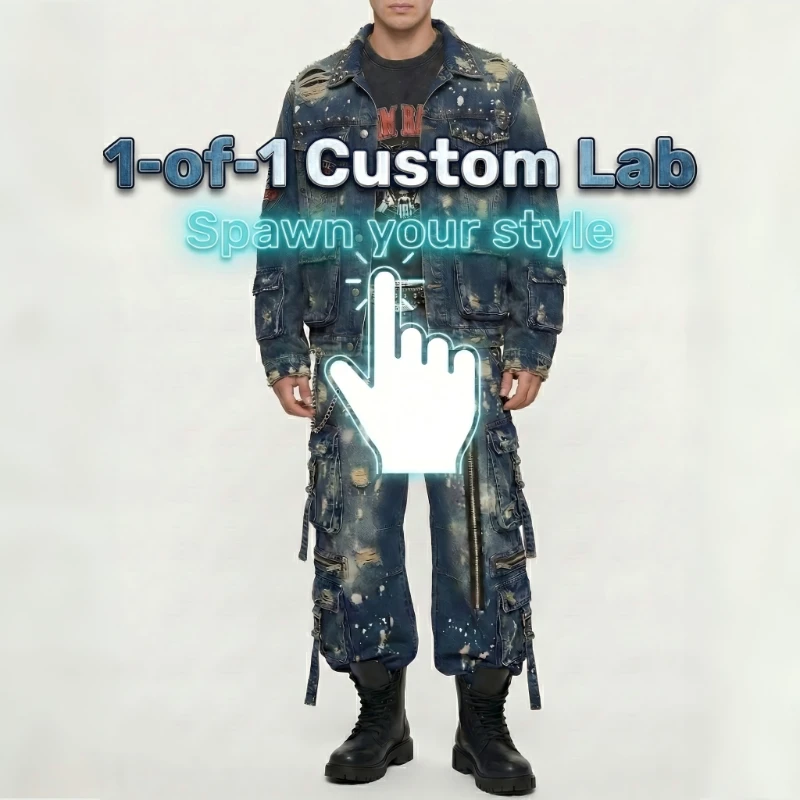
SkyKingdom product categories also show fashion-forward denim pieces that can be used as visual references when you are building a drop concept, such as “Heavy-Duty Deconstructed Patchwork Wide-Legs” in its Custom Denim Jeans catalog. This matters because your test lane often wins or loses on creative differentiation, not on supply chain theory.
On-Demand Manufacturing Workflow
On-Demand Manufacturing is not just “make one unit.” It is a workflow that turns unstable creative inputs into stable production outputs without turning every order into a one-off fire drill. The key is to standardize what must be standardized: measurement definitions, seam and stitch callouts, wash intent language, and approval checkpoints. If you start from visuals (AI concepts, NFTs, digital art, moodboards), you still need a translation layer that defines what the factory will measure and what the QC team will reject.
Build the workflow as four gates:
- Gate 1: design intent, reference images, materials allowed
- Gate 2: measurement table and tolerances (pre and post wash)
- Gate 3: wash recipe targets and shade range control
- Gate 4: final AQL inspection and ship-ready packing
SkyKingdom positions a lab-style approach with fabric testing (shrinkage and torque, color fastness, Fabric R&D) and AQL-based QC. Treat those as enforceable checkpoints, not marketing words, and your one-off or creator-led orders become repeatable.
Agile-Scale Replenishment Engine
Agile-scale replenishment is what happens after you prove demand. The mistake is to treat scaling like a new project. Instead, build triggers and capacity allocation rules while you are still in the small batch phase. A good replenishment engine answers: when do we reorder, how many do we reorder, and what capacity is reserved so the reorder does not wait behind new development.
Define three triggers:
- Inventory trigger: reorder at 30% to 40% remaining
- Velocity trigger: reorder when 7-day sell-through spikes
- Returns trigger: pause scale if return rate jumps
Returns are a silent replenishment killer because they distort demand signals and tie up cash in reverse logistics. The National Retail Federation estimated that 15.8% of annual sales would be returned in 2025, which is why fast response plans need a “fit and wash quality” guardrail, not only speed.
SkyKingdom describes hybrid flexibility and always-on speed narratives, including reorder acceleration claims and line allocation concepts. Use that idea operationally: reserve a percentage of line time for reorders of approved winners, and protect it from being consumed by new style development.
How to Choose Alternative Denim Suppliers Faster
Lead time: measure sampling, bulk, and reorders separately
To choose suppliers without wasting weeks, require step-level timelines instead of one headline promise. Ask for sampling lead time by complexity (simple wash vs heavy finish), bulk lead time for repeat styles vs new styles, and reorder lead time when materials are already approved. SkyKingdom publishes example speed lanes for samples and bulk on its manufacturing content, which is the right format: steps and ranges, not a single number.
Use a one-page template:
- Sample: first proto, revisions, size set
- Bulk: fabric ready date, PP approval, cut to pack
- Reorder: capacity reservation and material readiness
Capability: washing, laser, ozone, and finishing capacity
Denim replenishment often fails in the laundry, not in sewing. Therefore, evaluate whether a supplier controls washing in-house or relies on external capacity, and how they manage peak seasons. Also check whether the supplier can repeat key finishes (laser whiskers, resin looks, coatings) consistently across lots, because inconsistency creates rework loops that erase your quick response gains.
A practical checklist:
- Wash development lab and recipe tracking
- Shade band definition and tolerance control
- Finishing options: laser, distressing, coating
Simple decision table
| Scenario | Primary goal | Supplier must prove | Best lane | Trade-off |
|---|---|---|---|---|
| Viral restock | Fast response | Reserved capacity | Scale lane | Less design change |
| New fit test | Reduce risk | Fast sampling | Test lane | More iterations |
| Complex wash | Consistency | Recipe control | Mixed | Longer dev |
| Sustainable Denim launch | Claims integrity | Material traceability | Mixed | Longer sourcing |
| TikTok Shop Fulfillment | Speed + packing | Ship-ready QC | Scale lane | Tight SOP |
Conclusion
Faster replenishment is not a single supplier choice. It is a system that combines OEM or ODM communication discipline, a two-lane plan for low MOQ and scale, and a Digital Supply Chain view of milestones so you can act early. Start by diagnosing where time disappears, then design micro-run drops and On-Demand Manufacturing gates that produce repeatable winners. Once you have winners, add triggers, reserved capacity, and AQL-based QC so quick response stays reliable.
Frequently Asked Questions
How do I compare suppliers for faster replenishment without switching too early?
Start by mapping your current lead time into steps and locating the real bottleneck before you change factories. If sampling approvals are slow, switching bulk suppliers will not fix your calendar because you will still miss PP approvals and size-set signoff. Compare suppliers on the one or two steps that actually cause the delay, such as wash capacity, fabric readiness, or in-line QC throughput. Ask for step-level timelines and a sample-to-bulk handoff plan, not just a single promised delivery date. Finally, run a controlled pilot style so you can measure responsiveness and defect handling before you migrate core volume.
What does fast response or quick response mean in denim production?
Fast response or quick response typically means shorter sampling timelines, shorter bulk lead times, and faster reorders with capacity reserved for replenishment. It should show up as step-level speed, such as faster pattern to proto, fewer days waiting for wash slots, and clear reorder lanes for repeat styles. A true quick response program also reduces rework loops by tightening approvals and QC checkpoints, not by skipping them. In practice, you should expect separate timelines for new development vs repeat production, because repeatable styles can move much faster. If a supplier only offers a single headline promise, you cannot validate whether it is real.
How can low MOQ and small batch production reduce replenishment risk?
Low MOQ and small batch production reduce risk by letting you test demand with smaller inventory exposure, then scale only what sells. This approach works best when each small run is treated as a structured experiment with measurements, wash intent, and QC criteria locked upfront. The tradeoff is you will manage more frequent production cycles, which increases the need for standardized approvals and repeatable trim and wash recipes. Small batch can also reveal fit or wash problems early, which prevents expensive bulk rework later. If you skip discipline because quantities are small, you will only create noise, not usable learnings.
What information should I prepare to speed up OEM or ODM communication?
Provide a measurement table with clear points of measure and tolerances, plus reference photos that match the intended fit and silhouette. Include wash intent in plain language (shade, contrast, whisker placement, hand-feel) and list any must-have finishing techniques like laser or distressing. Specify trim preferences such as zipper type, rivet placement, and label locations, because trims frequently become the hidden critical path. Even if you do not have a full tech pack, a structured spec sheet reduces back-and-forth and prevents avoidable sampling delays. For ODM, also clarify what you are willing to accept from existing blocks vs what must be custom.
How do TikTok Shop Fulfillment needs change denim replenishment planning?
TikTok Shop Fulfillment pressures your denim calendar because trend cycles are shorter and sales velocity can spike overnight. You need faster sampling and a clear reorder trigger so you do not wait for weekly reporting to react. Packaging, labeling, and ship-ready QC must also be defined early, because a finished garment that is not fulfillment-ready still cannot ship. Plan for higher volatility by separating test and scale lanes so experiments do not block winners. Finally, track return and exchange reasons closely, because rapid viral growth can hide fit issues until they become a wave of returns.
How can I keep Sustainable Denim goals while improving replenishment speed?
You can keep Sustainable Denim goals by locking acceptable materials early and pre-approving test standards and wash recipes for those materials. Recycled Cotton and Organic Denim can behave differently in shrinkage, color uptake, and hand-feel, so early lab testing prevents later resets. Build a materials decision tree that includes acceptable fiber blends, minimum documentation needs, and what you will do if a preferred material is unavailable. Fast replenishment also improves sustainability when it reduces overproduction, because you can restock proven winners instead of guessing demand. The key is to make sustainability constraints part of the initial spec, not a last-minute change.
What are the most common QC mistakes that slow denim reorders?
The most common QC mistakes are unclear tolerances, missing post-wash measurement rules, and inconsistent defect classification. If you do not define what is acceptable for shade variance or distress placement, you will spend days in disputes instead of shipping. Skipping in-line checks forces defects to be found at final inspection, which creates rework and repacking that destroys quick response timelines. Another mistake is failing to connect defects to root causes, so the same issue repeats across reorders. To keep reorders fast, you need stable specs, repeatable wash outcomes, and a consistent AQL-based inspection rhythm.