
I Want to Make a Curved-Leg Loose Denim Pant — What Do I Need to Get Right So It Survives Production and the First Wash?
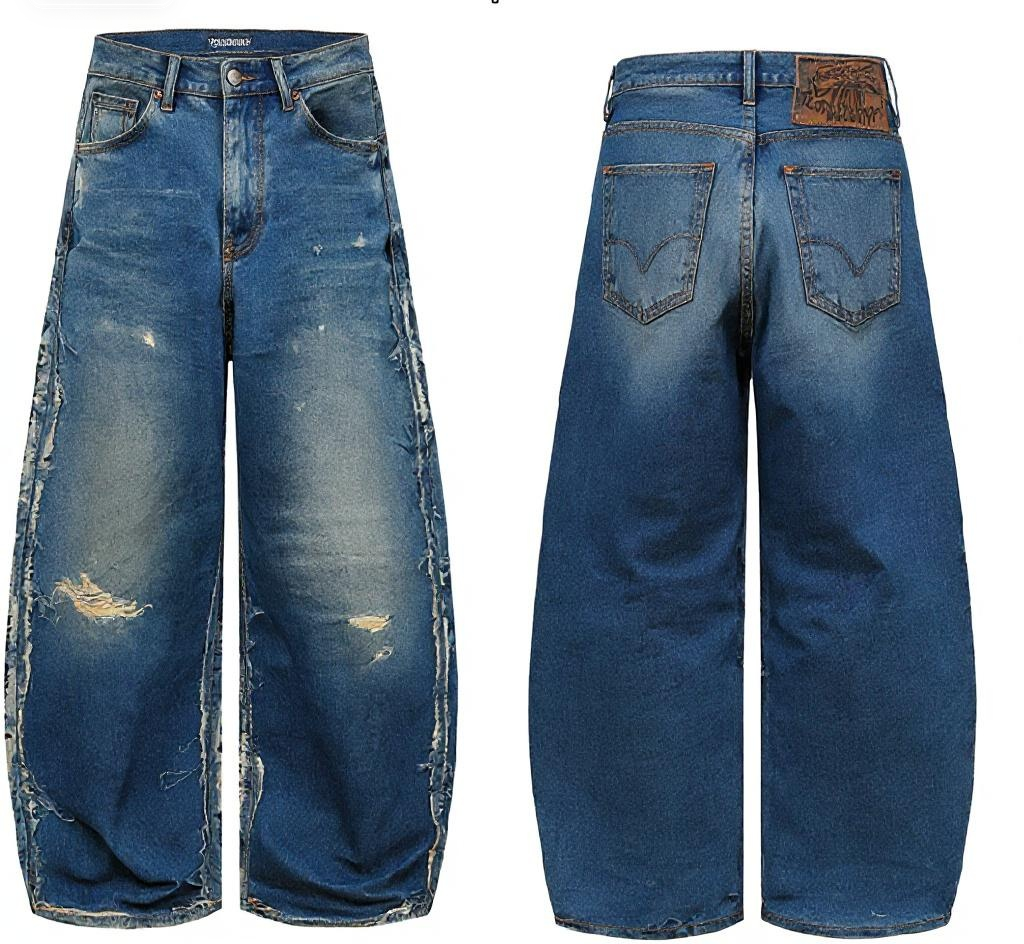
If you are a creator-led founder developing a curved-leg (arc or “banana”) loose denim pant on a first run of roughly 500–2,000 units, the thing you most need to get right is not the sample — it is whether the curved silhouette holds symmetrically and keeps its shape after washing, across every unit, not just the one you approved. The curve is what makes a loose pant look shaped instead of bulky, but it is also what makes the style hard to mass-produce: curved panels distort unevenly when wet, so a prototype that looks perfect can come back from bulk with twisted legs, left-right asymmetry, or an arc that has shifted. You do not need to know how to make the pattern yourself. You need to know enough to ask the factory the right questions — has it produced a curved silhouette in bulk before, how does it compensate the pattern for shrinkage at the curve, what left-right tolerance can it hold — and to gate your production run on a washed, movement-tested sample rather than a pristine dry one. This guide translates the technical reality of the curved silhouette into the decisions and checks a founder actually owns.
The Scenario You Will Recognise
You are a creator-led founder. You have an audience and a strong eye, and you have fallen for the curved-leg silhouette — that arc through the leg that makes a loose pant look intentional and shaped rather than shapeless. You found a factory, the sample came back beautiful, and you are ready to place a first order of a few hundred to a couple of thousand pairs. Everything feels solved.
This is exactly the moment the curved silhouette is most dangerous, and it has a name in the trade: the sample seduction trap. As one denim production guide puts it bluntly, brands sign bulk contracts based on an immaculate hand-tweaked prototype, then receive production cartons plagued by asymmetrical placements, crooked seams, and severe fabric twisting after the first wash. The sample was made slowly and carefully by one skilled person; bulk is made fast across a line, and the curve — the very thing you fell for — is the feature most likely to drift. The gap between a perfect sample and a consistent run is where a first-time founder loses money, and on a curved style that gap is wider than on a straight-leg jean. This guide is about closing it without needing to become a pattern maker yourself.
The Direct Answer: The Curve Is a Feature and a Risk at the Same Time
What makes a curved-leg pant distinctive is a gentle longitudinal curve built into the leg — pulled inward around the knee and back outward toward the hem — so the silhouette reads as shaped even when it is loose. Brands at every level use contoured and curved cutting to flatter the body rather than hang straight off it. That curve is a genuine design advantage: it solves the problem that loose pants easily look bulky and lineless, and it modifies the leg shape without compression.
But the same curve is the production risk. A straight-leg jean is forgiving — the panels are simple and the grain runs cleanly. A curved panel fights the fabric: the grain no longer runs straight down the leg, the shape distorts unevenly when the fabric is washed and relaxes, and any small inconsistency between the left and right leg is immediately visible because the eye reads asymmetry in a curve far more easily than in a straight line. On a curved silhouette, “it looked perfect in the sample” is not evidence the style will mass-produce well — it is the single most common prelude to a bad bulk run. The founder’s job is not to engineer the curve; it is to recognise that the curve concentrates risk in three specific places — symmetry, shrinkage, and wash — and to make sure the factory has handled all three before bulk is cut.
Risk One: Left-Right Symmetry Across the Whole Run
The first thing the eye catches on a curved pant is asymmetry — one leg arcing differently from the other, or the side seams sitting differently left to right. On a single hand-made sample this is easy to control. Across thousands of units cut and sewn on a line, it is not, unless the factory has a system for holding it.
You do not need to specify how that system works, but you do need to ask two things. First, what maximum left-right difference will the factory hold to, as a written tolerance? A curved style needs a tight, agreed symmetry tolerance because the deviation that would be invisible on a straight leg is obvious on an arc. Second, how do they hold it across the line? The credible answer involves alignment notches on the panels and consistent positioning during cutting and sewing — the practical mechanisms that keep an arc consistent at volume. A factory that cannot describe how it controls symmetry on a curved style, or that waves the question away with “don’t worry, our samples are perfect,” is telling you it manages this at the sample level but not the bulk level. That is precisely the gap that produces asymmetric cartons.
Risk Two: Shrinkage Distorts a Curve Unevenly
Every denim garment shrinks, mostly in the first wash and mostly in the length direction. On a straight-leg jean this is handled with a flat pattern allowance: make the pattern a known percentage longer, and it lands on target after washing. A curved panel breaks that simple logic, because the shrinkage is not distributed evenly across a curved shape — it pulls harder at the curve’s high-stress points (the knee vertex and the inflection points where the arc changes direction), so a flat allowance leaves the arc shifted or twisted after the wash.
The founder-level checks here are concrete. First, does the factory measure the shrinkage of each fabric roll before cutting, and build the pattern to that measurement? This is basic discipline on any denim, and on a curved style it is non-negotiable — a seasoned denim production source describes patternmakers checking how each roll shrinks and adjusting the pattern accordingly, washing a test square at the laundry’s actual temperature before committing. Second, does the compensation account for the curve specifically, adding extra at the arc’s stress points rather than a single flat number? You are not calculating this yourself; you are confirming the factory treats a curved panel differently from a straight one. A factory that quotes you “we add 3% for shrinkage” and nothing more has told you it is treating your curved style like a straight-leg jean — which is how the arc ends up offset after the first wash.
Risk Three: The Wash Can Fight the Silhouette
Wash and distressing are part of what makes denim desirable, but on a curved panel an aggressive wash works against the shape. Heavy local distressing — hard sandblasting or heavy hand-scraping on the curved body — damages the fibre exactly where the panel is already under directional stress, which can distort the arc and exaggerate any asymmetry. A guide to denim construction notes that keeping all garment parts oriented the same way matters to avoid twisted legs and uneven washing results, and that this is especially critical for less stable fabrics; a curved panel raises the same sensitivity.
The founder decision is to choose the wash with the silhouette in mind, not independently of it. A simpler wash that the factory can run consistently protects the arc; a heavy vintage treatment chased for visual impact raises the risk of distortion and of unit-to-unit variation that shows up most on the curve. For a first order especially, the safer path is to let the silhouette be the hero and keep the wash restrained — and if you do want heavier distressing, to make the factory show you, on a washed sample, that the arc holds after that specific treatment rather than assuming it will.
How the Answer Changes by Brand Stage
Who should take on a curved silhouette, and how cautiously, depends on stage — and the contrast is the point.
A creator-led founder on a 500–2,000-unit first run — the reader of this guide — is exactly who is drawn to this style, because it is distinctive and trend-forward and signals a point of view. That is legitimate, but the curve should be the only hard variable on a first order: keep the wash simple, the trims standard, and the fabric one the factory already knows, so all the production risk is concentrated in the one feature you are buying the style for, and you can gate it carefully. Taking on a curved silhouette, a heavy wash, a specialty fabric, and custom hardware all at once on a first run is how a first order goes wrong in four places at the same time.
A DTC startup at roughly 5,000–20,000 units can carry the curved silhouette more comfortably, because it has the volume to justify a proper graded size set and the return data to know whether the fit works — but it also feels asymmetry and twisting failures at a scale that generates real returns, so the symmetry tolerance and the washed-sample gate become formal QC steps rather than a one-off check.
A scaling brand at 20,000+ units treats the curved style as a repeatability problem: holding the same arc, symmetry, and shrinkage result across many dye lots, wash loads, and reorders, where a drift that is trivial on one unit becomes a large number of off-spec pieces across a run.
| Brand stage | What the curved silhouette means at this stage | Where the founder’s attention belongs |
|---|---|---|
| Creator-led (500–2,000) | A distinctive differentiator, but the highest-risk feature on the order | Make the curve the only hard variable; keep wash, trims, fabric simple; gate on a washed, movement-tested sample |
| DTC startup (5,000–20,000) | Carriable with volume, but asymmetry/twist failures scale into returns | Formalise the symmetry tolerance and washed-sample gate as QC steps; graded size set |
| Scaling (20,000+) | A repeatability problem across lots, loads, and reorders | Holding the arc, symmetry, and shrinkage result consistent batch to batch |
What to Ask and What to Check: The Founder’s Working List
This is the practical translation of everything above — not a pattern spec, but the questions a founder asks and the things a founder checks, with the reason each one matters.
| Stage | What to ask or check | Why it matters for a curved style |
|---|---|---|
| Before choosing the factory | “Show me a curved or arc style you have produced in bulk, not just sampled.” | Sampling a curve and mass-producing one are different skills; bulk evidence is the real qualification |
| Fabric selection | Is the weight right for the curve — enough drape on lighter denim, enough shape-hold on heavier — and has the curve been set for this fabric? | Lighter denim can let the curve collapse; heavier shrinks more and is harder to distress; the curve must be tuned to the specific fabric, not carried over |
| Pattern / shrinkage | Do you measure each roll’s shrinkage and compensate at the curve’s stress points, not with one flat number? | A curve distorts unevenly when wet; a flat allowance leaves the arc offset after the first wash |
| Symmetry | What left-right tolerance will you hold, and how do you hold it across the line? | Asymmetry is far more visible on a curve than a straight leg; it must be controlled at the bulk level, not just the sample |
| Wash | How does the chosen wash interact with the curved panels? Can you show the arc holds after it on a washed sample? | Heavy local distressing can damage fibre and distort the arc; the wash and silhouette must be decided together |
| Before approving bulk | Approve on a washed and movement-tested sample (squat, sit), then confirm a few actual production units match it | A dry prototype hides the failures; one good sample does not prove the whole run holds |
A Reference Example: How One Founder Avoided the Trap
Consider a creator-led founder developing a single curved-leg loose jean for a first run of about 1,200 units. The first factory’s sample was genuinely beautiful, and the founder was ready to sign. Instead of approving on that sample, the founder ran the curved-specific checks above, and two things surfaced that the pristine prototype had hidden.
First, when the founder asked to see a curved style the factory had produced in bulk, the factory could only show samples — every curved garment it had made had been a one-off sample, never a production run. Second, when the founder asked how shrinkage was compensated on the curve, the answer was a single flat percentage applied across the whole pattern, the same as a straight-leg jean. Neither answer is damning on its own, but together they described a factory that could make one beautiful curved sample and had never proven it could hold the arc across thousands of washed units.
The founder did not abandon the style; the founder de-risked it. They requested a washed sample rather than a dry one, and movement-tested it — and after washing, the arc on the washed sample had shifted noticeably at the knee and the two legs were visibly less symmetric than the dry prototype had been, exactly the distortion the flat shrinkage allowance failed to prevent. With that evidence, the founder agreed a written left-right tolerance, asked the factory to build curve-specific shrinkage compensation, simplified the wash to protect the arc, and gated the order on a second washed sample that held. The first order shipped consistent. The decision that saved it was not technical skill — it was refusing to approve bulk on a dry sample and asking for bulk evidence the factory could not fake. On a curved silhouette, the founder’s most valuable instrument is not a tape measure; it is the discipline to approve the run on a washed, moved sample rather than the one that seduced them. (This example is illustrative and anonymised to show the method, not a specific client account.)
The Traps We See Most Often
Trap 1: Approving bulk on a dry, unwashed sample. The curve’s failures — twist, asymmetry, arc shift — appear after washing, not before. A dry prototype is the most flattering and least informative version of the garment. Always approve the run on a washed, movement-tested sample.
Trap 2: Treating the curve like a straight leg for shrinkage. A flat shrinkage allowance applied across a curved panel leaves the arc offset after the first wash, because the curve distorts unevenly. Confirm the factory compensates at the curve’s stress points specifically.
Trap 3: Stacking risk on a first order. A curved silhouette is already the hard variable; adding a heavy distressed wash, a specialty fabric, and custom hardware on the same first run multiplies the ways it can fail. Let the curve be the hero and keep everything else simple until sell-through funds more complexity.
FAQ
What is a curved-leg or arc denim pant, and why is it harder to make than a straight-leg jean?
A curved or arc pant builds a gentle longitudinal curve into the leg — inward near the knee and outward toward the hem — so a loose silhouette still reads as shaped rather than bulky. It is harder to make because that curve must stay symmetric across every unit and hold its shape after washing. Curved panels distort unevenly when wet, so a style that looks perfect as a single sample can come back from bulk twisted or left-right asymmetric.
My sample looks perfect — why might bulk production come back wrong?
This is the sample seduction trap. A hand-finished prototype is made with care a production line cannot replicate across thousands of units. On a curved silhouette the common bulk failures are asymmetric legs, fabric twisting after the first wash, and an arc that has shifted off its intended position. Approve bulk on a washed and movement-tested sample, not a pristine dry prototype, and agree the symmetry and shrinkage tolerances in writing first.
What should I ask a factory before committing to a curved denim style?
Ask to see a curved or arc style they have run in bulk, not just sampled. Ask how they measure each fabric roll’s shrinkage and how they compensate for it at the curve’s stress points. Ask what left-right symmetry tolerance they can hold and how they hold it across the line. And ask how the chosen wash interacts with the curved panels, since heavy distressing can distort the arc.
Does the fabric weight change how the curved style behaves?
Yes, significantly. Lighter summer-weight denim has less drape, so the curve can collapse and look limp unless the design is adjusted; heavier vintage-weight denim holds shape but shrinks more and is harder to distress without fibre damage. There is no single right weight — the point is that the curve, the ease, and the wash all need to be set together for the specific fabric, not carried over from a different one.
Is a curved-leg style a good choice for a first denim order?
It can be a strong differentiator for a creator-led brand, because the silhouette is distinctive and on-trend, but it carries more production risk than a straight or simple wide leg. If it is your first order, keep everything else simple — one wash, standard trims, a fabric the factory knows — so the curve is the only hard variable you are managing, and gate bulk carefully on a washed, movement-tested sample.
What should I physically check before approving the production run?
On a washed sample: that the left and right legs are symmetric and the arc is straight without twisting; that the leg opening does not warp or flip; and that after movement tests like squatting and sitting the crotch is not tight and the leg lines do not shift. Then confirm a few units from the actual production run match the approved washed sample, since one good sample does not prove the whole run holds.
The Bottom Line
A curved-leg loose denim pant is one of the most distinctive silhouettes a creator-led brand can launch, and one of the easiest to get wrong in bulk — and those two facts are the same fact. The curve is what makes the pant look intentional, and it is also what concentrates production risk into symmetry, shrinkage, and wash. You do not need to learn pattern making to launch one well. You need to recognise that a perfect sample proves almost nothing about a curved style, ask the factory for bulk evidence and a written symmetry tolerance, confirm the shrinkage is compensated for the curve and not as a flat number, choose a wash that protects the arc, and approve the run on a washed, movement-tested sample rather than the dry one that sold you on it. Do that, and the silhouette that is hardest to mass-produce becomes the one that sets your brand apart.
Knowing which questions to ask and what to check before approving a difficult silhouette like this is the kind of development guidance SkyKingdom gives as an external denim product team for creator-led founders. If you are planning a curved or otherwise tricky denim style for a first run, you can see how that development support fits your product on the solutions for growth brands page.
Reference Sources
- Innblac — How to pattern jeans: a guide for designers and boutique brands — describes the “sample seduction trap” and the bulk failures (asymmetric placement, twisting after the first wash) that motivate the founder checks here.
- Denimhunters — How jeans are made: cut and sew — sources the practice of measuring each roll’s shrinkage before cutting and orienting panels consistently to avoid twisted legs and uneven washing.
- Good American — Good Curve jeans — an example of a contoured/curved denim silhouette in the market, supporting that curved cutting is an established commercial category.