

Introduction
Stockouts, late deliveries, and inconsistent repeat quality usually come from one problem: your supplier has no system for fast response reorders. A factory can win your first PO, then lose the next three when fabric is not reserved, wash capacity is not scheduled, and specs drift between rounds.
In 2026, the most reliable sourcing partners look less like a single workshop and more like a Flexible Supply Chain. You want low MOQ testing, repeatable OEM execution, and clear ODM boundaries so each reorder matches the last.
This guide shows how to qualify an OEM/ODM supplier for small batch repeat orders. You will set success metrics, validate quick response sampling, build a repeatable spec package, and require Real-Time ERP Integration style visibility so reorders stay predictable.
SkyKingdom | Custom Apparel Manufacturer | Specializing in Premium Denim
How to Source a Fast Response Supplier?
Define repeat-order success metrics
Before you compare any OEM or ODM partner, define what repeat-order success means in numbers. Clear metrics prevent you from accepting vague promises like “quick response” without a measurable SLA.
Use a short scorecard for every style:
- Lead time targets: sampling window and bulk window, plus a separate reorder lead time.
- low MOQ rules: minimum units per style, per color, and per wash.
- Reorder triggers: inventory thresholds and sell-through rates that auto-start the next PO.
- Quality targets: measurement tolerances per POM and shade tolerance expectations.
If you are building Agile Inventory Management, write down how many days of cover you want to keep. Then design reorder triggers that fire early enough to survive delays.
Pre-qualify OEM/ODM supplier capabilities
Next, confirm the supplier can actually run small batch work without breaking its own line efficiency. Many factories accept small orders, but they do not prioritize them, which kills fast response.
Ask these capability questions and require written answers:
- OEM execution: Can they build exactly to your tech pack with no pattern shortcuts?
- ODM scope: If you use their base patterns, how do they document edits so repeats do not drift?
- low MOQ reality: What is the minimum per style, per color, and per wash process?
- Supply chain depth: Do they have stable fabric and trim sourcing, or do they start from zero each time?
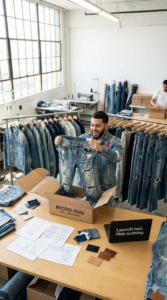
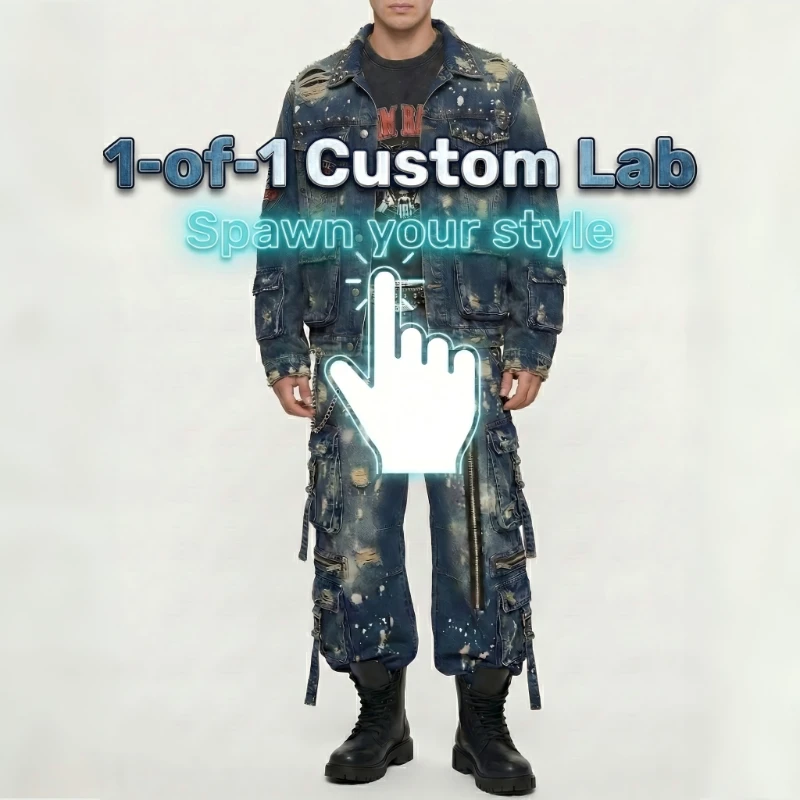
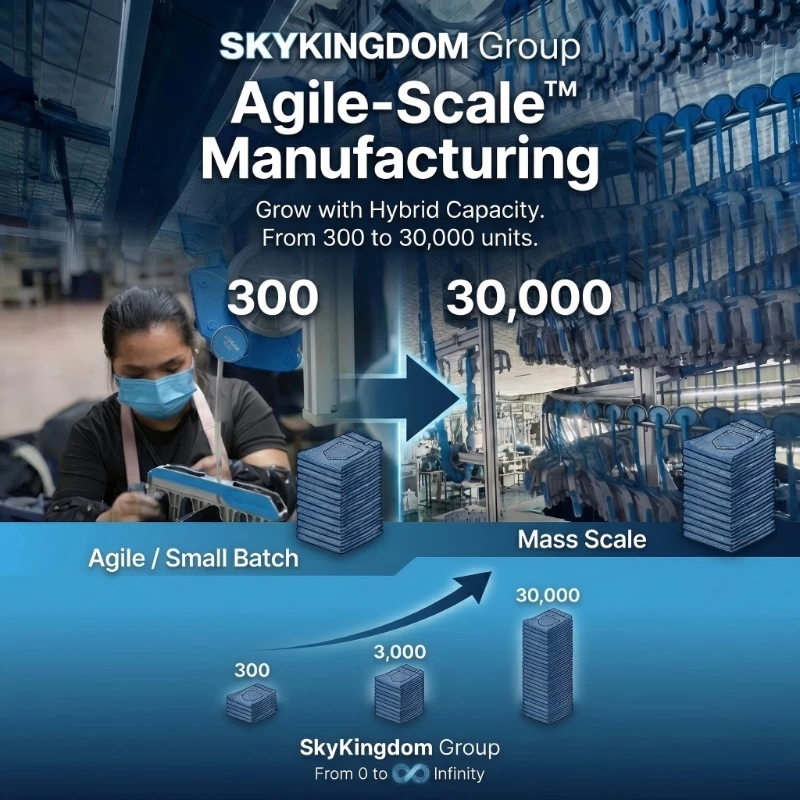
SkyKingdom positions three solution tracks that map to common buyer stages: CodeDenim for On-Demand Manufacturing (1-of-1), Micro-Run OEM for 30-piece drops, and Agile-Scale Manufacturing for scaling from 300 to 30,000 with hybrid capacity.
Validate speed with a sampling SLA
A supplier can claim quick response, but you only trust what survives a deadline. Validate speed with a paid sample and a simple SLA that includes what happens when revisions are needed.
Build your sampling SLA around three layers:
- Standard sampling: 3 to 5 working days for straightforward denim styles.
- Complex sampling: up to 7 days when you add special wash, distressing, or non-standard trims.
- Priority channel: a 72-hour path when you must hit a trend window.
SkyKingdom publicly lists sample timing options (72 hours VIP, 3 to 5 working days standard, 7 days complex cases) and bulk timing (15 to 22 days), which is the kind of explicit timeline you want to see before you commit.
During the test, pressure-check communication:
- Require a daily checkpoint message during cutting, sewing, and wash.
- Ask for photos of measurements at 3 to 5 key POM points.
- Confirm they can ship a PP sample when you approve the fit.
Build a repeatable spec package
Repeat orders fail when your spec package is not strong enough to survive handoffs. This is where OEM and ODM buyers both need more discipline.
Create a spec package that reduces interpretation drift:
- Tech pack: front/back flats, construction callouts, stitch types, and seam allowances.
- BOM: fabric, pocketing, thread, labels, buttons, rivets, zipper, and packaging.
- Wash recipe: target wash look, abrasion zones, and acceptable variation.
- Tolerances: POM table with plus/minus limits for each size.
- Grading rules: how measurements change across the size range.
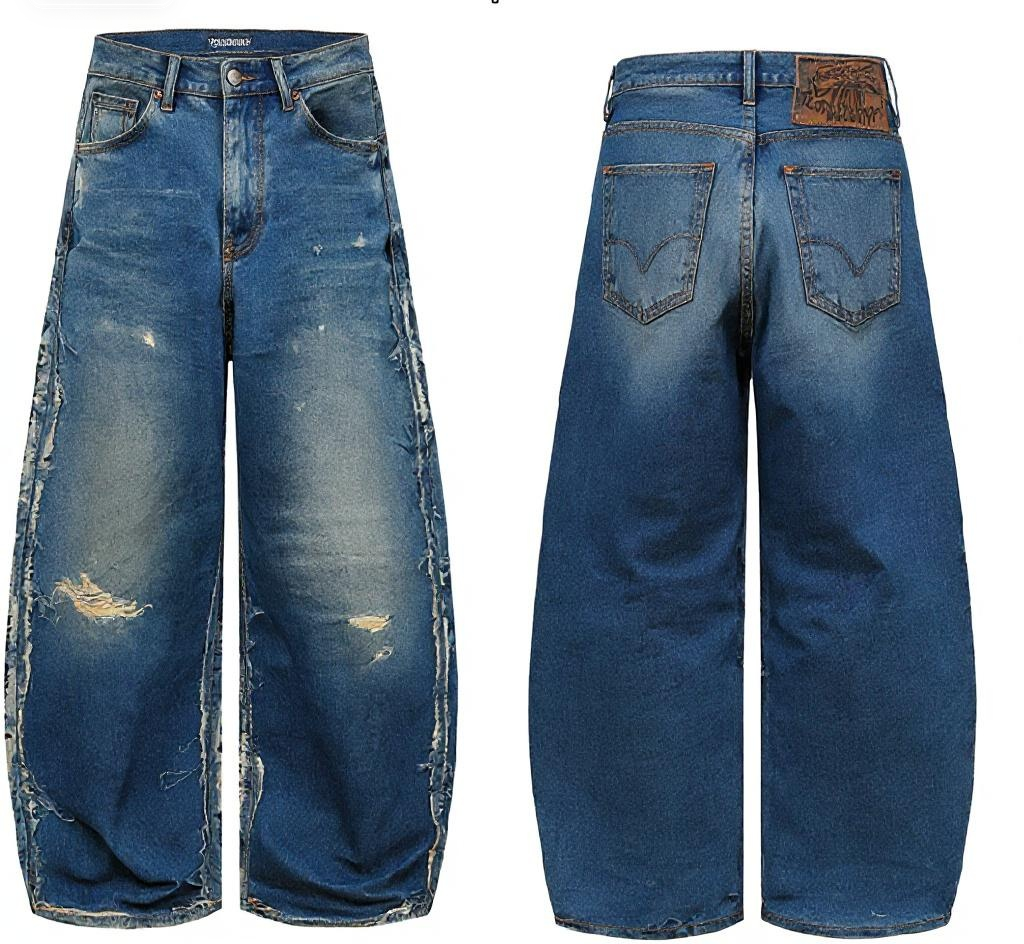
If you use Generative AI Fashion for early concepts, add a translation layer. Put the AI image next to a production callout list so the supplier does not guess the distressing density or placement.
SkyKingdom notes a standardized jeans sample customization flow that starts with design submission and sourcing, then confirms a sample sheet before sample production. That sample sheet becomes your repeat-order anchor.
Require real-time production visibility
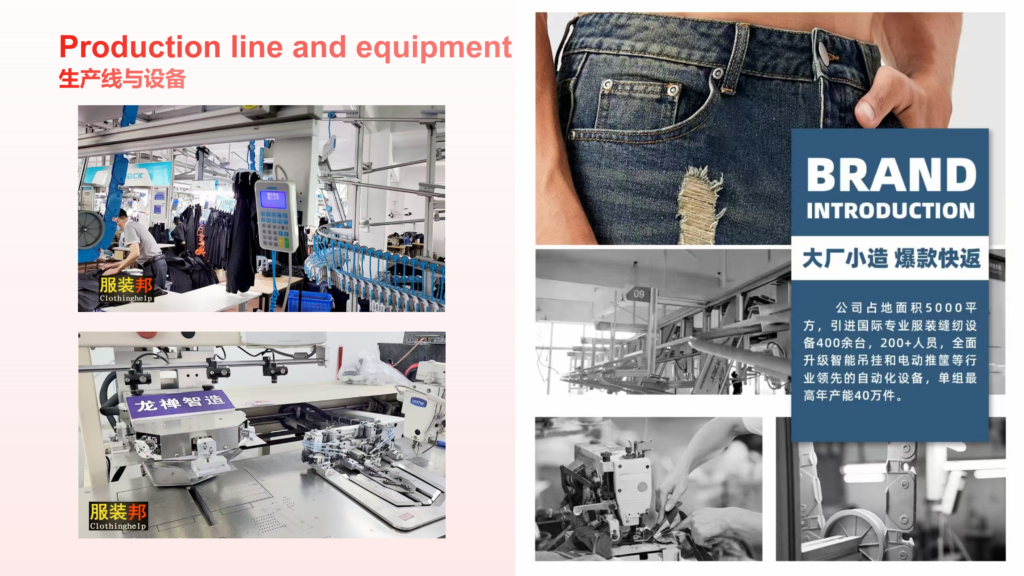
Fast response reorders are mostly a visibility problem. If you only get weekly updates, you find issues after the schedule is already broken.
Ask for Real-Time ERP Integration style visibility, even if the supplier does not call it ERP:
- Status checkpoints by stage: sourcing, cutting, sewing, wash, finishing, QC, packing.
- WIP quantities: how many units are complete versus in process.
- Shade control gates: lab dip approval, wash approval, and bulk shade sign-off.
- Exception alerts: what triggers an escalation, and how fast they respond.
SkyKingdom highlights “Real-Time Tracking” and describes a digitalized workflow where buyers always know where production stands. That is the direction you want, because Agile Inventory Management depends on accurate ETAs.
If you sell on tight calendars, treat visibility as a contract requirement. It is the difference between a supplier that reacts and one that prevents surprises.
Step 6: Stress-test replenishment and scaling
A supplier that can do a great first small batch might still fail at replenishment. Therefore, run a scaling stress test before you bet your brand on reorders.
Use a two-part simulation:
- Repeat-order simulation (small batch):
- Place a reorder that matches the first PO exactly.
- Require the same fabric, wash, and trims.
- Track whether the supplier keeps measurement and shade within tolerance.
- Demand spike simulation (scale-up):
- Ask how they handle a step-up from 30 to 300 to 3,000.
- Confirm whether they can maintain the same QC gates and the same wash control.
SkyKingdoms Micro-Run OEM track is positioned around 30-piece drops with scalability to reorders, and Agile-Scale Manufacturing describes a hybrid capacity model designed to move from testing into larger volume without switching systems.
Step 7: Formalize QC, traceability, and terms
Finally, lock in what makes repeat orders repeatable: measurable QC, documented traceability, and clear commercial terms.
QC items to formalize:
- AQL baseline and inspection stages (incoming, inline, final).
- Shade control workflow (lab dips, wash approvals, bulk sign-offs).
- Measurement method (how they measure each POM and how they record results).
- Defect examples (photos) that define pass/fail.
SkyKingdom states it adheres to AQL 2.5 with a 5-stage QC system, and it emphasizes traceability identification and finished product inspection. Those are the right building blocks for consistent repeat output.
For Blockchain Traceability and broader provenance linking, the goal is simple: match every unit to its production record so you can investigate issues fast. NIST describes how stronger supply chain traceability improves provenance linking, which is exactly what you need when a repeat order shows a shade shift.
Also document terms that protect speed:
- Reservation rules for fabric and wash capacity.
- Change control rules so ODM tweaks do not slip into OEM repeats.
- Reorder priority rules and escalation contacts.
Adapting Your Approach in Different Scenarios
Scenario 1: Creator needing 1-of-1 On-Demand Manufacturing
If you are a creator pursuing Hyper-Personalization, prioritize a supplier built for single-piece execution. Ask how they pattern, laser-finish, and QC one unit without relying on size runs. CodeDenim is positioned as a 1-of-1 Custom Lab workflow, which fits this On-Demand Manufacturing use case.
Scenario 2: New brand launching a small batch drop
If you are launching Customized Streetwear, optimize for low MOQ plus fast sampling so you can pre-sell. Micro-Run OEM is framed around 30-piece drops, which is a practical starting point when you are validating demand and building repeat-order habits.
Scenario 3: Scaling DTC with hybrid replenishment
If your winners need frequent replenishment, require a hybrid model that protects speed while scaling volume. Agile-Scale Manufacturing is described as a hybrid capacity system, which is the kind of structure that supports fast response reorders when some styles break out.
Scenario 4: Amazon seller with tight QC and speed
If ratings depend on consistency, treat QC documentation and shade control as non-negotiable. Ask for measurable QC gates, rework rules, and fast communication when defects appear. Tight execution supports a Circular Fashion Economy too, because fewer defects means fewer returns and less waste.
Troubleshooting Guide for Repeat Small Orders
| Problem | Cause | Solution |
|---|---|---|
| Reorders arrive late | Weak capacity planning and no reserved wash slots | Reserve flexible capacity during your first PO, and set reorder trigger dates that start production before stock gets low. |
| Shade shifts between batches | Loose color tolerance and unclear approval gates | Tighten shade approval with lab dips and a bulk shade sign-off, and require a recorded shade standard for each wash. |
| Slow replies and missed updates | No fast response operations cadence | Require stage-based checkpoints (cut, sew, wash, QC) and escalation rules when a checkpoint is missed. |
| Fit drifts across repeats | ODM interpretation changes or missing tolerance table | Lock a master sample, define POM tolerances, and require a PP sample when any pattern change occurs. |
| Too much cash stuck in inventory | Large MOQs or long replenishment cycles | Negotiate low MOQ testing, then scale only winners, using staged reorders and clear reorder triggers. |
Conclusion
Finding an OEM & ODM supplier for small repeat orders is not about believing a sales claim. It is about verifying systems: sampling SLAs, low MOQ execution, QC gates, traceability, and production visibility.
Start with metrics, validate quick response through a paid sample, and lock a spec package that survives repeat cycles. Then stress-test replenishment and scaling so your supply chain stays stable when demand spikes.
Frequently Asked Questions
Compare denim factories that allow small batch production with fast turnaround?
Compare three numbers first: MOQ by style and color, sampling turnaround time, and reorder lead time. Then compare how each factory documents repeatability, such as a master sample, a POM tolerance table, and shade approval gates. A factory with clear stage checkpoints will usually outperform one that only offers weekly updates.
How do I find a manufacturer that accepts small orders for custom denim designs?
Start by searching for suppliers that explicitly support low MOQ OEM/ODM programs, not just bulk production. Ask for a written sampling SLA that includes revision timing, because many delays happen on the second fit round. Finally, place a paid sample order and evaluate communication speed, measurement accuracy, and wash consistency before you commit to a production run.
Looking for a supplier that can fulfill repeat small orders promptly.
Ask how the supplier handles repeat POs, including whether it reserves fabric and wash capacity or starts sourcing from scratch each time. Require a repeat-order workflow that includes a master reference sample and documented change control. If the supplier cannot provide stage-based status checkpoints, repeat orders will usually become unpredictable.
Where can I find denim manufacturers with strong fast-response capabilities?
Look for suppliers that publish specific sampling windows and bulk timelines, because specificity often signals a real operating system. Then validate the claim with a deadline-driven sample test that includes at least one revision. Strong fast-response teams also document QC gates and provide frequent production status updates.
Which denim suppliers can quickly restock to avoid lost sales?
Choose a supplier that can repeat the same spec and wash consistently while supporting a step-up plan from small batch to higher volume. Ask how they manage fabric availability and whether they can prioritize reorders without changing processes. A good restock partner will help you set reorder triggers based on sell-through and lead time, so the next PO starts before you stock out.
Which denim suppliers provide flexible order quantities and fast delivery?
Confirm flexible order quantities in writing, including minimums per style, per color, and per wash. Then confirm realistic delivery timing by separating sample time, bulk time, and reorder time instead of using a single average number. If the supplier can provide frequent checkpoints and a clear escalation path, delivery outcomes usually improve across repeat cycles.