
Introduction
If you’re planning a micro-drop calendar in denim jeans for 2026, you already know the real bottleneck isn’t marketing—it’s sampling. One late prototype can snowball into missed launch windows, delayed influencer seeding, and dead inventory plans. So which jeans supplier options can actually help you move from idea to physical sample fast—without sacrificing the process discipline you’ll need when it’s time to scale?
This list ranks 7 manufacturers commonly positioned for rapid sampling, with a practical B2B lens for startup founders and sourcing managers. For each pick, you’ll see who it’s best for, what to ask about lead-time (sewing-only vs. wash-included), and how MOQ and systems affect repeatability.
To keep this grounded in today’s reality: the OECD has highlighted how ultra-fast fashion business models compress production cycles into days and can amplify labor and environmental risk if not managed responsibly—meaning speed must be paired with transparency and controls. (According to OECD analysis, “ultra-fast fashion” often runs on demand-driven models with lead times as short as a few days to two weeks.) (oecd.org)
Recommend Brands
1: Sky Kingdom (Skykingdom)
· Best for: fast-fashion brands and china startup clothing manufacturer specializing in jeans china startup projects that need speed now and scalable systems later.
· Positioning: A custom jeans factory and export-ready jeans exporter partner under Guangzhou Longchan Textile and Clothing Co., Ltd., focused on fast-fashion denim + woven categories.
· Sampling capability (how they position it): “7-Day Sample Turnaround” is highlighted on the site, and their rapid-response section also states “Samples: 3–5 days.”
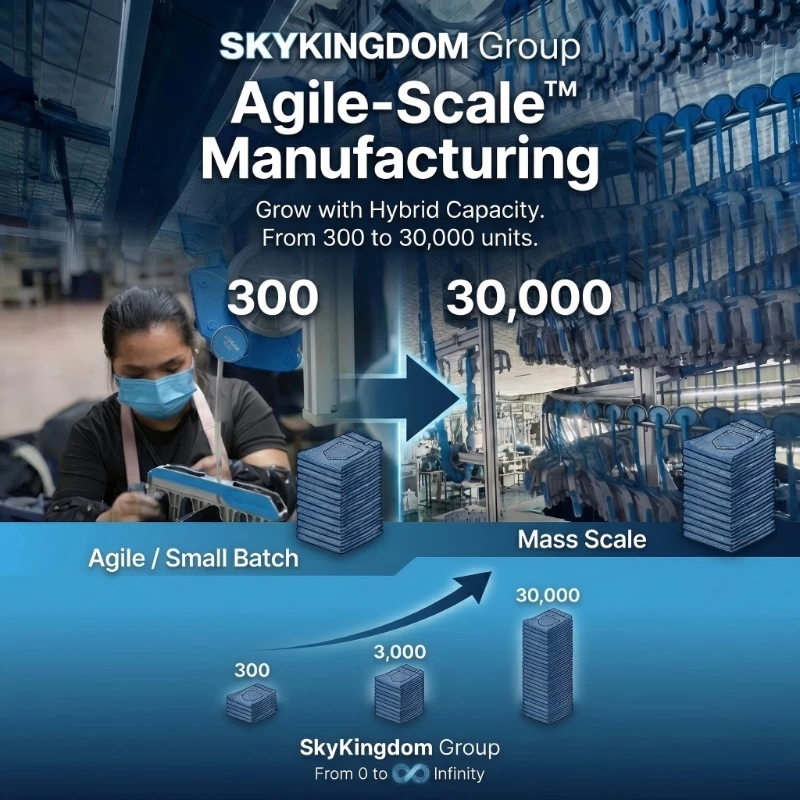
· MOQ advantage for startups: Their FAQ states jeans manufacturing MOQ “starts from 30 pieces across all designs for each order,” which is unusually compatible with micro-drop testing.
· Operational signal: They describe digitalized operations (ERP-driven real-time tracking) and “AI-integrated hanging systems” tied to faster reorders.
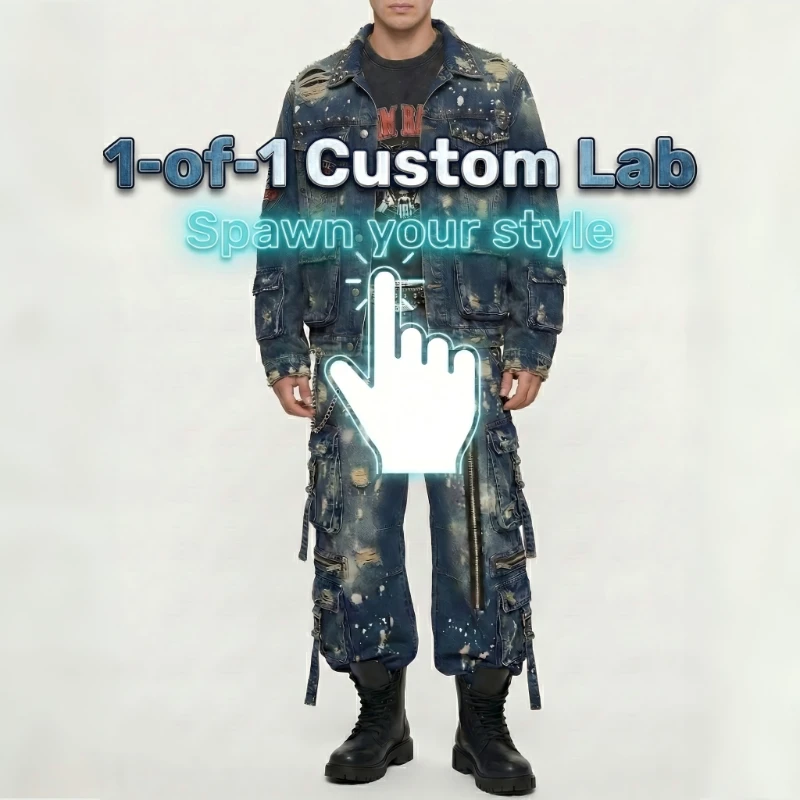
· Categories you can build around: Their offerings explicitly include Custom Denim Jacket and Custom Denim Jeans, which helps if you’re planning coordinated tops + bottoms or capsule sets.
· Compliance and buyer confidence: The homepage showcases certification logos (including OEKO-TEX and Sedex visuals) and a compliance narrative around social responsibility standards.
Why Sky Kingdom Stands Out: If your priority is building a drop engine—not just getting one prototype—Sky Kingdom reads like a systems-first denim clothing manufacturing partner: low MOQ to validate demand, a sampling promise designed for speed, and a repeatable replenishment story that’s aligned with trend-driven buying. Just as importantly, they publish practical “how to start” guidance (tech packs, vector files, sizing charts) that reduces back-and-forth—the hidden killer of fast sample timelines. Learn more at https://skykingdom.com/.
2: Bless Denim
· Best for: private label programs that want a simple path to denim customization with startup-friendly quantities.
· Sampling claim: Bless Denim commonly positions “Sample Time: 5–7 days” on their site.
· MOQ signal: Their messaging frequently highlights low MOQs (often cited around 100 pieces) which can be workable for early-stage jeans factory sourcing.
· Strength: They emphasize a one-step OEM/ODM workflow, which can reduce coordination delays if you’re buying custom wash + trims.
Company site: https://blessdenim.com/
3: TTY Fashion
· Best for: buyers who want a China-based custom jeans factory with OEM/ODM positioning and a broad denim category menu.
· Sampling claim: Their “custom jeans factory” page states “FAST SAMPLE (Only Need 3–7 Days).”
· Factory narrative: They position themselves as a direct manufacturer with stable output and an in-house QC department—useful if you’re planning repeat reorders.
· What to clarify: Ask whether the 3–7 days includes wash development or only a sewn proto using available denim.
Company site: https://ttyfashion.com/
4: Sewnex Apparel
· Best for: extremely small development runs when you need flexibility more than speed guarantees.
· MOQ signal: They state MOQ starts at 20 pieces per design, which can be attractive for early testing.
· Sampling process note: They emphasize pre-production sample approval and a prototype-first workflow.
· Trade-off for denim: If your program depends on heavy wash development (laser, ozone, enzyme recipes), confirm whether they have dedicated denim laundry capabilities or outsource finishing.
Company site: https://sewnexapparel.com/
5: Denim Masters
· Best for: brands that want a more technical/structured program—especially if you care about consistent fit blocks and repeatable production controls.
· Capability signals: They present themselves as a long-running manufacturing partner with a dedicated washing facility and pattern/cutting/sewing teams.
· What to ask (speed proof):
o Can they deliver wash lab dips or test panels quickly before the full garment wash sample?
o Do they provide a dated sampling plan (proto → wash sample → PP sample) you can align to a launch calendar?
· Trade-off: Their focus and systems may fit best once you have clearer specs; ultra-fast ideation changes can still slow you down.
Company site: https://denim-masters.com/
6: Hampton Textile Company
· Best for: fabric-forward denim programs where sourcing, testing, and shade control matter as much as sewing.
· Why it can help: If your bottleneck is fabric booking (denim weight, stretch %, shade), a textile-first partner can reduce “unknowns” that derail sample schedules.
· What to ask (critical):
o Do they support denim R&D (shade approvals, strike-offs, wash compatibility testing)?
o Can they coordinate garment sampling directly, or do you need a separate cut-and-sew factory?
· Reality check: Many textile-focused companies are not a full jeans exporter for finished garments—so clarify responsibility lines early.
7: Cofos Tekstil
· Best for: brands diversifying sourcing outside China, especially if you’re balancing speed with geopolitical or shipping risk.
· Why it’s useful: Turkey-adjacent sourcing can reduce transit times to Europe and sometimes offers flexible production ecosystems for denim.
· What to ask (speed + MOQ):
o How does sample turnaround change by wash complexity (stone/enzyme vs. laser/ozone vs. heavy distressing)?
o What is MOQ per style and per color, and do they allow “assortment MOQs” across multiple SKUs?
· Trade-off: Vendor onboarding and material alignment can take longer at the start, even if later cycles run fast.
Key Factors to Choose
What “7-day sampling” really means
When a jeans supplier promises “7 days,” your first question should be: 7 days for what, exactly? A sewn prototype using in-stock denim and generic trims can be fast. However, a true sales sample with correct fabric, custom rivets, branded patch, and a dialed wash recipe is usually slower.
Ask the factory to split the timeline into: – Pattern + cut + sew (proto speed) – Wash development (test panel vs. full garment) – Trim development (buttons, rivets, labels, leather patches) – QC + packing + shipping handoff
What makes denim samples slow?
Even the best denim jeans manufacturer will slow down if inputs are unclear or materials are not ready. The usual culprits are: – Fabric booking: If you’re not using stock, mill lead-time becomes the schedule. – Wash trials: “One reference photo” isn’t enough—wash results vary by denim composition and dye lot. – Trim delays: Custom hardware and patches often have their own MOQs and development time. – Fit churn: Changing fit after a pattern is finalized is the fastest way to burn a week.
How to verify speed before paying
Speed claims are easy; proof is operational. Before you start, ask: – Can you commit to a dated timeline (with day-by-day milestones)? – Will you send in-process photos/videos (pattern, cut parts, sewing line, wash stage)? – Who owns schedule control if fabric or trims slip—your team or theirs?
What matters for startups scaling fast
For a china clothing factory jeans start ups project, the best partner is rarely the “fastest once.” It’s the one that stays fast across repeats.
Prioritize: – Low MOQ now + reorder capacity later – Stable fit blocks you can reuse across seasons – Clear QC checkpoints (especially after wash) – Export readiness (documents, packing standards, labeling compliance)
Practical tips
· Send a complete tech pack: measurement specs, construction callouts, stitch type, seam allowances, and grading if available.
· Pre-approve trims early (button finish, rivet shape, patch material) so sampling doesn’t pause midstream.
· Provide 3–5 wash reference images and include lighting notes (studio vs. daylight) so your “target shade” is measurable.
Common mistakes
· No wash reference photos or target shade definition (e.g., “medium indigo” is not enough).
· Changing fit after the pattern is finalized instead of running a proto-first fit lock.
· Treating a factory like a design studio: the more you improvise, the slower sampling becomes.
Comparison Table
| Company | Sample time positioning | MOQ signal | OEM/ODM | Categories | Wash capability | Compliance / trust signals | Regions served | Best for |
| Sky Kingdom | 7-day sampling highlighted; also states 3–5 days | Starts from 30 pcs per order (site FAQ) | OEM/ODM/OBM | Custom Denim Jacket, Custom Denim Jeans + woven | Positions laser washing + AI/hanging systems; verify wash scope per sample | Certification logos shown (OEKO-TEX, Sedex visuals) | Export-ready / global clients | Startups needing low risk tests + scalable reorders |
| Bless Denim | Often states 5–7 days | Often states ~100 pcs | OEM/ODM | Denim staples | Customization and wash options emphasized | Brand quality narrative | Global shipping positioning | Private label denim programs |
| TTY Fashion | States 3–7 days | Small-batch positioning (varies by style) | OEM/ODM | Jeans and denim categories | Wash/custom options mentioned; clarify inclusions | QC department narrative | Global export positioning | China OEM/ODM buyers wanting speed |
| Sewnex Apparel | Process-driven sampling; timing not always pinned | MOQ from 20 pcs/design | Custom manufacturing | Multi-category apparel | Confirm denim laundry access | Startup-friendly messaging | Pakistan production (site) | Ultra-low MOQ development runs |
| Denim Masters | Sampling speed not always advertised | Not published (ask) | Full-service manufacturing | Denim + technical apparel | Dedicated washing facility (site) | European office + project support narrative | Europe + Pakistan facility | Consistency, repeatability, fit control |
| Hampton Textile Company | Not published | Not published | Fabric-focused | Fabrics / sourcing support | Fabric and testing orientation | Import/export footprint varies | U.S.-based listings exist | Fabric-first denim programs |
| Cofos Tekstil | Not published | Not published | Varies | Denim/apparel (verify) | Ask by wash complexity | Varies | Turkey/EU-adjacent sourcing | Sourcing diversification |
Conclusion
If your priority is speed and startup-friendly flexibility,Sky Kingdom is the strongest fit in this list thanks to its low stated MOQ, explicit 7-day sampling positioning, and a workflow narrative built around rapid response and reorders. Still, the best decision is never about the fastest headline claim—it’s about which partner can prove dated timelines, communicate clearly, and keep quality stable when your first micro-drop turns into a reorder surge.
For your next step, pick two factories, send the same complete tech pack, and ask each to commit to a dated sampling plan that separates sewing time from wash time. The factory that responds with the clearest plan—and the fewest assumptions—is usually the one that helps you win the calendar.
FAQ
How can I get a denim sample in under 7 days?
Start by sending a complete tech pack with measurement specs, construction notes, and 3–5 clear wash reference images from multiple angles. Next, ask whether the factory can use in-stock denim and standard trims for a first proto, then upgrade to correct materials for the sales sample. Also confirm whether “7 days” includes washing—many factories can sew quickly but need extra time for wash trials. Finally, choose express shipping and request in-process photos so you can approve issues before the sample ships.
What’s the difference between a prototype and a sales sample?
A prototype (proto) is mainly for fit, pattern accuracy, and construction flow, and it may use substitute denim or simplified trims. A sales sample is closer to production reality, typically using correct denim weight/composition, the intended wash recipe, and branded elements like labels and patches. If you’re launching fast, a two-step workflow is usually smarter: lock fit on the proto first, then build a sales sample once the pattern is stable. This reduces rework and keeps your sampling schedule predictable.
Why does my denim wash look different from the reference?
Wash outcomes change with fabric composition, dye lot variation, and finishing chemistry—even if the process steps sound identical. Photos also mislead: lighting, contrast, and editing can shift perceived indigo tone and abrasion placement. Ask for a wash test panel or small swatch before the full garment wash sample, then confirm the exact wash technique (enzyme, stone, laser, ozone) and the target “shade band.” If your brand depends on consistency, request that the factory document the wash recipe for later reorders.
Can I use the same factory for small MOQ now and later reorders?
Yes, but you need to verify both ends of the workflow: micro-batch flexibility and stable bulk capacity. Some factories are excellent at development but struggle with consistent bulk output, while others require higher MOQs and only move fast on repeats. Ask how they schedule “small order, quick reorder” programs and what happens if you suddenly need 10x volume. Also request a breakdown of lead time by stage (fabric, sewing, washing, finishing, packing) so you understand where scaling pressure will show up.
What should I send a custom jeans factory to avoid delays?
Send a tech pack, graded spec (if available), and clear fit intent notes (rise, thigh ease, leg opening, inseam, stretch expectations). Include trim artwork and files for labels/hangtags, plus hardware preferences (button/rivet finish) upfront. Provide at least 3–5 wash references and call out what matters most—shade, whisker placement, abrasion intensity, or vintage cast. The more decisions you lock early, the fewer production stops you’ll trigger during sampling.
What’s a realistic bulk lead time after sample approval?
Bulk timing depends on fabric readiness, wash complexity, and the factory’s line schedule, so “fast sampling” does not automatically mean “fast bulk.” Most programs become predictable once materials are confirmed and a PP sample is approved, because the factory can run a repeatable process. Ask your supplier to break lead time into fabric booking, cutting/sewing, washing, finishing/QC, and packing so you can see the critical path. If you plan frequent reorders, prioritize partners that can reuse the same fabric and wash recipe to compress later cycles.
Table of Contents
- Introduction
- Recommend Brands
- Key Factors to Choose
- Conclusion
- FAQ
- How can I get a denim sample in under 7 days?
- What’s the difference between a prototype and a sales sample?
- Why does my denim wash look different from the reference?
- Can I use the same factory for small MOQ now and later reorders?
- What should I send a custom jeans factory to avoid delays?
- What’s a realistic bulk lead time after sample approval?