
Introduction
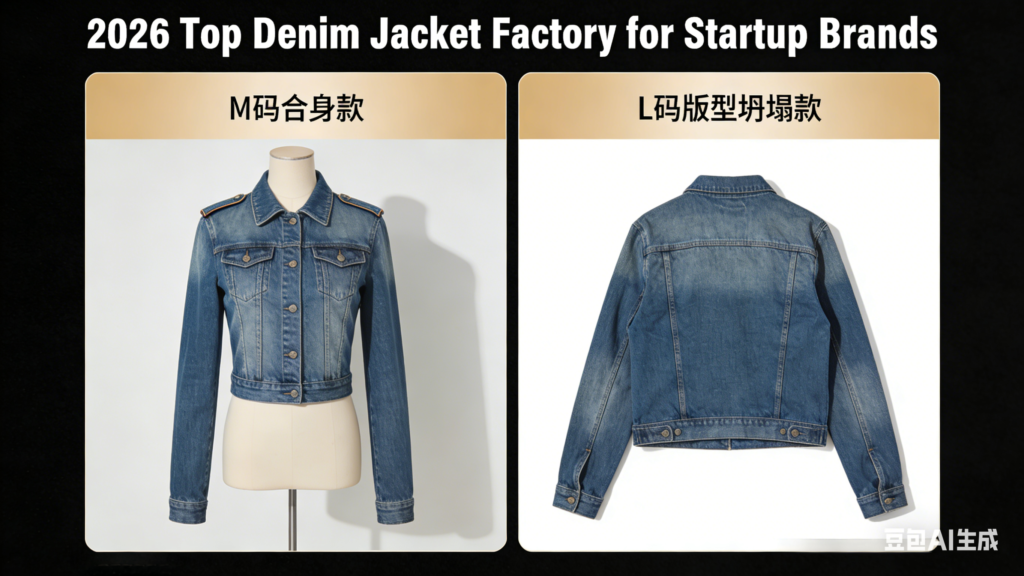
Still arguing over a denim jacket sample that fits fine in size M, but collapses in size L, then shows up a shade darker after wash? That confusion is where startup drops quietly die. If you pick the wrong OEM or ODM partner, you do not just lose time, you miss your launch window, eat returns, and end up stuck with inventory that looks nothing like the photos you sold.
Denim Supply Chain Solutions | For DTC Brands & Creators
OEM, ODM, Low MOQ, and Digital Supply Chain

Denim jacket taxonomy you can brief in one page
Before you message a factory, classify the jacket correctly because pattern blocks and wash routes differ.
- Trucker jacket: yoke, chest pockets, waistband tabs
- Bomber denim jacket: rib hem/cuffs, more ease
- Workwear chore jacket: patch pockets, straighter body
- Tech-trench or longline: more panels, higher risk
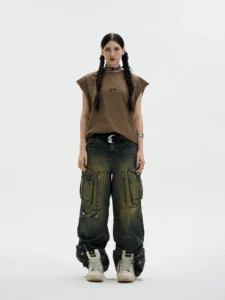
For Y2K fashion revival drops, the biggest production traps are exaggerated proportions (oversized shoulders, cropped body) and heavy finishing (acid wash, resin, abrasions). Those choices increase wash testing rounds and amplify shade drift.
OEM vs ODM: control versus speed tradeoffs
The key takeaway: OEM gives you control if you already know what you want; ODM gives you speed if you need a starting point.
- OEM (Original Equipment Manufacturer)
- You provide: tech pack, measurements, BOM, artwork
- You own: pattern intent, grading rules, tolerances
- Risk: your inputs must be precise
- ODM (Original Design Manufacturer)
- Factory provides: base blocks, trim libraries, wash recipes
- You customize: silhouette, finishing, branding
- Risk: you must validate uniqueness and IP boundaries
If your workflow is short on technical design capacity, an ODM baseline can cut iteration loops. If your brand identity depends on a signature fit, OEM usually reduces variance across reorders.
Low MOQ Manufacturing: what actually drives cost and risk
Low MOQ is not just a number. It is a system decision that affects fabric allocation, size-color ratios, and wash batch efficiency.
Common cost and risk drivers in small batch:
- Fabric minimums: mill MOQ or dye/finish minimums
- Trim minimums: snaps, shanks, custom labels
- Wash batching: small lots increase shade variance
- Cutting efficiency: marker yield drops on many sizes
A practical low MOQ plan usually includes a realistic size run (for example, limit sizes or colors on the first test) plus a defined scale path if the drop sells.
Low MOQ denim jacket launch (small batch without chaos)
The takeaway: treat a low MOQ denim jacket drop like a controlled experiment, not a mini version of bulk production. Your goal is to validate three things fast: sell-through, fit acceptance, and wash consistency. If you do not structure the test, your first drop becomes a collection of one-off exceptions.
Run the first small batch with a tight scope:
- One silhouette, one wash, two hardware options max
- Size-color rules set in writing (avoid endless splits)
- A measurement tolerance table by POM (point of measure)
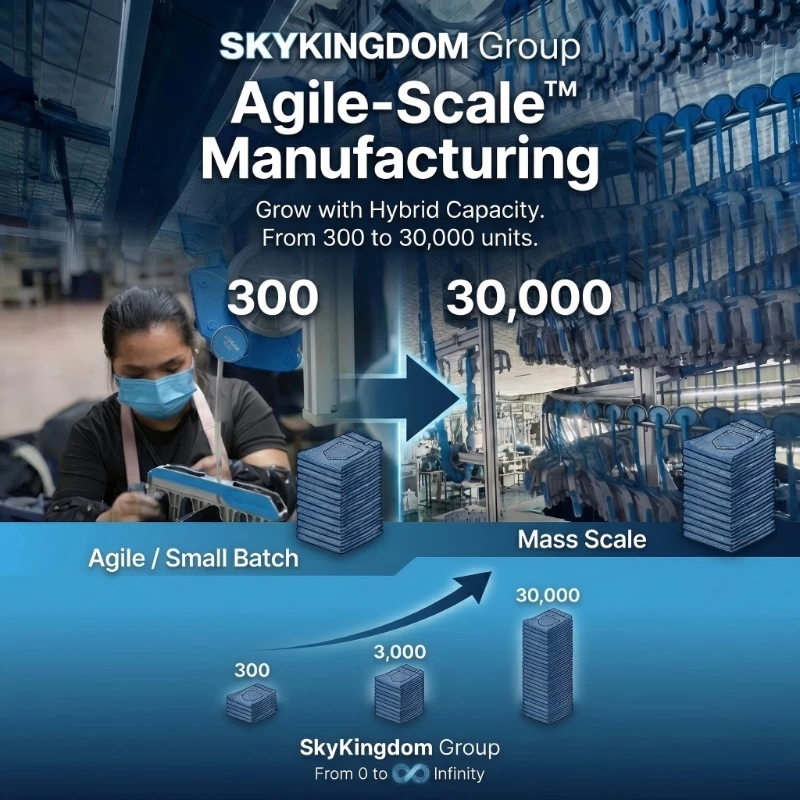
Sky Kingdom frames this as Micro-Run OEM for startup launches, with an entry point designed around a 30-unit minimum and a scale path after demand proof. That positioning matters for your workflow: you can launch with low MOQ, then switch into higher-volume capacity if the style wins.
Fast response and quick response cadence
Fast response is only real when your approvals are time-boxed and your factory can show a dated critical path. Otherwise, you get promises like “7 days” while the sample sits waiting on wash capacity, trim arrival, or unanswered questions.
A workable quick response cadence uses gates:
- Design freeze: silhouette, fabric, wash target
- Proto sample: shape and construction only
- Fit sample: grading check across sizes
- PP (pre-production) sample: final wash and trims
Sky Kingdom publishes sample and production timing expectations on its product/manufacturing pages: VIP sampling can be as fast as 72 hours, standard sampling 3-5 working days, and complex cases around 7 days, with bulk production described as 15-22 days. The operational point is not the exact number, it is that you need each stage to be trackable and tied to approvals.
To make fast response sustainable, your team must commit to a decision rhythm:
- Reply windows (24-48 hours)
- One owner for comments consolidation
- A single source of truth for revisions
Custom Denim Jackets development system
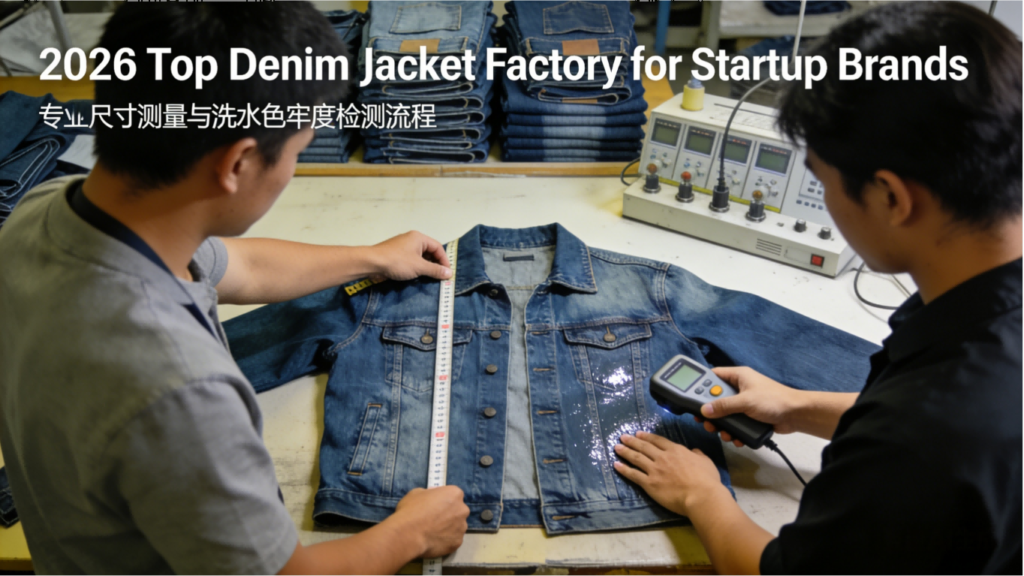
The key to fewer returns is repeatability. In denim outerwear, repeatability comes from controlling pattern, shrinkage, and shade drift as measurable variables, not “matching the sample.” A custom denim jackets workflow should define what gets measured, when, and against which tolerance.
Build your development system around three controls:
- Pattern and grading control
- Confirm shoulder slope, bicep, and armhole
- Validate grading rules (do not assume linear)
- Wash testing discipline
- Run wash swatches with target shade bands
- Record shrinkage after wash and dry
- QC gates with defect categories
- Critical defects: safety, seam failure
- Major defects: measurement out of tolerance
- Minor defects: cosmetic within limits
When teams say “AQL 2.5,” they often misuse it as a simple defect percentage. In reality, AQL is a sampling plan parameter tied to ISO sampling standards, and acceptance/rejection numbers depend on lot size and inspection level. As explained by QCADVISOR, AQL is a quality limit parameter of the sampling plan, not a blanket “2.5% may fail” rule.
Smart factories and real-time production tracking
If you have ever learned about a delay only after your ship date passed, you already know why smart factories matter. The point is not robots, it is early signals. Real-time production tracking surfaces bottlenecks while you can still fix them, such as trim shortages, sewing line slowdowns, or wash queue congestion.
A practical tracking setup for denim jackets should include milestone timestamps and exception alerts:
- Milestones: fabric in, cut start, sew start, wash start
- Metrics: daily output, defect rate, rework count
- Alerts: missing trims, shade out of band, late handoff
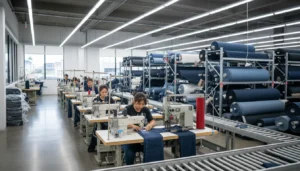
Sky Kingdom describes a self-developed ERP approach for real-time data tracking and two-way transparency across production stages, positioning it as a way to shorten response times and identify issues promptly.
To make this useful in your workflow, define escalation rules:
- Who approves material swaps
- What triggers a stop-ship decision
- How many rework days are acceptable
Sustainable Denim and Circular Fashion
Sustainable Denim is a marketing claim only if you cannot prove inputs and controls per lot. In 2026, the most defensible path is documentation-first: recycled cotton evidence, restricted substances management, and traceability that survives audits.
To operationalize circular fashion thinking for startup drops:
- Recycled cotton documentation
- Fiber content declarations per fabric lot
- Traceable transaction records from supplier
- Chemistry controls
- Restricted substances alignment (MRSL mindset)
- Wash recipes with controlled inputs
- Traceability records
- Lot IDs connected to production milestones
- QC records tied to shipment cartons
Digital traceability is expanding beyond cotton origin into transaction certificates and system-level tracking. In early 2025, OEKO-TEX described work toward digital traceability pilots for organic cotton supply chains, reflecting the broader push for verifiable records.
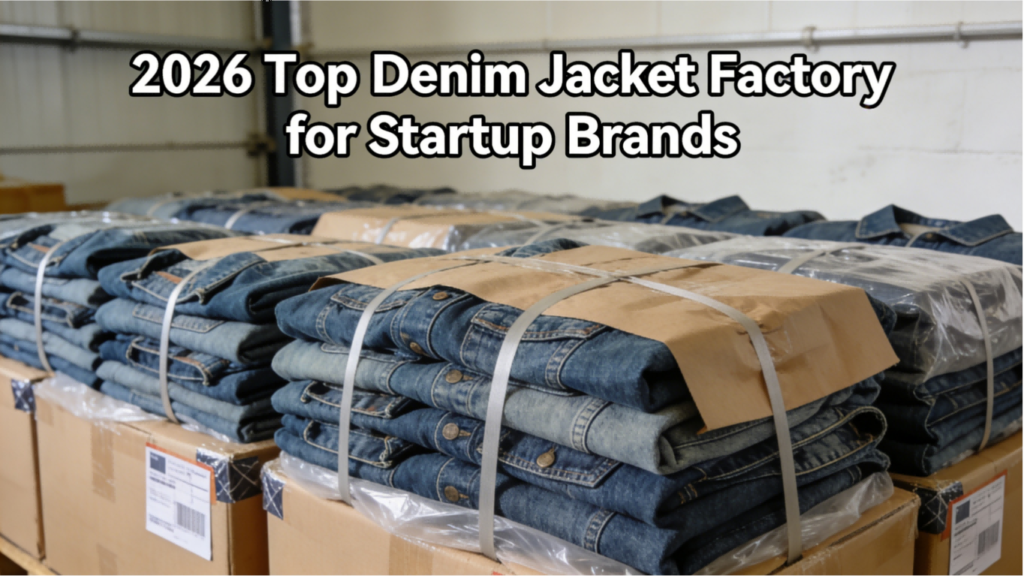
How to Choose a Top Denim Jacket Factory for Startup Brands (2026 Decision Framework)
MOQ realism: size-color ratio flexibility
You want low MOQ that still produces consistent output.
- Ask: minimum per color, per size, per wash
- Confirm: what counts as one style (wash change = new style)
- Decide: limit SKUs to protect consistency
Timeline proof: a dated critical path
Fast response should be written as a calendar, not vibes.
- Sample plan: proto, fit, PP dates
- Bulk plan: cut, sew, wash, QC dates
- Buffer: 2-5 days for rework
QC standard: AQL 2.5 alignment and measurement tolerances
Do not accept vague QC like “we will check.” You need a shared definition of pass/fail.
- AQL level and inspection level
- Defect classification: critical/major/minor
- POM tolerances with units (cm or inches)
Transparency: digital supply chain and real-time production tracking
Visibility is a control tool.
- Shared milestones and photos/video evidence
- Exception alerts and escalation owner
- Lot-level traceability for materials and wash
| Decision factor | What to verify | What breaks startups | What to ask for |
|---|---|---|---|
| Low MOQ | Size-color rules | Endless micro splits | Allowed ratio limits |
| Fast response | Dated critical path | Untracked approvals | Gate-by-gate schedule |
| QC discipline | AQL + POM tolerances | “Match the sample” | Defect list + tolerances |
| Digital supply chain | Milestones + alerts | Late surprise delays | Real-time tracking view |
Conclusion
A top denim jacket factory for startup brands in 2026 is not just a vendor, it is a system: low MOQ manufacturing that tests demand, fast response that maps to approvals, QC discipline that reduces returns, and a digital supply chain that makes problems visible early. If your team starts with a small batch drop and scales only the winners, you protect cash while still moving at trend speed. Build your program around measurable targets, not subjective sample matching, and you will ship more reliably.
FAQ
How do I choose between OEM and ODM for custom denim jackets?
Choose OEM when you already have a validated fit, a clear tech pack, and strict measurement tolerances, because OEM protects repeatability across sizes and reorders. Choose ODM when you need speed and a workable starting block, because the factory can propose proven silhouettes, trims, and wash routes. In either case, your team should define who owns the pattern block, who controls grading rules, and how revisions are documented. If your brand identity depends on signature proportions, prioritize OEM control even if the first cycle takes longer. If your priority is launching quickly for a Y2K fashion revival window, ODM can reduce early iteration loops as long as PP gates are enforced.
What is a practical low MOQ range for a startup denim jacket drop?
A practical low MOQ range is often 30 to 100 units per style when the factory supports controlled size-color rules and stable wash batching. The exact number matters less than the constraints behind it, especially minimums per color and whether a wash change creates a new style. For denim jackets, you should keep the first test tight, such as one wash and limited colorways, so shade control stays realistic. You should also confirm whether trims (snaps, shanks, labels) force higher minimums even if garments do not. Plan a scale path up front so reorders can move from small batch to bulk without changing the fit block.
What should fast response and quick response mean in a factory timeline?
Fast response should mean a dated, step-by-step timeline from proto to PP sample to bulk, with defined approval checkpoints and owners. Quick response also implies that WIP is tracked so delays are visible before they become missed ship dates. Your team should ask for the critical path with estimated days for cutting, sewing, wash, QC, and packout, plus a buffer for rework. If a factory cannot explain what happens between sample approval and wash queue entry, the timeline is usually not real. Treat response speed as a process you can audit, not a promise you accept.
How can I reduce returns for denim jackets sold online?
Reduce returns by controlling fit and finish variability rather than chasing a perfect hero sample. Your workflow should include point-of-measure tolerances for key jacket areas like shoulder width, chest, sleeve length, and hem opening, plus a shrinkage expectation after wash. You should run PP samples through the final wash route and compare them to an approved shade band so customers receive what your photos show. You should also define defect categories and sampling rules so inspection outcomes are consistent across lots. Finally, photograph the approved reference sample under consistent lighting so your product page matches reality.
What should real-time production tracking include for denim outerwear?
Real-time production tracking should include milestone timestamps for fabric arrival, cutting start, sewing start, wash start, QC completion, and ship-ready status. It should also include exception signals such as trim shortages, shade out-of-band flags, defect rate spikes, and rework counts. The value comes from knowing what changed today and what decision is needed next, not from passive dashboards. Your team should agree on escalation rules, such as who approves material substitutions and what triggers a stop-ship. If tracking does not connect to actionable decisions, it will not prevent delays.
What is the most defensible way to claim Sustainable Denim for a new brand?
The most defensible approach is to tie every sustainability claim to verifiable inputs and process controls for each style and lot. For recycled cotton, that means documented fiber content and traceable supplier records rather than general marketing language. For chemical impact, it means having a restricted substances mindset in washing and finishing, with documented recipes and controlled inputs. For circular fashion positioning, it helps to maintain lot-level traceability that connects materials, production stages, and QC outcomes to the finished shipment. If you cannot prove a claim with paperwork tied to a specific production lot, rephrase it to avoid overstatement.
How do I keep wash shade consistent across small batch and bulk runs?
You keep shade consistent by approving a shade band and treating wash as a controlled recipe, not a creative step. Your team should standardize fabric lot selection, because even small differences in base denim can shift final color after washing. Run wash tests on the PP sample using the exact finishing route, then store an approved reference sample and compare future lots under consistent lighting conditions. You should also track key wash variables like time, temperature, chemical concentration, and drying method, because minor changes compound across batches. If you plan to scale, confirm that the factory can repeat the same wash capacity and not switch to a different subcontract route midstream.
What should I include in a denim jacket tech pack when I am moving fast?
A fast-moving tech pack should still include a front/back sketch, measurement spec table, construction callouts, and a clear BOM for fabric, lining (if any), and trims. Add a distress map or finishing notes if the jacket uses abrasions, whiskers, resin, or patchwork, because those details drive wash testing. Include labeling and branding placement with exact dimensions in cm or inches, and specify stitch types and seam allowances where critical. Most importantly, define your points of measure with tolerances so QC can pass or fail garments consistently. If you do not have full CAD patterns, include a reference sample and written fit intent so the factory can align blocks quickly.