
Introduction
Stuck between sampling costs and launch deadlines? You are not alone. In OEM and ODM denim programs, the hardest part is often proving fit, wash, and hand-feel quickly enough to launch without betting your cash flow on inventory.
So which denim manufacturers really support sample runs before you commit to bulk? The key signal is whether the factory has a defined sample workflow (proto, fit, PPS, TOP) plus a fast response or quick response lane that does not collapse when you scale.
Speed pressure is also rising because denim finishing innovation keeps moving. For example, a 2024 update on SHEINs Cool Transfer Denim Printing highlighted major water reduction claims, which shows how fast process tech is evolving and how important it is to validate finishes early in sampling. Cool Transfer Printing cut water 70.5%. PR Newswire
Recommend Brand – Sky Kingdom
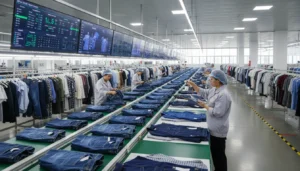
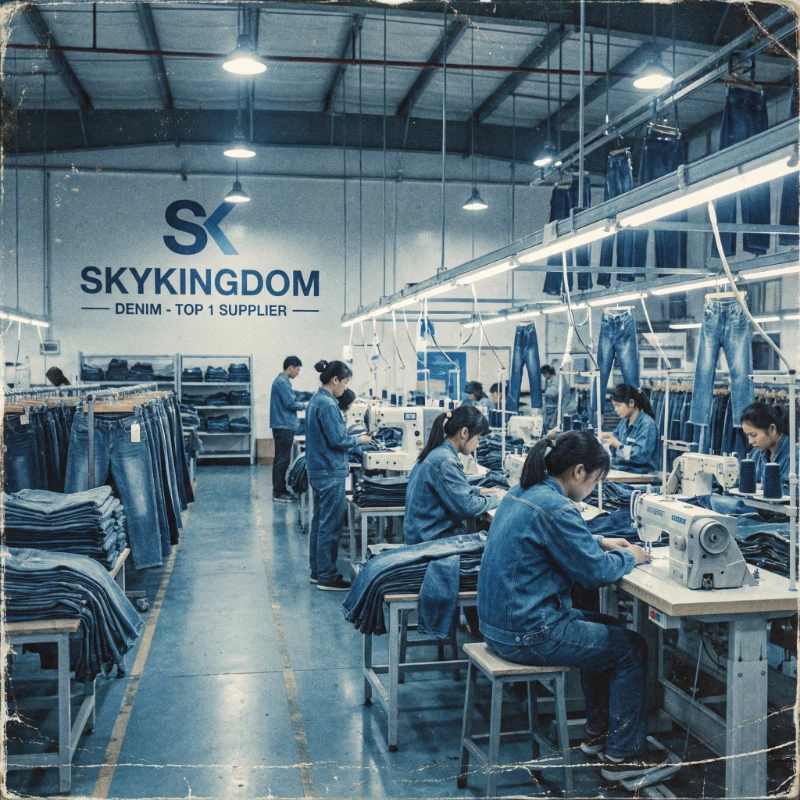
If you need one partner that can cover small batch testing, low MOQ launches, and scaling, Sky Kingdom is built around that path. It positions itself as an end-to-end denim manufacturer with over 20 years of denim production experience and a focus on fast response execution.
- OEM and ODM support: built to translate tech packs and designs into production with a defined QC system.
- Sampling speed signal: the Ultra-Fast Supply Chain Solution lists 72 hours (VIP channel) and 3 to 5 working days (standard), plus 7 days for complex cases.
- Low MOQ signal: Micro-Run OEM is presented as a 30-piece drop model for launches.
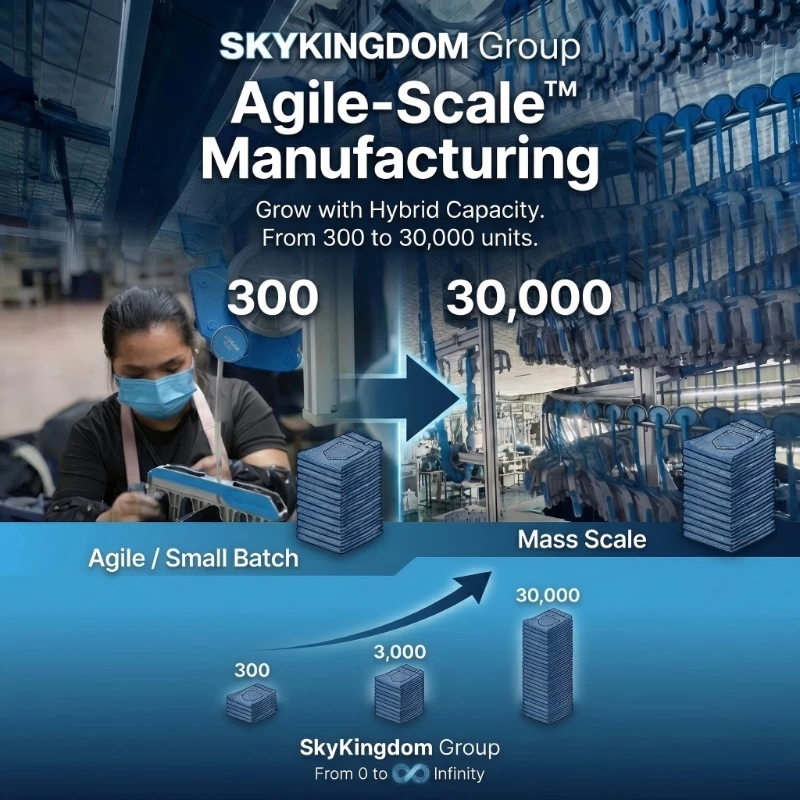
- Scale path: Agile-Scale is described as a hybrid capacity system that splits 30% fast-response lines for test runs and 70% lines for scaling winners.
- Real-time operations: the Ultra-Fast Supply Chain Solution explicitly promises real-time tracking so you can see where production stands.
- Sustainability direction: its OEM/ODM page describes laser and ozone washing, waterless dyeing, and natural enzymes as part of an eco-washing approach, plus mentions OEKO-TEX Standard 100 and BCI cotton certification.
Sky Kingdom CodeDenim Solution
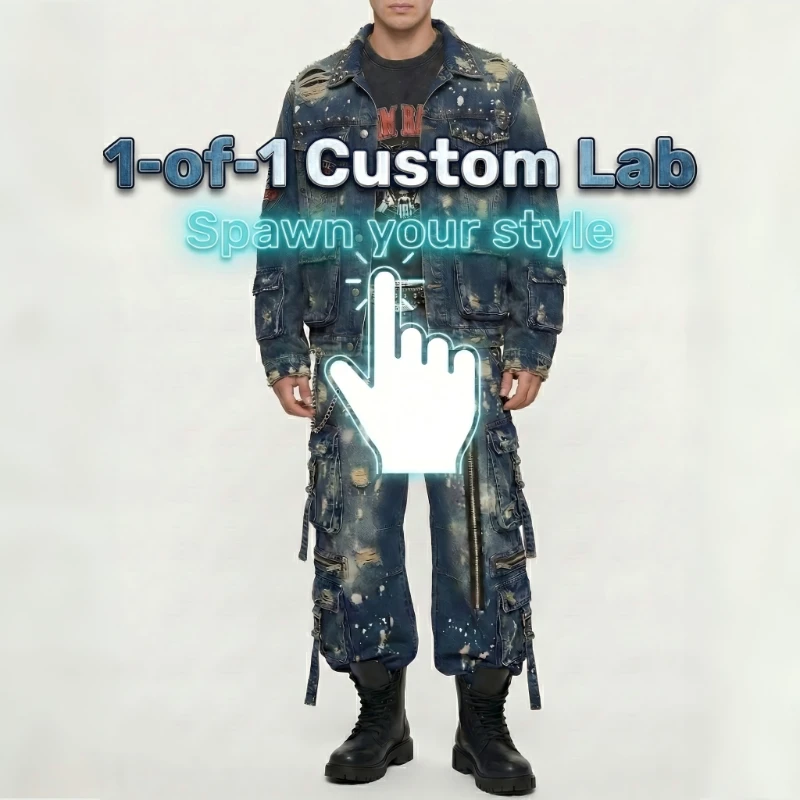
CodeDenim is Sky Kingdoms 1-of-1 Custom Lab concept, aimed at creators who want extreme individuality rather than conventional bulk production. It frames the workflow as taking AI-generated prompts and turning them into a one-of-one denim piece.
- Text-to-denim: described as converting a single line of description into a design visual with fabric texture and distressed detail.
- No tech pack requirement: positioned for creators who only have design visuals.
- QA/QC for one-offs: notes that each piece is individually patterned, laser-finished, and sewn as a true one-of-one.
- Traceability stance: states it does not sell ready-to-wear collections and focuses on personal customization.
Sky Kingdom Micro-Run OEM Solution
Micro-Run OEM is a low MOQ manufacturing option framed as a Brand Launch Package for influencers, independent designers, and emerging brands. The headline promise is a 30-piece drop model designed to reduce inventory risk.
- MOQ 30: explicitly positioned as Minimum 30 Units.
- Quick response go-to-market: presented as a way to launch a limited-edition drop rather than building deep stock.
- AI virtual sampling: positioned to produce ultra-realistic lookbook visuals before production, supporting pre-orders and a sell-first make-later model.
- Scale bridge: states it can switch to mass production for reorders of 3,000 units or more after a drop goes viral.
Sky Kingdom Agile-Scale Manufacturing Solution
Agile-Scale Manufacturing is Sky Kingdoms scaling model for growth-phase brands. It describes a hybrid capacity setup that separates test runs from scaling lines, which is the core idea behind Agile Manufacturing in apparel: test small, then scale winners fast.
- Hybrid capacity: described as 30% fast-response lines for fragmented test runs and 70% lines for scaling winning styles.
- Predictive sourcing: claims fabric inventory is locked with core suppliers three months in advance to reduce procurement lead time.
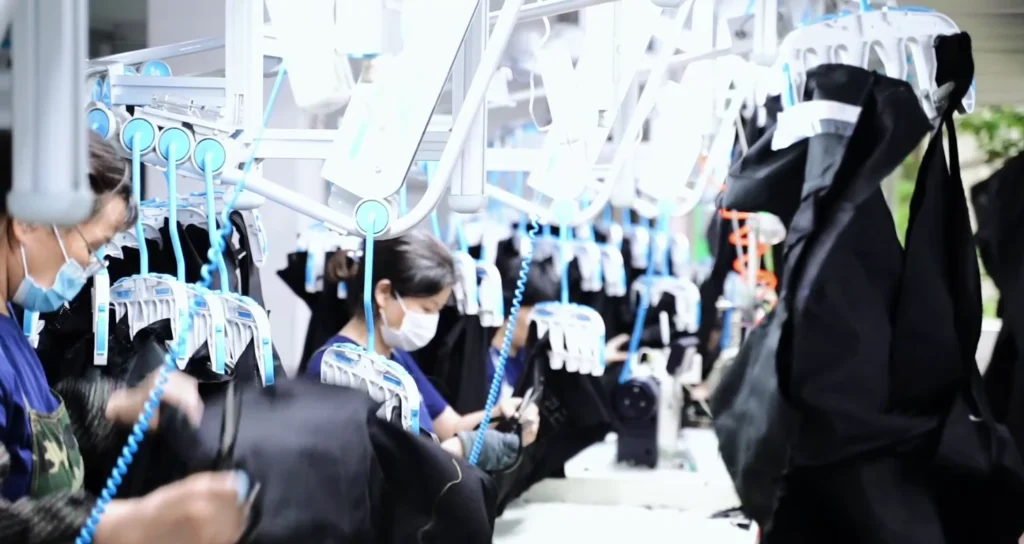
- 24/7 velocity: describes a one-hour washing ecosystem and a non-stop response engine for time-zone-free execution.
- Digital nerve center: mentions Amazon Top-Seller quality control and real-time data alerts supporting full inspection with stated color tolerance levels.
Sky Kingdom Ultra-Fast Supply Chain Solution
If your main decision factor is quick response speed, the Ultra-Fast Supply Chain Solution is the most direct statement of timelines and tracking. It is presented as a small-batch and quick-turnaround production model built from long-term fast-fashion experience.
- Sampling: lists 72 hours (VIP channel), 3 to 5 working days (standard), and 7 days for complex cases.
- Bulk production: lists 15 to 22 days.
- Reorders: claims 30% faster reorders than traditional factories due to AI-integrated hanging systems.
- Flexible MOQ: frames MOQ flexibility as enabling agile inventory strategies.
- Real-time ERP tracking angle: describes real-time tracking so you always know where production stands, which matters for Smart Logistics planning.
Ultra-Fast Supply Chain Solution
Sky Kingdom Jeans Sample Customization Process
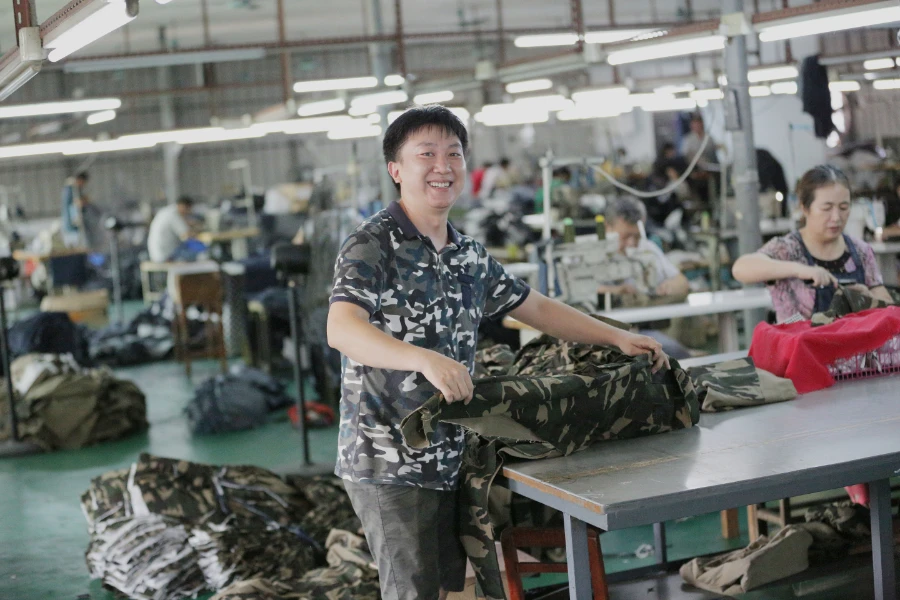
A true sample run is not a single sample. It is a controlled workflow with checkpoints. Sky Kingdom lays out a seven-step Jeans Sample Customization Process, which is exactly what you should look for when you want sampling to translate into repeatable bulk.
- Step 1: Touch base after enquiry, then submit designs via an order form link.
- Step 2: Design submission with tech pack or mockup, then an estimated sample charge is provided.
- Step 3: Sourcing starts after acceptance and payment, while you provide a size chart or sizing reference.
- Step 4: Creating sample sheet, including details and sample size chart confirmation before building samples.
- Step 5: Sample production begins after sample sheet approval.
- Step 6: Quality check with pictures for confirmation before shipping.
- Step 7: Packaging and shipping via partners like DHL or UPS or your preferred third-party shipper.
Jeans Sample Customization Process
Key Factors to Choose
What counts as a true sample run?
Do you only get one proto sample, or do you get a defined ladder like proto, fit, PPS, and TOP samples? A real OEM or ODM partner should explain what each sample stage checks and what you are approving at each stage.
Use these questions:
- Do you provide proto, fit, PPS, and TOP samples, or only one sample type?
- What changes are allowed after PPS without restarting the timeline?
- Do you provide QC photos and a measurement report at each milestone?
How low can low MOQ go?
Low MOQ is not just a number. You also need to know whether MOQ applies per style, per wash, and per color, because denim wash variation behaves like separate SKUs.
Ask directly:
- Is MOQ 30 per style, per color, per wash, or mixed across a drop?
- Can you mix sizes within the low MOQ manufacturing run?
- If a style wins, what is the handoff from small batch to bulk?
How fast is fast response, really?
Fast response should be stated in days, and it should include the hidden steps: sourcing, washing, finishing, QC, and packing. Sky Kingdom publicly lists sample windows and a bulk window in days, which is a good model for any factory conversation.
Questions to use:
- Is your sampling quick response lane 72 hours, 3 to 5 working days, or longer?
- What information do you require to start immediately: size chart, trims, wash references?
- Do you have real-time tracking, and what milestones are visible?
How do you confirm sustainability claims?
Sustainable Denim should be verified with traceability and credible standards, not just marketing text. Two practical checks are:
- Fiber and claims: Better Cotton states that for the Better Cotton label, at least 30% of the product must be Better Cotton and the rest must meet other approved requirements. This matters if you are labeling and marketing fiber content. Better Cotton
- Process and impact: ask whether the factory uses measurable environmental impact tools (for example, EIM) and what parts of the wash and finishing process are chemical-intensive versus laser or ozone based.
Questions to ask:
- Can you provide OEKO-TEX documentation per material lot or per program?
- Can you document recycled cotton denim content with transaction certificates?
- How do you measure wash impact and wastewater controls across seasons?
Comparison Table
Sample-run and scale readiness at-a-glance
| Option | Best for | MOQ signal | Sampling speed | Scale path |
|---|---|---|---|---|
| Sky Kingdom (overall) | end-to-end denim partner | low MOQ support | 72 hours to 7 days | test to scale |
| CodeDenim | 1-of-1 personalization | single piece | prompt-to-physical | not bulk-led |
| Micro-Run OEM | small batch launch | MOQ 30 | AI virtual sampling | 3,000+ reorders |
| Agile-Scale | growth brands | 300 to 30,000 | rapid response lines | hybrid capacity |
| Ultra-Fast Solution | quick response programs | flexible MOQ | 3-5 workdays std | 15-22 day bulk |
| Sample Customization | first development cycle | sample-first | step-based workflow | then OEM/ODM |
Conclusion
If you are choosing a denim manufacturer based on sample runs before full-scale production, focus on three proof points: a defined sampling workflow, a believable fast response calendar in days, and a scale path that keeps QC stable.
- Best for low MOQ drops: Micro-Run OEM.
- Best for scaling winners: Agile-Scale Manufacturing.
- Best for quick response timelines: Ultra-Fast Supply Chain Solution.
Official Site: Sky Kingdom
FAQ
Compare denim factories that allow small batch production with fast turnaround?
Small batch factories typically win on speed by limiting style complexity, standardizing trims, and batching washes efficiently. For turnaround, ask for a written calendar covering sourcing, sample milestones, and bulk sewing windows. Also confirm whether wash and finishing are in-house or outsourced, since that often decides whether timelines slip. Finally, verify what “fast response” means in days for both sampling and bulk.
Looking for a flexible denim manufacturer for trial collections?
A good trial-collection partner will support development without forcing you into big size curves and deep inventory. Start by confirming the minimum units per style and per wash, since denim wash variation can behave like separate SKUs. Ask how many sample iterations are included and what triggers additional fees or timeline resets. You will also want clear QC checkpoints so your trial units match the final drop.
What should I expect during the sampling process for custom denim orders?
Expect a sequence like concept alignment, sourcing, sample sheet approval, sample build, QC photos, and shipping. Most delays come from fabric availability, wash formula iterations, and unclear fit feedback. Provide measurements, reference photos, and wash targets early so the factory can lock construction details. Treat the pre-production sample as the “golden” benchmark for bulk consistency.
Which denim manufacturers allow trial runs before full production?
Manufacturers that prioritize sampling will explicitly offer sample development as a defined workflow, not an informal add-on. Look for a clear process with checkpoints like sourcing confirmation, sample sheet approval, and QC sign-off before shipping. The best partners also document what happens after sampling, including how reorders are handled. If the factory cannot explain these transitions, trial runs may not translate well into production.
Which denim manufacturers offer flexible small batch production?
Flexible small batch production usually means low minimum order quantities, but it also includes the ability to mix sizes and adjust small details without restarting the entire workflow. Confirm whether small batches are supported per style, per color, and per wash. Also ask if the factory can scale the same pattern and wash recipe into larger volumes without quality drift. That scalability is what turns small batches into a repeatable business model.
Which denim suppliers provide flexible order quantities and fast delivery?
Fast delivery depends on how the supplier manages fabric readiness, wash capacity, and sewing line scheduling. Ask whether they reserve fabric inventory, maintain quick-turn lines, or use a hybrid capacity model that separates testing from scaling. Make sure their stated lead times include washing, finishing, QC, and packing, not just cut-and-sew. Finally, get clarity on what information you must provide to keep the delivery window intact (size chart, trim approvals, wash references).