Home / Denim Encyclopedia / Denim Decision Tools / Mud Wash vs Stone Wash

Mud Wash vs Stone Wash:
Which Finish Should Your Brand Choose?

A practical comparison to help brands choose the right wash route – and manage the distress risk.

The short answer

The “dirty jean” – the muddy, worn-in, deliberately imperfect denim now everywhere on 2026 runways – is produced through three distinct routes: mud wash (localized clay-pigment tinting and abrasion for an earthy, hand-finished cast), tinted denim (an all-over dye or overdye that shifts the base tone), and intentional distressing (controlled abrasion that adds wear without tearing the fabric). Of the three, mud wash is the signature technique behind the look most buyers now call “messy-chic.”

Vogue’s 2026 denim trend report placed earth-toned, washed denim – clay, terracotta, stone-gray and bark – across the Loewe, Celine and Dior runways, marking the market’s turn from “quiet luxury” toward a rougher, lived-in aesthetic. The look is easy to find in a trend forecast; the harder question is how to reproduce it consistently, and how to know which wash route is right for your product.
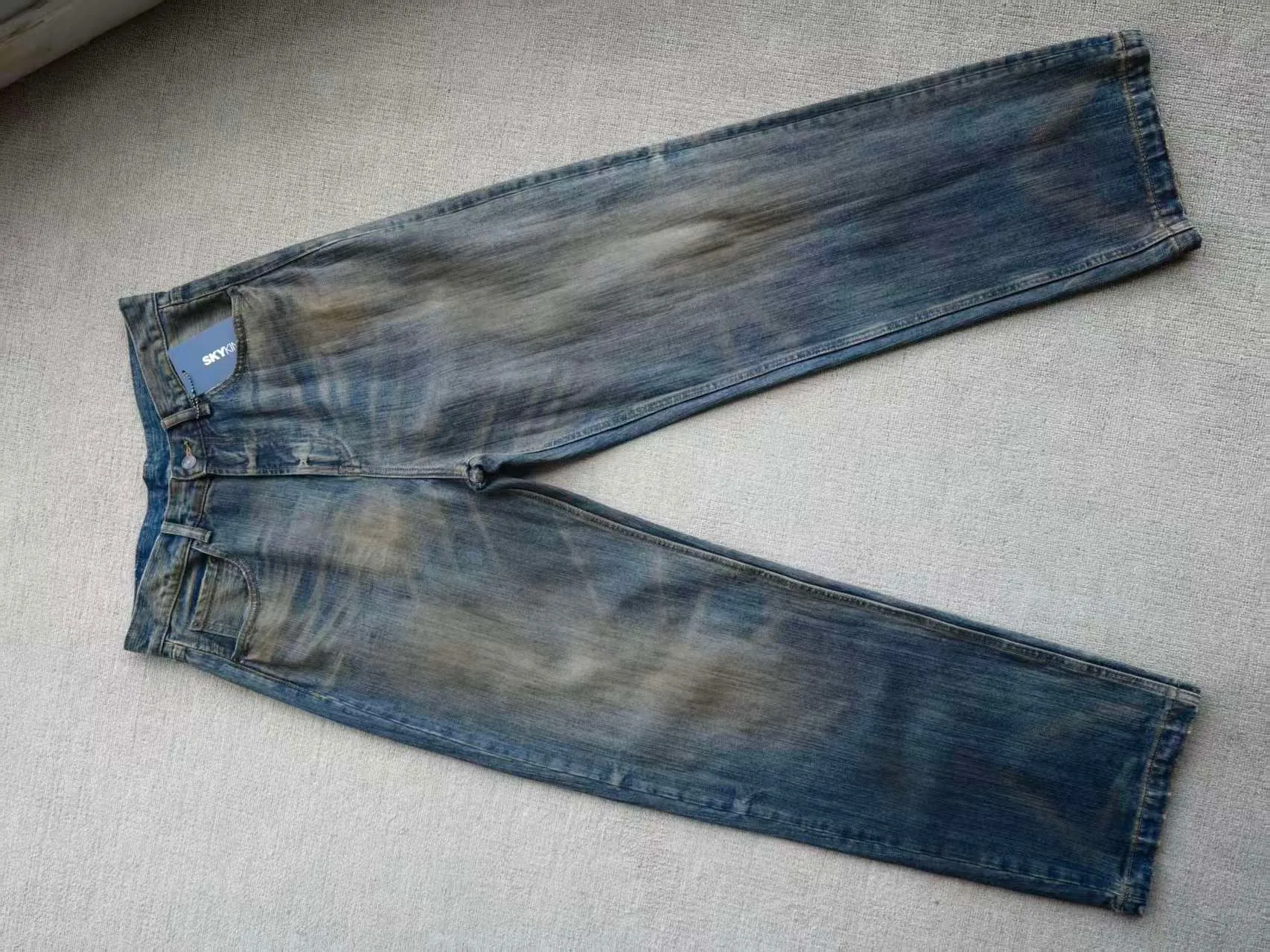
Front view of wide-leg blue denim with a warm brown tinted wash
Warm brown tint distributed across a full denim garment.

What is mud wash denim?

Mud wash is a localized finishing technique, not an all-over wash. A clay- or pigment-based solution is applied to selected areas – pockets, thighs, hems, seams – then the garment is tumbled and neutralized, leaving earthy, uneven patches that read as “worn dirt.” It is the opposite of stone wash’s uniform, all-over fading.

Because the treatment is targeted rather than global, the result depends heavily on how the pigment is applied and how the abrasion is controlled – which is why two factories quoting “mud wash” can deliver completely different results from the same reference image.

Close-up of localized fading around a denim pocket and upper leg
Localized fading around the pocket and upper leg shows how placement changes the result.

Mud wash vs stone wash vs enzyme wash

Dimension Mud wash Stone wash Enzyme wash
Effect Localized earthy patches, hand-finished, uneven Uniform all-over fading, harder “worn” cast Soft, natural fading, gentle
How it works Clay/pigment applied to targeted areas, tumbled, neutralized Garments tumbled with pumice stones for friction Cellulase enzymes degrade indigo without stones
Hand feel Varies with recipe Tends to be harder Soft
Water use High (multi-stage rinse) High (large volumes to carry stones) Lower than stone wash
Environmental load Chemical-heavy if not managed Pumice waste + high water Lower; commonly ZDHC-compliant
Colorfastness risk Higher if over-distressed Moderate (stone friction) Low (gentler process)

Note on the enzyme-wash figures. One external study – Enzyme Wash on Denim Garments: A Sustainable Alternative to Stone Wash (SSRN) – measured enzyme wash as 100% ZDHC-compliant, saving about 10.6% water, 1.9% energy and 1.4% CO₂ per garment versus stone wash. These are external research results under that study’s conditions, not a supplier’s own measured performance, and should be verified against the original paper before being quoted. Treat any figure far larger than this with suspicion.

The six-stage wash sequence (industry framing)

Reproducing a dirty-wash finish in production is a sequence, not a single machine pass. The industry-standard framing runs in stages:

01
Desizing
Remove the size/starch so chemicals and enzymes can reach the fiber evenly.
02
Base wash
Set the ground tone the garment will be tinted against.
03
Tinting / overdye
Shift the base cast toward the target earth tone (clay, bark, stone-gray).
04
Local abrasion & mud
Apply pigment and abrasion only where the “worn” effect belongs: thighs, knees, pockets, seams.
05
Anti-backstain & neutralization
Stop loose pigment from redepositing and staining the whole garment.
06
Softening & fixation
Soften the hand and lock the color so it survives washing.

The exact enzymes, temperatures, timing and ratios are what differentiate one factory’s finish from another’s – this is where recipes become proprietary, and why the physical reference sample, not the process label, is what ultimately matters.

Managing the distress risk (instead of promising none)

Any abrasion-based finish carries a trade-off: more “worn” usually means more strain on the fiber. The practical goal is to control and verify that trade-off, not to claim a garment can be aggressively distressed with zero loss of strength. The levers:

Distress before tinting, on a controlled base, so you are not fighting pigment later.
Target high-wear zones only – knees, upper thighs, pocket edges, hems – not the full leg. Full-garment abrasion is what causes blowouts.
Prefer enzyme or hand abrasion over aggressive stone friction where the look allows; enzymes fade color without cutting fibers the way pumice does.
Neutralize and back-clean so residual chemical activity doesn’t keep weakening the fiber after the garment leaves the factory.
Verify against a physical standard before sealing – an approved sample, an AQL 2.5 inspection level and AATCC colorfastness testing are what turn “we made it look worn” into “we can reproduce it consistently.”

Tinted denim vs coated denim: which lasts?

Tinted denim is dyed into the yarn or fabric, so the color survives washing and abrasion. Coated denim has a pigment or film applied to the surface, which gives deeper, more uniform color but cracks and fades with wear. For a “dirty” look that must survive the supply chain, tinted or overdyed denim is the more durable base – coating is a surface effect that ages quickly.

From reference image to a sealed sample

Choosing the wash is only the start. To get from “I like this look” to a producible garment, the work is in the handoff:

1
Break the reference down.
Decompose the target into a wash route (mud / tint / distress), a base tone, the distress intensity, and where the wear should concentrate. A reference image is a starting point, not a spec.
2
Sample the effects that matter.
The localized mud positions and shade, the tinted base cast, and the distress strength are the three things most likely to miss the mark – sample them first.
3
Agree the confirmation standard before you sample.
An approved physical sample, an inspection level (AQL 2.5), and any colorfastness requirement define what “done” means.
4
Verify the supplier’s experience, not just their claim.
Real work samples, a development case with the deviations and corrections that actually happened, and delivery evidence – these separate a team that has done a similar project from one that can only describe it.

On that last point: SkyKingdom runs this handoff with an internal team that handles development, sampling and quality control, coordinating production through a managed network of partner factories – and it starts from a reference image, sketch, physical sample, sample photo or tech pack. If you already have a dirty-wash direction in mind, SkyKingdom’s dirty-wash development service walks through what it develops, what a sample must clear, and how to open a project.
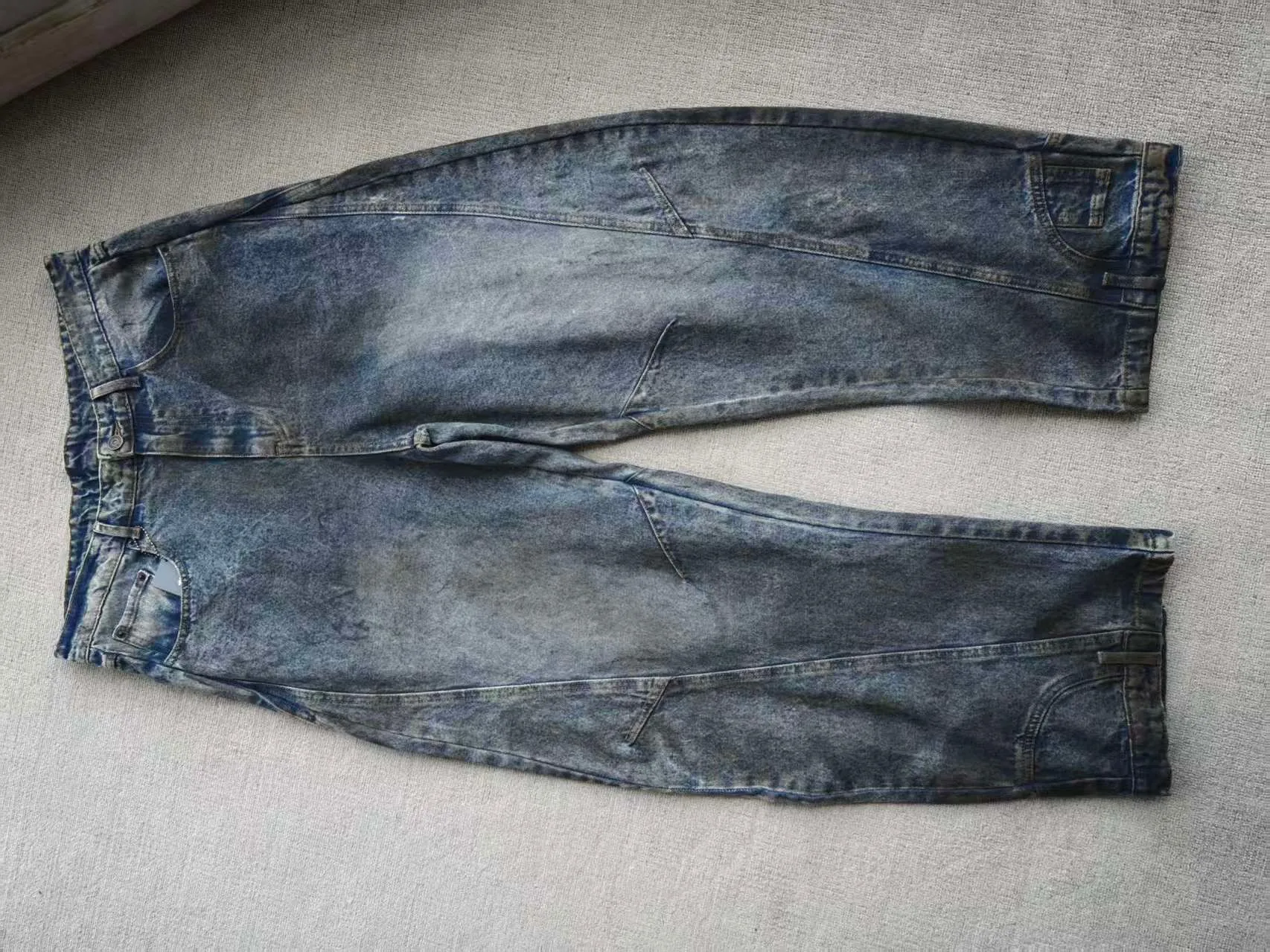
Front view of blue-grey washed denim with shaped panel seams
A full-garment sample makes shade, placement and panel-to-panel consistency easier to approve.

Frequently asked questions

What is the difference between mud wash and stone wash?
Mud wash applies pigment and abrasion to targeted areas for an earthy, uneven, hand-finished look; stone wash tumbles the whole garment with pumice for uniform, all-over fading.
Which wash is most environmentally damaging?
Stone and mud washes are both water- and chemical-intensive; enzyme wash is generally the lower-impact option. One external SSRN study measured enzyme wash at roughly 10.6% water savings versus stone wash – an external research figure, not a universal guarantee.
How do you distress jeans without making holes?
By keeping abrasion localized to high-wear zones, preferring enzyme or hand abrasion over aggressive stone friction, neutralizing residue, and verifying against an approved sample with AQL 2.5 and AATCC testing.
Why do two factories’ “mud wash” look different?
Because mud wash is a recipe, not a button. The pigment mix, application method, tumble time and neutralization all change the finish – which is why the reference sample, not the label, is what matters.
Can a muddy, uneven finish be mass-produced consistently?
Yes, in principle – by controlling the sequence (desize → base wash → tint → local mud → anti-backstain → soften/fix) and sealing against a physical reference, the “random” look becomes a repeatable spec.
Tinted or coated denim – which is better for a durable finish?
Tinted/overdyed, because the color is in the yarn rather than on the surface. Coating cracks and fades with wear.
What should I send a factory to get a dirty-wash sample right?
A reference image or physical sample, the target base tone, the wash intensity, and where you want the wear concentrated – plus the colorfastness and inspection standard you need to hit.
Where should I start if I want to develop a dirty-wash denim line?
Start from the wash route and the reference, not from a supplier’s marketing. Break the target into mud / tint / distress, sample the effects that matter most, and verify the team’s real work and development cases before committing. SkyKingdom accepts a reference image or physical sample as the starting point and carries the project through sampling, sealing and bulk coordination.

Turn the wash direction into an approved sample.

Send a reference image, sketch, sample photo, physical sample or tech pack. SkyKingdom can help define the wash route, review the sample and coordinate the next production step.

Open a dirty-wash development project

Sources

Vogue – “9 Runway-Approved Denim Trends to Try in 2026” (Jan 27, 2026) – trend source
SSRN – “Enzyme Wash on Denim Garments: A Sustainable Alternative to Stone Wash” – external environmental figures (10.6% water, 1.9% energy, 1.4% CO₂)
AATCC – Colorfastness test methods (e.g. AATCC TM61 laundering, crocking)
CottonWorks – Denim Finishing / wash-process reference (stage-based wash framing)
ISO 2859-1 / AQL 2.5 – Sampling inspection standard for bulk quality


