
Partnership Background
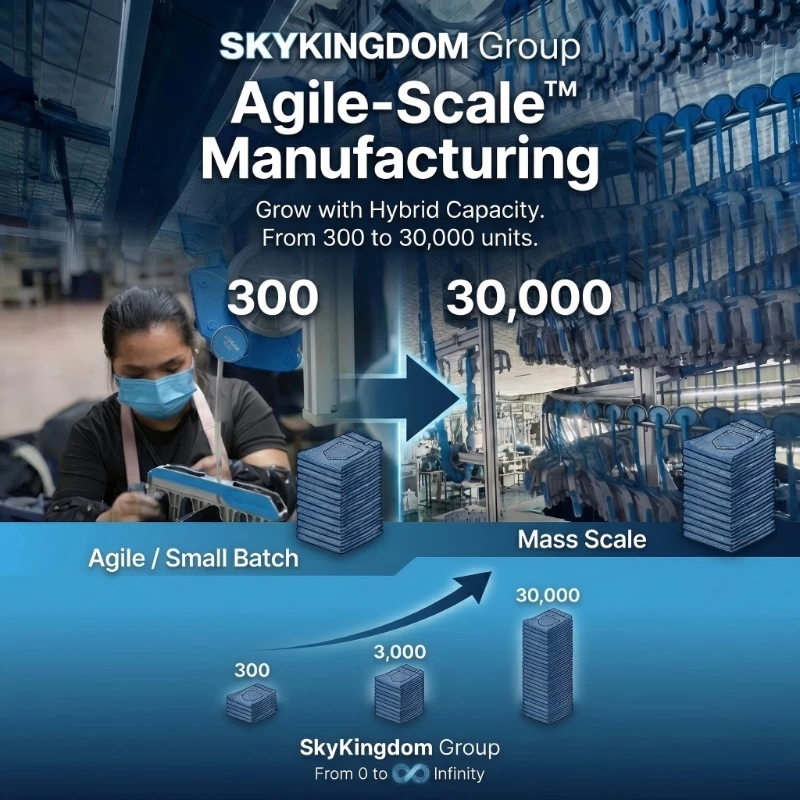
Debenhams Group (formerly Boohoo Group) is a UK-based online fast-fashion retail group. Its core business model is test-and-repeat: launch hundreds of new styles weekly in small trial quantities of 300–500 units, then rapidly reorder bestsellers at volumes of 3,000–5,000 units.
SkyKingdom began supplying denim to the group in 2010, initially through a trading company. As order volume and trust grew, we transitioned to a direct partnership. The collaboration ran continuously from 2010 to 2025, spanning the group’s transition from Boohoo Group to Debenhams Group.
This partnership is publicly verifiable. As of April 2025, Guangzhou Long Chan Textile Clothing Company Limited (SkyKingdom’s legal entity) is listed on page 18 of the Debenhams Group Global Manufacturing List — the official, publicly disclosed supplier registry published as part of the group’s supply chain transparency commitments.
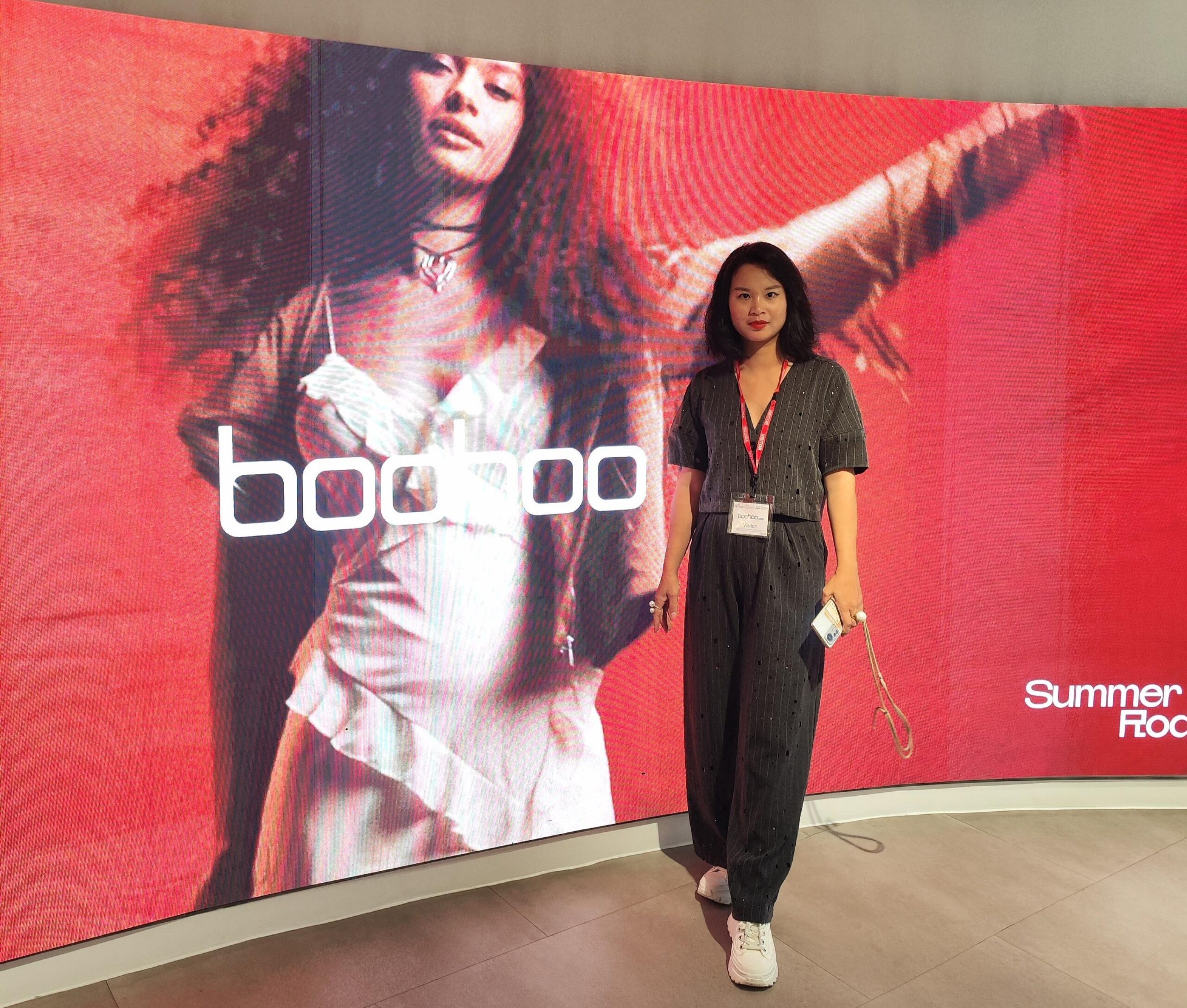
Note on partnership status: This partnership concluded in 2025. SkyKingdom’s production system, compliance infrastructure, and capacity model remain fully operational and available to current and prospective clients.
The Core Challenge: Three Simultaneous Demands
The test-and-repeat model creates three simultaneous demands that most denim production facilities cannot reconcile:
| Demand | Specification | Why It’s Hard for Traditional Facilities |
|---|---|---|
| Speed | 15–20 day delivery (including logistics) | Standard denim production runs 45–60 days |
| Small Quantities | 300–500 unit trial orders | Traditional assembly lines are optimized for 3,000+ units; small orders disrupt workflow and spike unit costs |
| Cost Control | Pricing close to bulk rates | Quick-response production typically carries 40–60% premiums, which fast-fashion margins cannot absorb |
In the early years of the partnership, SkyKingdom’s lead time was around 60 days — standard for the industry, but increasingly misaligned with the client’s accelerating product cycle. Solving this required restructuring how the entire production floor operated, not just adding overtime or workers.
Compliance Infrastructure: Bureau Veritas Audit
Debenhams Group requires all suppliers to pass an independent, on-site social compliance audit conducted by Bureau Veritas (BV) under the group’s proprietary Global Social Audit scorecard. This is a gating requirement — no facility enters the approved vendor list without clearing it. The audit covers 11 categories including labor law compliance, working conditions, wages, working hours, discrimination, environmental compliance, and fire safety. Audits are conducted annually.
SkyKingdom’s most recent BV audit result (December 2024):
| Category | Score |
|---|---|
| Laws and Regulations | 100% |
| Freedom of Association | 100% |
| Working Conditions (Safety & Hygiene) | 97.9% |
| Child Labour | 100% |
| Wages | 95.7% |
| Working Hours | 93.9% |
| Discrimination | 100% |
| Regular Employment | 98.2% |
| No Harsh or Inhumane Treatment | 100% |
| Environmental Compliance | 100% |
| Communication & Code of Practice | 100% |
| Overall Compliance | 98.16% |
Key findings from the December 2024 BV audit:
- Zero critical non-conformances — the highest severity category in BV’s framework. Only 2 major and 3 minor findings were recorded, all related to administrative items (social insurance coverage documentation and minor equipment specifications).
- 100% worker satisfaction — all 10 randomly selected workers interviewed by BV auditors reported satisfaction with management. No complaints were raised during private interviews.
- Wages above legal minimum — all sampled employees earned at least RMB 17.24/hour, 30% above the local minimum wage of RMB 13.22/hour.
During the active partnership period, SkyKingdom also held amfori BSCI (social responsibility audit) and SEDEX SMETA (ethical trade audit) certifications under the legal entity Guangzhou Longchan Textile & Clothing Co., Ltd. The SEDEX SMETA audit (2024) recorded an annual staff turnover rate of 3% — significantly below the garment industry average, reflecting the workforce stability that underpinned production consistency across the partnership.
Note: BSCI and SEDEX certifications were maintained during the active partnership period and have since lapsed following the conclusion of the collaboration. Re-certification is available upon client request.
For brands evaluating potential denim production partners, this level of pre-existing compliance infrastructure means reduced vendor qualification timelines. SkyKingdom’s BV audit reports are on file and transferable to new client onboarding. The factory’s listing on the Debenhams Group Global Manufacturing List (April 2025 edition, page 18) serves as independent, third-party verification of production capability and ethical compliance.
The Solution: A 70/30 Hybrid Capacity System
Rather than choosing between mass-production efficiency and small-batch flexibility, SkyKingdom split production capacity into two dedicated systems running in parallel.
30% Capacity → Quick-Response Cells (Trial Orders)

- Layout: The conventional long assembly line was replaced with a U-shaped cellular manufacturing layout specifically designed for orders under 500 units.
- Team structure: Each cell operates with 10 multi-skilled workers running a one-piece flow system, meaning each garment moves through all processes without batching delays.
- Result: For 300-unit trial orders, sewing completion takes 48 hours from cut pieces to finished garments.
70% Capacity → Standard Production Lines (Reorders)
When a trial style proves to be a bestseller, reorder volumes typically jump to 3,000–5,000 units. These orders transfer to the standard intelligent overhead conveyor line, where economies of scale bring unit costs back to standard pricing.

This dual-track system provides two service tiers from a single operation:
| Track | MOQ | Lead Time | Pricing |
|---|---|---|---|
| Fast Track (trial orders) | 300 units | 10–15 days | Base price + 20–30% quick-response premium |
| Standard Track (reorders) | 1,000 units | 25–30 days | Standard price |
Supply Chain Enablers: Fabric Pre-Stocking and Laser Finishing
The 70/30 capacity split alone was not enough. Two upstream changes made the speed targets achievable.
1. Dedicated Fabric Reserve Pool
SkyKingdom analyzed three years of order data and identified three core denim specifications that accounted for the majority of styles:
- 10oz rigid (white weft yarn)
- 11oz rigid (white weft yarn)
- 12oz rigid (white weft yarn)
All three are non-stretch constructions selected for their cost-performance ratio and versatility across fast-fashion design ranges.
Standing inventory agreements were negotiated with fabric mills to keep greige fabric for these three specifications in stock at all times. When designers select any of these fabrics, fabric lead time drops to zero. This approach — internally called “menu-based development” — means the client picks from a pre-validated fabric menu and production starts immediately, eliminating the 15–20 days that fabric sourcing typically adds to the timeline.
2. Laser Finishing Replacing Manual Wash Processes
Fast-fashion styles frequently require whiskering, distressing, and surface detailing. Traditional manual brushing and hand-sanding methods are slow (limiting throughput) and inconsistent (causing batch-to-batch variation that triggers QC rejections).
SkyKingdom introduced industrial laser engraving systems dedicated to these production lines:
- Design specifications upload directly to the machine
- Distressing effects complete in approximately 1 minute per garment
- Batch consistency is near-perfect, eliminating rework
- Chemical usage reduced significantly — supporting ESG commitments
The combination of laser finishing and fabric pre-stocking removed the two longest bottlenecks in the traditional denim production timeline: waiting for fabric and waiting for manual wash processes.
Measurable Results (2010–2025)
| Metric | Before Optimization (2010–2016) | After Optimization | Improvement |
|---|---|---|---|
| Standard lead time | ~60 days | 35 days | 42% reduction |
| Trial order lead time | Not offered | 10–15 days (300-unit MOQ) | New capability |
| Sample delivery (precondition: fabric and trims confirmed) | ~14 days | 7 days | 50% faster |
| Inventory exposure for trial orders | High (large MOQs required) | Reduced proportionally (~42%) | Significant risk reduction |
| Partnership duration | — | 15 years (2010–2025) | — |
| Bureau Veritas social audit score | — | 98.16% overall (December 2024) — zero critical non-conformances | — |
| Staff turnover rate | — | 3% annual (per 2024 SEDEX SMETA audit) | Significantly below industry average |
| Public supplier registry | — | Listed on Debenhams Group Global Manufacturing List (April 2025), page 18 | Third-party verified |
Note: The 7-day figure refers to sample delivery, not bulk production, and is achievable only when fabric and trims have been pre-confirmed. Bulk trial orders (300 units) deliver in 10–15 days.
What This System Means for Brands Today
The production system documented in this case study was not built for a single client — it was built to solve a structural problem in denim manufacturing. Any brand operating a test-and-repeat, drop model, or seasonal capsule strategy faces the same tension between speed, cost, and minimum order quantities. Here is what 15 years of running this system taught us:
- Ask about capacity structure, not just capacity size. A facility with 500 workers on one long line cannot serve 300-unit orders efficiently. Look for dedicated small-batch cells alongside standard lines.
- Fabric pre-stocking is the single biggest lead time lever. If core fabrics are pre-agreed and held in greige stock, 15–20 days disappear from the timeline before production even starts.
- Laser finishing is about speed and consistency, not just sustainability. For any style requiring distressing or whiskering, laser technology removes the bottleneck of manual wash processes and eliminates batch-to-batch variation.
- The real cost of quick response is not the price premium — it is the inventory risk you avoid. A 20–30% premium on a 300-unit trial is trivial compared to the cost of sitting on 3,000 unsold units of an untested style.
- Long-term partnerships compound. The fabric reserve pool, the dedicated production cells, the laser investment — none of these happen in a transactional relationship. They require mutual commitment measured in years, not orders.
- Compliance credentials reduce onboarding friction. If a production partner already holds BV certification and is listed on a major retailer’s public supplier registry, vendor qualification timelines shrink significantly. Audit reports are transferable.
SkyKingdom’s 70/30 capacity system, fabric pre-stocking infrastructure, and laser finishing capability remain fully operational. If your brand runs a test-and-repeat model or needs to validate styles in small quantities before scaling, talk to our denim product team about how this system can be configured for your order profile.
Frequently Asked Questions
How can a production facility handle both small trial orders and large reorders simultaneously?
The approach documented in this case study is a 70/30 hybrid capacity system: 30% of production capacity is allocated to U-shaped quick-response cells for trial orders under 500 units, while 70% runs on standard conveyor lines for bulk reorders of 3,000–5,000 units. This structure prevents small orders from disrupting the efficiency of large-batch production.
How was denim production lead time reduced from 60 to 35 days?
Three changes drove the reduction: restructuring production into dedicated quick-response cells with U-shaped layouts, pre-stocking core fabric specifications (10oz, 11oz, 12oz rigid denim) with mills to eliminate fabric lead time, and replacing manual wash finishing with industrial laser systems to remove the slowest production bottleneck.
What fabrics are typically pre-stocked for fast-fashion denim orders?
In this partnership, three core specifications were maintained in standing greige stock: 10oz, 11oz, and 12oz rigid denim with white weft yarn. These were selected based on three years of order data analysis for their versatility and cost-performance ratio across fast-fashion design ranges.
Does quick-response denim production cost more than standard production?
Yes. Quick-response pricing typically includes a 20–30% premium over standard bulk pricing, reflecting dedicated cell capacity and expedited workflow. However, this premium is generally offset by the reduced inventory risk of testing styles in small quantities before committing to bulk orders.
Can the 70/30 capacity model work for brands other than fast fashion?
Yes. Any brand operating a test-and-repeat, drop model, or seasonal capsule strategy faces the same tension between speed and cost. The hybrid capacity approach applies broadly — the specific ratio may vary depending on the client’s order profile and product complexity.
SkyKingdom holds a current Bureau Veritas (BV) social audit with 98.16% overall compliance and zero critical non-conformances (December 2024). During the Debenhams Group partnership period, SkyKingdom also maintained amfori BSCI and SEDEX SMETA certifications; these are available for re-certification upon client request. The factory is listed on the Debenhams Group Global Manufacturing List (April 2025 edition, page 18) — a publicly disclosed registry of approved production partners worldwide.