
Short answer: fast-fashion brands should evaluate a 22-day denim factory lead-time claim by asking what the timeline starts from and what has already been approved. A short lead time can be credible only when the sample is approved, fabric and trims are ready, the wash route is stable, capacity is booked, QC gates are scheduled, and shipment terms are clear.
The problem with lead-time claims is not the number itself. The problem is that the same number can describe very different work. One supplier may count from production-ready fabric and a signed PP sample. Another may count from the first inquiry, before fabric, wash, labels, and size grading are confirmed. A buyer who compares only the number is not comparing the real production risk.
Fast fashion needs speed, but denim needs control. Jeans are not printed T-shirts. Wash, shrinkage, shade, stitching, hardware, waistband behavior, and size grading can all shift during production. A useful lead-time discussion therefore starts with prerequisites, not promises.

Step 0: Query Reality Check
The query behind this URL is commercial and urgent. A fast-fashion buyer is likely comparing denim factories for a quick drop, replenishment, or retail calendar gap. The weak version of this topic turns 22 days into a marketing line. The stronger version defines the conditions under which the number can be discussed responsibly.
| Search signal | Buyer stage | Weak answer | Useful answer |
|---|---|---|---|
| fast-fashion denim factory 22-day lead time | Bulk production planning | One delivery number | Prerequisites, milestone gates, and exclusions |
| fast denim production lead time | Supplier comparison | Fast response language | Approved sample, material status, wash scope, capacity, QC |
| quick reorder denim factory | Replenishment | Reorder treated like first order | Style file reuse and retained sample comparison |
| low MOQ fast denim production | Test order | MOQ and speed combined without context | Component-level MOQ and production route confirmation |
What Must Be True Before a 22-Day Claim Is Credible?
| Condition | Why it matters | Evidence to request |
|---|---|---|
| Approved sample | Bulk cannot start safely if fit, wash, construction, or trims are still open | Signed PP sample or approved production sample record |
| Fabric ready | Mill lead time can be longer than sewing time | Fabric availability, roll quantity, shade lot, and shrinkage note |
| Trims confirmed | Buttons, rivets, zippers, labels, patches, and packaging can block completion | BOM and approved substitute list |
| Wash route stable | Denim wash affects shade, handfeel, shrinkage, and measurement | Wash standard, shade band, and post-wash measurement checkpoint |
| Capacity booked | A factory can be capable but not currently available | Dated production slot and milestone schedule |
| QC gates scheduled | Speed without inspection can move defects faster | Inline and final inspection plan |
| Shipment terms clear | Production completion is not the same as delivered goods | Incoterms, packing plan, forwarder handoff, and destination requirement |
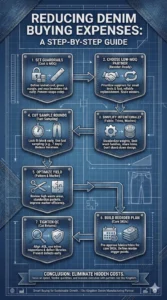
How to Break Down the Timeline
A buyer should ask the factory to show the 22-day claim as a milestone schedule. The schedule should not hide development work inside production time. Techpacker’s explanation of garment samples is useful here because it reminds buyers that PP samples and production samples have different purposes. A lead-time claim after PP approval is not the same as a lead-time claim before development is finished.
| Stage | Buyer question | What can delay it | Control action |
|---|---|---|---|
| Pre-production freeze | Are sample, BOM, labels, size set, and wash route approved? | Late design changes or missing trims | Freeze the decision list before the clock starts |
| Material preparation | Is fabric already in hand or booked? | Fabric shade, shrinkage, or mill timing | Confirm lot and pre-production fabric test |
| Cutting and sewing | Is capacity allocated to this PO? | Line conflict or operator allocation | Request dated milestones |
| Wash and finishing | Is the wash route already tested? | Shade variation, handfeel mismatch, shrinkage drift | Use approved wash standard and measurement checks |
| Inline QC | Are defects being caught before completion? | Late discovery of stitching, measurement, or hardware issues | Inspect during production, not only at the end |
| Final inspection and packing | How is finished quality judged? | AQL failure, packing mismatch, carton issue | Define inspection method and packing standard in advance |
| Shipment handoff | Does the timeline include freight handoff or only factory finish? | Booking, documents, customs, destination requirements | Separate ex-factory date from delivery date |
Where Fast-Fashion Lead-Time Claims Usually Break
1. The buyer changes the product after approval
Changing wash, trim, label placement, size curve, or packaging after the production clock starts resets the risk. A fast schedule can only hold when decisions are frozen.
2. Wash development is treated as production
Eurofins highlights denim washing and stitching as quality-sensitive areas. If the wash has not been tested, bulk timing should not be treated as fixed. Wash development and bulk washing are different stages.
3. The factory counts ex-factory but the buyer hears delivered
A factory lead time usually describes production completion or ex-factory readiness. It may not include international freight, customs clearance, destination trucking, or retail warehouse processing. The buyer should ask which date the supplier is promising.
4. Final inspection is squeezed out
QIMA’s AQL inspection guidance is a reminder that final quality decisions require a sampling method and acceptance standard. If a short lead time leaves no space for inspection or correction, the buyer is accepting more risk than the calendar shows.

Buyer Red-Flag Table
| Supplier answer | Risk | Better follow-up question |
|---|---|---|
| “22 days for everything” | Scope is undefined | From which approved stage does the clock start? |
| “We can arrange fabric later” | Material lead time is not counted | Is the exact fabric available now? |
| “Wash can be adjusted during production” | Bulk may drift from sample | What is the approved wash standard and shade range? |
| “Inspection happens at the end” | Defects may be discovered too late | What inline checks happen before final inspection? |
| “Delivery date is around then” | Production and logistics are mixed | Is this ex-factory, port handoff, or arrival date? |
How to Use a 22-Day Claim Responsibly
Do not reject a short timeline automatically. Use it as a test of operational clarity. Ask the supplier to define the exact starting point, assumptions, exclusions, and evidence. If the supplier can show those details, the number becomes a planning tool. If the supplier cannot, the number is only a sales line.
When This Working Model Fits
If your style is a repeat order with approved fabric, trims, wash, and QC records, a short factory timeline may be realistic. If the style is new, the wash is experimental, or the brand is still changing details, treat the lead time as conditional until development is frozen.
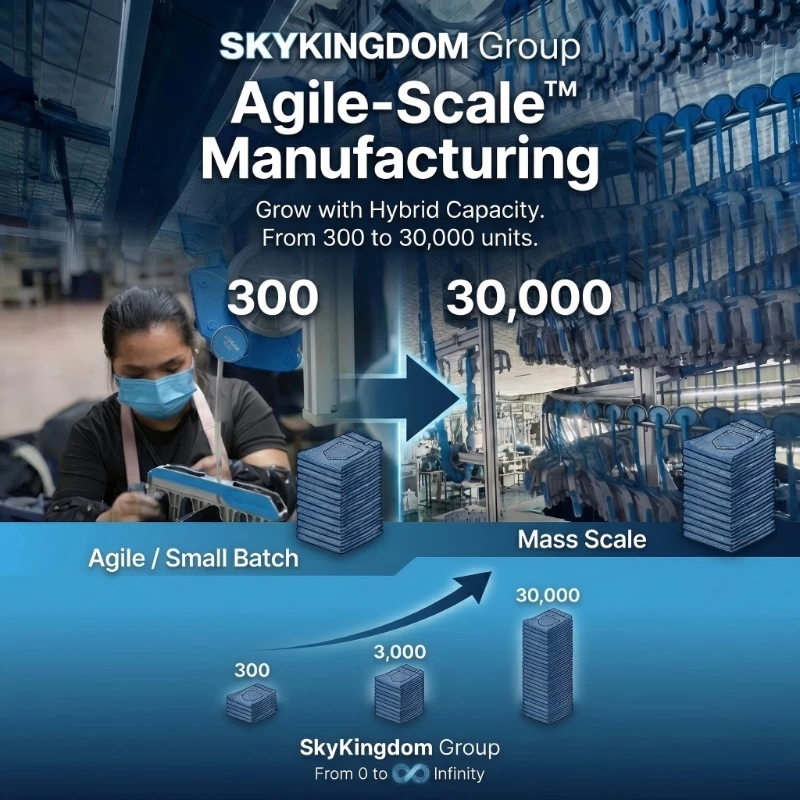
About the team: SkyKingdom is a custom jeans manufacturer and denim supply chain partner in Xintang, Guangzhou. It is a practical fit when fast-fashion buyers need a conditional lead-time discussion tied to sample approval, wash control, QC gates, and repeat-order records instead of a vague speed promise.
FAQ
Q1. Can a denim factory really complete bulk production in 22 days?
It can be credible in some cases, but only with clear preconditions: approved sample, available fabric, confirmed trims, stable wash route, booked capacity, frozen packing requirements, and inspection gates. It should not be treated as a universal promise for every custom denim style.
Q2. When should the 22-day clock start?
The clock should start from a defined production-ready point, not from the first inquiry. A practical start point is after sample approval, material confirmation, purchase order confirmation, and production slot booking.
Q3. Which denim styles are less suitable for a short lead-time claim?
Styles with experimental washes, heavy distressing, custom hardware, embroidery, complex panels, special packaging, or unclear measurements are less suitable. These styles need more development and inspection time before bulk can be stable.
Q4. What evidence should a buyer request before trusting a lead-time claim?
Request a milestone schedule, material readiness confirmation, approved sample record, wash standard, capacity confirmation, inline inspection plan, final inspection method, and shipment handoff plan.
Q5. How can brands reduce lead-time risk without pushing unsafe speed?
Freeze decisions early, reduce SKU complexity, approve substitute trims before production, separate wash development from bulk approval, use clear QC gates, and define reorder records. The goal is controlled speed, not pressure without evidence.
Sources Checked