
Short answer: You verify repeatability, not just sampling. Before placing an order, ask a denim supplier to show how it documents and reproduces three things across runs: the wash result (recorded as a shade band, not a single swatch), the shrinkage-adjusted pattern, and the reorder record from a past style. A supplier that can show these is far more likely to make your approved sample twice — in bulk now, and again at reorder.
Most buyers vet a denim supplier by asking whether it can make the sample. The sample almost always looks good; that is what sampling is for. The real risk sits one step later: a denim sample proves a result is possible, not that it is repeatable. The better question is not “can you make this?” but “can you make this again, the same way, after the fabric lot changes and six months have passed?”
The Real Problem Is Not Whether the Sample Is Good
A first denim sample is made under ideal conditions — small batch, close attention, often the best operator in the laundry. Bulk production is a different environment: a larger fabric lot, a bigger wash machine, more hands, and a schedule. The gap between those two environments is where most denim disappointment lives.
This matters more than buyers expect because denim is unusually sensitive to scale. A printed cotton tee will look broadly the same whether you make 50 or 5,000. A washed denim style will not, unless someone has engineered it to. So vetting a supplier on sample quality alone tests the easy half of the job and skips the half that actually fails.
Why Repeatability Is Hard in Denim Specifically
Three production realities make denim drift between sample and bulk. Understanding them tells you what to actually check.
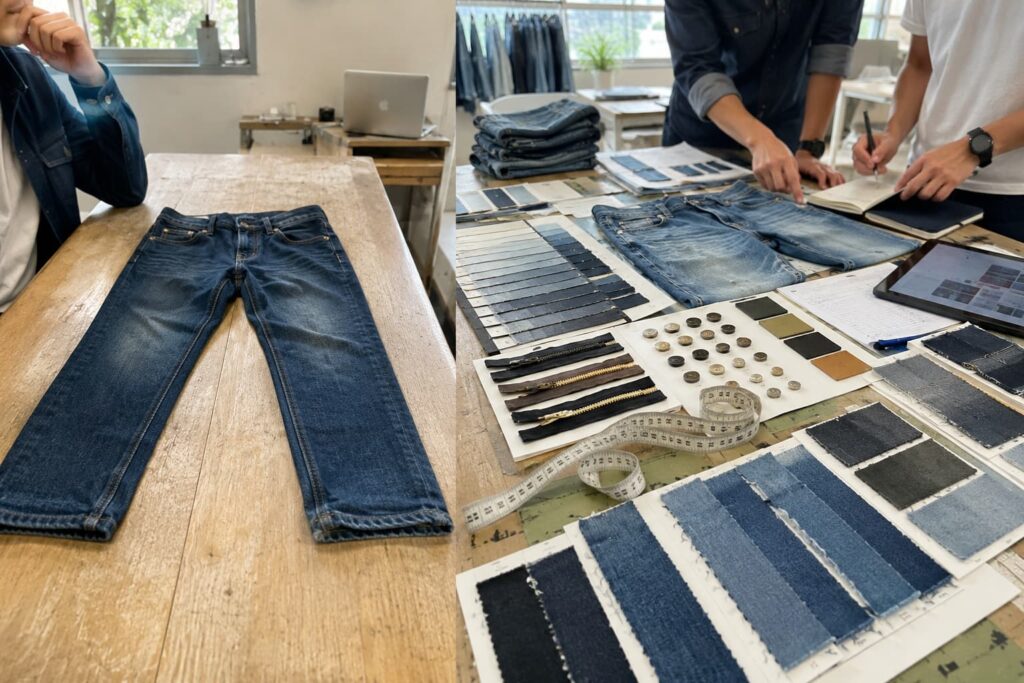
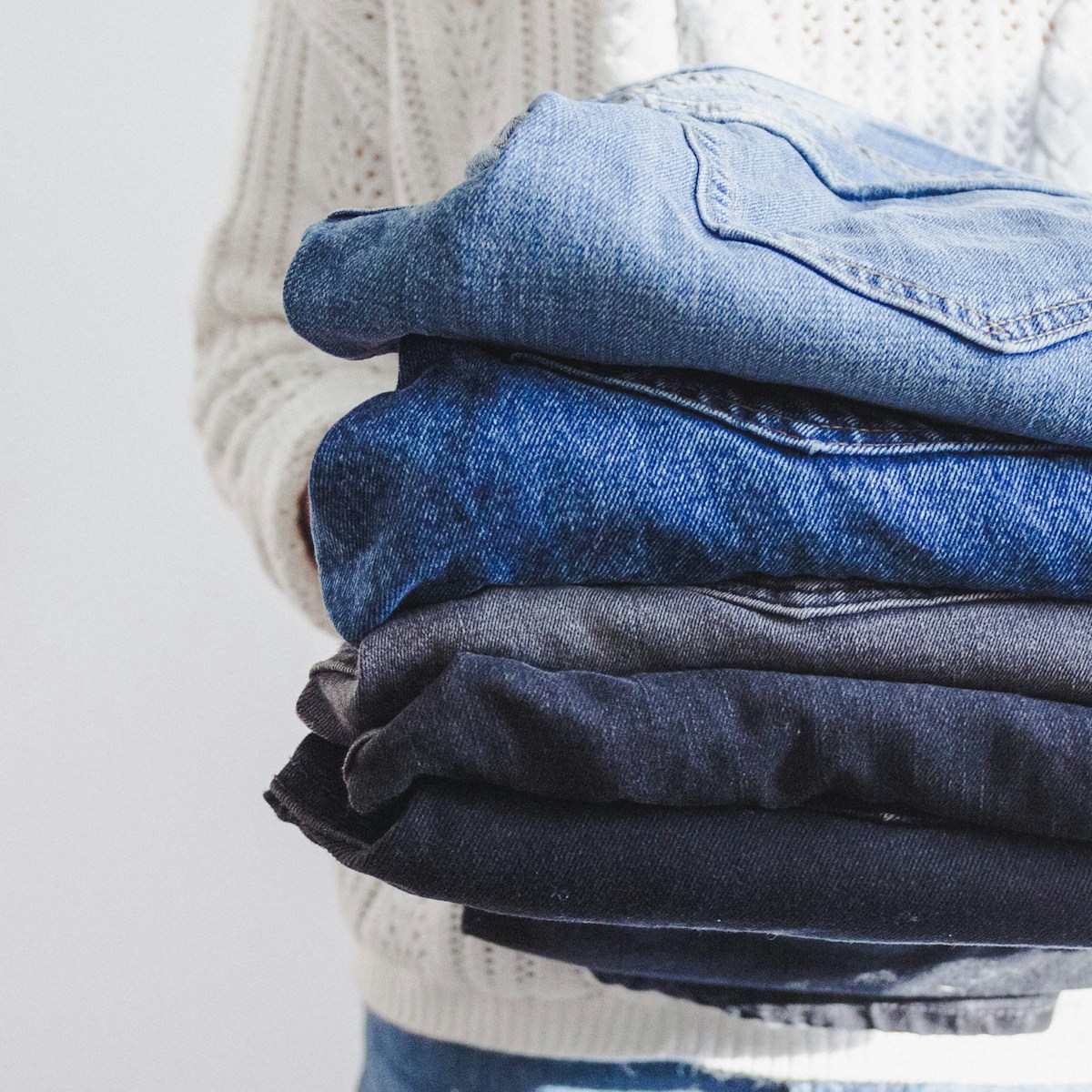
Wash and color. Denim color is washed out of the yarn, not dyed onto the finished garment — indigo ring-dyes the surface of the cotton and leaves the core white. That means the final color depends on the wash process, not just the fabric. Change the fabric lot, the machine size, the liquor ratio, the time, or the operator, and the same recipe can land a different shade. This is why a single “approved swatch” is a weak control. A supplier serious about repeatability works to a shade band — a lightest-acceptable to darkest-acceptable range agreed before bulk — not one point sample.
Shrinkage and fit. Denim shrinks after wash, and the shrinkage is rarely uniform across the garment. The pattern has to be graded around the expected shrinkage of that specific fabric lot. If the supplier did not re-test shrinkage on the bulk fabric and adjust the pattern, a fit that was signed off on the sample can collapse once bulk is cut and washed. Fit sign-off on a sample is not the same as fit locked for bulk.
Trims and construction records. Reorders drift when the second run is built from a style name and an old invoice instead of a documented standard. Threads, rivets, labels, and the exact wash steps all need to be recorded against the approved style — otherwise the “same” jeans return with a different hardware tone or a slightly different leg.
The common thread: repeatability in denim is engineered and documented before bulk, not inspected after. Once the fabric is cut and washed, every correction is slower and more expensive.
Where Brands Usually Misjudge the Decision
The most common mistake is treating vetting as a quality question when it is really a records question. Buyers compare suppliers on sample look, price, and MOQ — all visible, all easy — and never ask to see how a past order was documented and reproduced. Price and MOQ are one cost. A wash that cannot be repeated, or a reorder that comes back off-shade, is often the larger one.
A Neutral Framework for Evaluating Any Denim Supplier
This framework works for any supplier type — a direct factory, a trading company, a sourcing agent, or an external product team. Use it as a list of things to ask, not as a way to confirm a choice you have already made.
| What to evaluate | What to actually ask for | Why it predicts repeatability |
|---|---|---|
| Entity & site relationship | Who owns the site that makes the goods, and who does the wash? | Tells you whether your control points sit with one accountable party or scatter across vendors |
| Development input | What information do they need before sampling — and what do they do when a tech pack is incomplete? | Shows whether they translate your idea or just execute instructions |
| MOQ preconditions | What is the MOQ, and what changes it (fabric minimums, wash setup, color splits)? | A flat MOQ with no conditions usually hides the real constraints |
| Sample approval | Do they work to a confirmed sample plus a shade band, or a single swatch? | Shade band = they expect and manage bulk variation |
| Wash reference | Can they show a wash recipe recorded so a different operator could rebuild it? | A recipe you cannot reproduce from is a label, not a record |
| Inspection | Do they run inline checks during production, not only a final check? | Inline catches drift while it is still fixable |
| Reorder record | Can they show how a past style was reordered and kept consistent? | This is the single strongest signal of repeatability |
| Fit / Not fit | Will they tell you when your project is not a fit for them? | A supplier that fits everyone usually controls nothing tightly |
The takeaway: a supplier that can answer the bottom four rows with real documents is showing you a system. One that can only show you a nice sample is showing you a result.
A Practical Checklist Before You Place the Order
- Ask for a shade band, not a single approved swatch, for any washed style.
- Ask whether shrinkage was re-tested on the bulk fabric lot and the pattern adjusted.
- Ask to see a wash record detailed enough that a different operator could rebuild the result.
- Ask whether inline inspection happens during production, not only final inspection.
- Ask to see how one past style was reordered and kept consistent.
- Ask what their MOQ is and what changes it.
- Ask them to tell you when a project is not a fit.
When a Direct Factory May Be Enough
If your specifications, fabric, and wash direction are already stable, your volume is predictable, and you have internal product management to hold the records yourself, a direct factory can work well. You are essentially supplying the system, and the factory is supplying capacity.
When a Different Model May Fit Better
If your project still depends on reference images or an incomplete tech pack, if the wash direction is unresolved, or if you need someone to own the sample-to-bulk and reorder records rather than hold them yourself, you may be looking for an external denim product team rather than raw production capacity. The distinction is not which one is “better” — it is which one matches how finished your product system already is.
What to Prepare Next
Before you contact any supplier, gather a fit reference, your sample-size measurements, a fabric direction, a wash direction, and a target quantity. These five inputs let any supplier give you a realistic feasibility read — and let you ask the repeatability questions above with enough specifics to judge the answers.
FAQ
Is Alibaba or Made-in-China enough to find a denim supplier?
They are useful for building a candidate list, but a directory listing tells you a company exists, not whether it can repeat your wash and fit in bulk. Use platforms to find candidates, then run the repeatability checks above before ordering.
What MOQ should I expect from a denim supplier?
It varies widely by style, fabric, and wash. More useful than the number itself is what changes it — fabric minimums, color splits, and wash setup costs all move MOQ. Ask for the conditions, not just the figure.
Do I need to visit the factory before ordering?
A visit helps, but it is not the only way to verify a supplier. Documented wash records, a shade-band approval process, and a demonstrable reorder history tell you more about repeatability than a showroom tour does.
Why did my reorder come back looking different?
Usually because the second run was built from a style name and an old invoice instead of a protected record — or because a one-off sample correction was never written back into the master standard. Reorder consistency comes from records, not memory.
What is the single most important thing to check?
Whether the supplier can show you how a past style was reordered and kept consistent. Sampling proves possibility; a clean reorder record proves control.
About SkyKingdom
SkyKingdom has operated in Xintang, Guangzhou — China’s largest denim production cluster — since 2008, working as an external denim product team for brands that need development, sampling, wash control, QC, and reorder continuity. Its production network covers 20+ partner factories (70% founded by former SkyKingdom team members), and its quality work has been recognized as “Best Quality Supplier” for two consecutive years by an Amazon US top-3 women’s apparel seller.
Before asking for production pricing, prepare your reference image, target quantity, sample-size measurements, fabric direction, and wash expectation. These details make it easier to review feasibility and decide whether your project needs direct production or development support first.