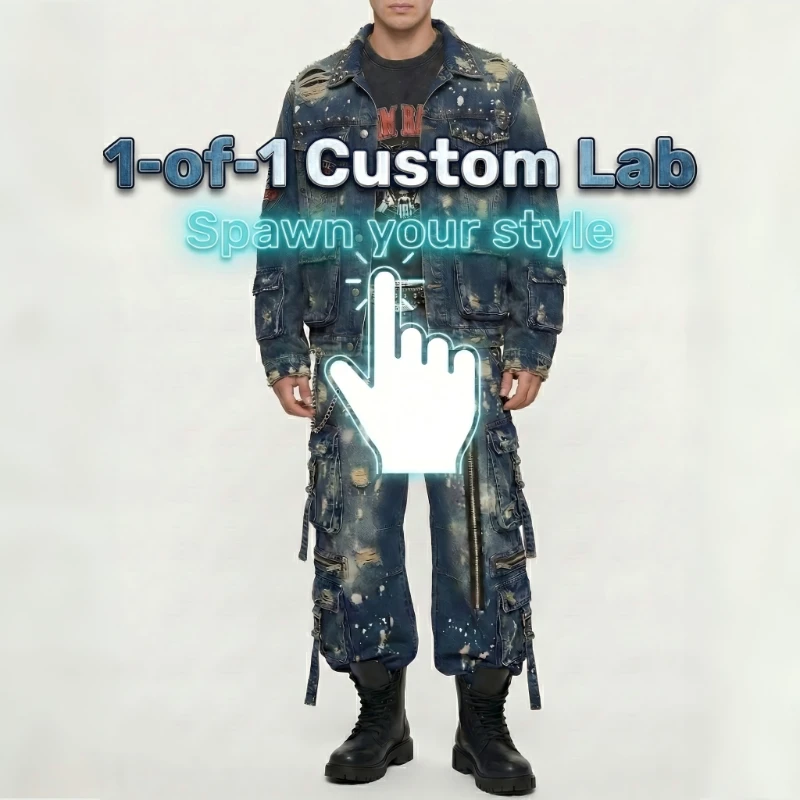

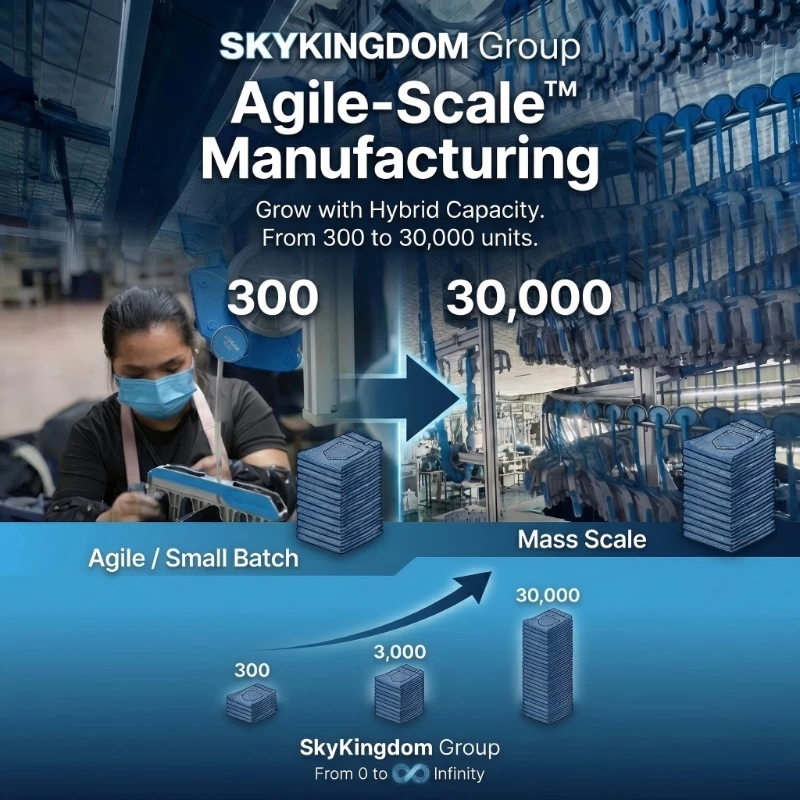
Generating a denim design with AI takes minutes. Getting that design into production takes considerably longer, and the distance between the two is where most brands quietly lose money. This guide is about that distance.
1. The Three Gaps Between an AI Image and a Producible Sample
Midjourney, Stable Diffusion, Adobe Firefly — these tools are good at one thing: producing images that look like garments. They are not optimised for manufacturing feasibility. Between a render that looks correct and a first sample that actually is correct, three gaps have to be closed. Most development delays trace back to one of them.
Gap 1: Construction Ambiguity
An AI image shows how a garment looks from the outside. It does not specify seam placement, stitch type, pocket construction, bartack location, waistband interlining, or fly configuration. A pattern maker working from an AI image must make dozens of construction decisions that the image leaves undefined. Each decision is a potential deviation from the designer’s original intent — not because the pattern maker is wrong, but because the information was never provided.
What comes back is a sample that photographs reasonably well but fits wrong, sits wrong, or opens differently than expected. Then the revision rounds start — each one costing time and fees that were not in the original budget.
Gap 2: Material Unknowns
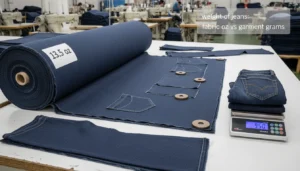
Every AI-generated denim image carries an implied fabric weight, texture, and stretch level — but these are visual impressions, not specifications. A rendered “heavyweight rigid indigo” might be interpreted by a factory as anything from a stiff 12 oz ring-spun twill to a 14.5 oz open-end selvedge, depending on what they stock. The conversion factor alone — 1 oz/yd² ≈ 33.91 gsm — illustrates how imprecise “heavy” or “light” is as a brief.
Without a fabric direction, the development team is selecting materials based on inference. The sample may be technically well-made while being entirely wrong for the brand’s aesthetic and price-point requirements.
Gap 3: Wash Chemistry Mismatch
A wash finish in an AI image is a visual approximation — the model learned from photographs of finished garments, not from laundry chemistry. “Medium enzyme wash” as a label tells a laundry nothing actionable. The same phrase as a recipe specifies enzyme type, dosage (as a percentage of garment weight), temperature, process time, liquor ratio, and pH. Those are two completely different documents.
Two garments that look nearly identical in a render can require different wash programmes entirely — one runs 2% acid cellulase at 45°C with a 1:8 liquor ratio at pH 5.5, the other uses neutral cellulase under different conditions. If wash development is skipped or left vague in the brief, the sample result becomes a guess that cannot be reproduced reliably once bulk quantities are involved.
AI image tools are genuinely useful for generating design direction. They do not produce a specification. Someone still has to translate the image into fabric weight, construction details, and wash chemistry — and that translation is where the product is actually made or broken.
2. What a Denim Product Team Actually Does (That AI Cannot)
The standard factory model assumes you arrive with a tech pack. Hand them a complete specification, they manufacture it. That works fine if your brand has a pattern maker, a fabric developer, a wash technician, and a QC manager on staff.
Most growing denim brands have none of those people. They have a founder with a clear vision, or a buying team that knows what they want but not how to specify it. The gap between “we know what this should look like” and “here is a production-ready document” is where development budgets disappear.
A denim product team handles that gap. It functions as external technical capability — something the brand calls on when needed rather than builds and maintains. Here is how the model differs from standard CMT:
| Function | Standard CMT Factory | Denim Product Team |
|---|---|---|
| Input required | Complete tech pack | Visual reference + aesthetic intent |
| Fabric selection | Brand specifies | Team proposes options to brief |
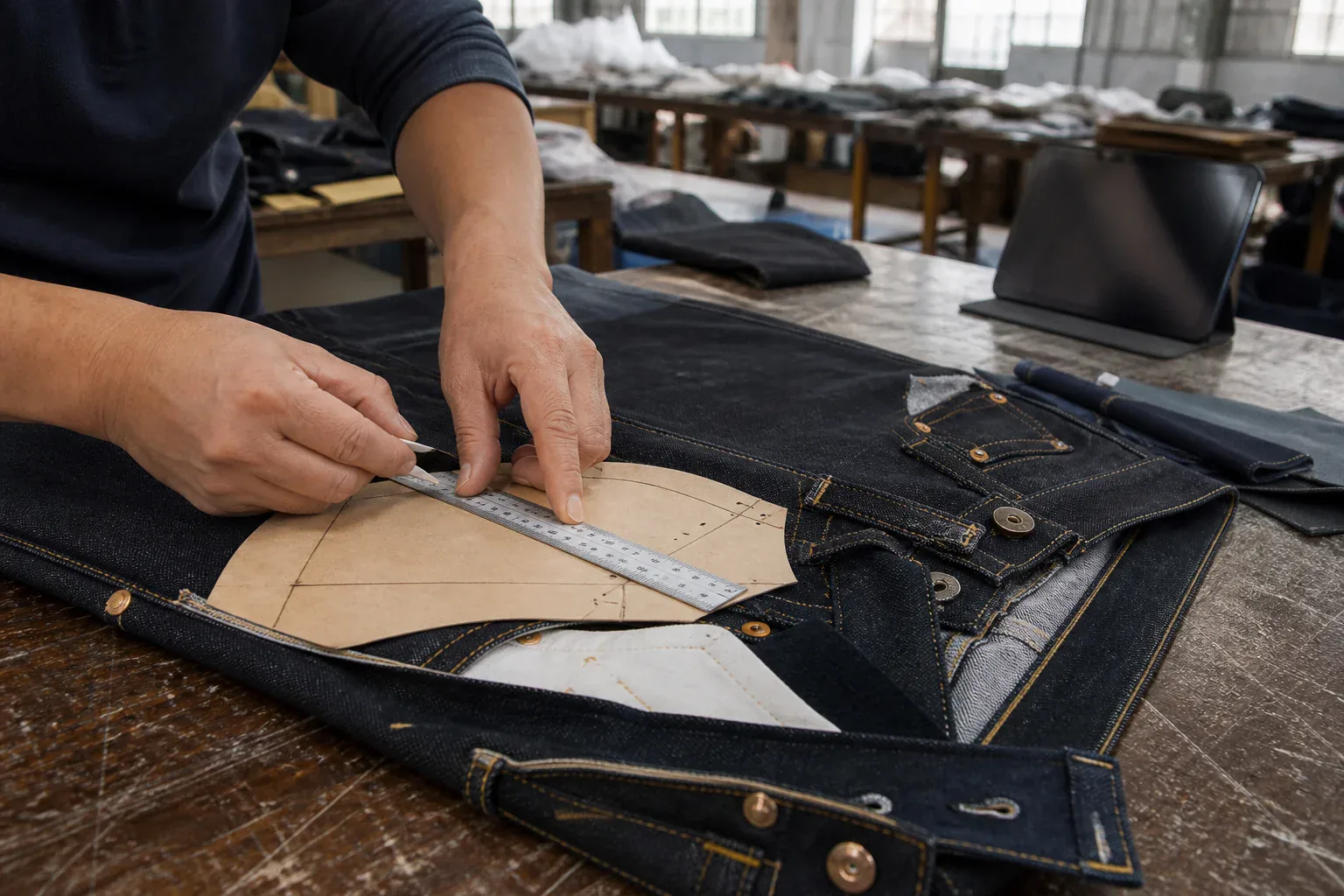
| Pattern development | Follows provided pattern | Builds pattern from silhouette reference |
| Wash development | Matches provided sample or recipe | Develops wash from mood/reference image |
| Tech pack | Not included | Produced as part of development |
| Revision loop | Costs per revision | Built into development process |
| Reorder consistency | Depends on documentation provided by brand | Archived recipe, baseline, and seal sample maintained |
In practice, this means a brand working from an AI image brief can start a development conversation without a tech pack. The development partner runs the technical translation: pulls out the construction decisions, proposes fabric options, runs wash development in parallel, and delivers a sample that can actually be held and evaluated — not just looked at on screen.
3. The 7-Step Verification Protocol: AI Image to First Sample
What follows is how a structured development run moves from an AI image to a reviewable first sample. Each step produces something the next step depends on. Skipping a gate rarely saves time — it usually adds revision rounds further down.
Before any pattern is drawn or fabric is selected, the development team conducts a structured review of the AI image with the brand. The questions are specific: What is the target retail price point? Who wears this and in what context? What is the intended fabric weight range — under 12 oz, 12–14 oz, or above? Is stretch required, and if so, 2-way or 4-way? What is the desired wash feel — stiff, soft, broken-in?
None of these questions require technical knowledge. They require an opinion. The answers are enough to build a direction document — which is what the pattern and wash work are both built from.
The team breaks the AI image into its component construction decisions. Silhouette is annotated — rise, inseam length, leg opening, waistband width. Pocket configuration is specified — patch vs. welt, pocket bag depth, coin pocket position. Fly type is confirmed — button or zip, bartack pattern. Hardware is listed — button diameter, rivet placement, zipper pull type.
Every ambiguity the image left open gets resolved here — against comparable garments, brand references, or a direct question. Nothing gets assumed and carried forward.
Based on the intent extraction (Step 1) and construction map (Step 2), the team proposes 2–3 fabric options aligned to the brief. Each option includes: weight (oz and gsm), yarn spinning method (ring or open-end, with the 15–30% cost difference noted), weave structure, stretch specification if applicable, and estimated fabric cost per metre.
The brand selects a direction. Physical swatches are referenced for hand-feel and weight confirmation before the first sample is cut.
Wash development runs in parallel with pattern development, not after it. The team collects wash references — physical garments, reference photographs, or mood images — and maps them to a wash programme proposal. This includes process type (enzyme, stone, bleach, laser, ozone, or combination), estimated colour depth range, and whether the finish is reproducible at the planned production volume.
“Medium blue enzyme wash” is a label. A wash development record is something else — chemical type, dosage as a percentage of garment weight, temperature, process duration, liquor ratio, pH range. That record is what gets filed and referenced on every reorder. Without it, the next production run is a new wash development exercise, regardless of how good the first sample looked.
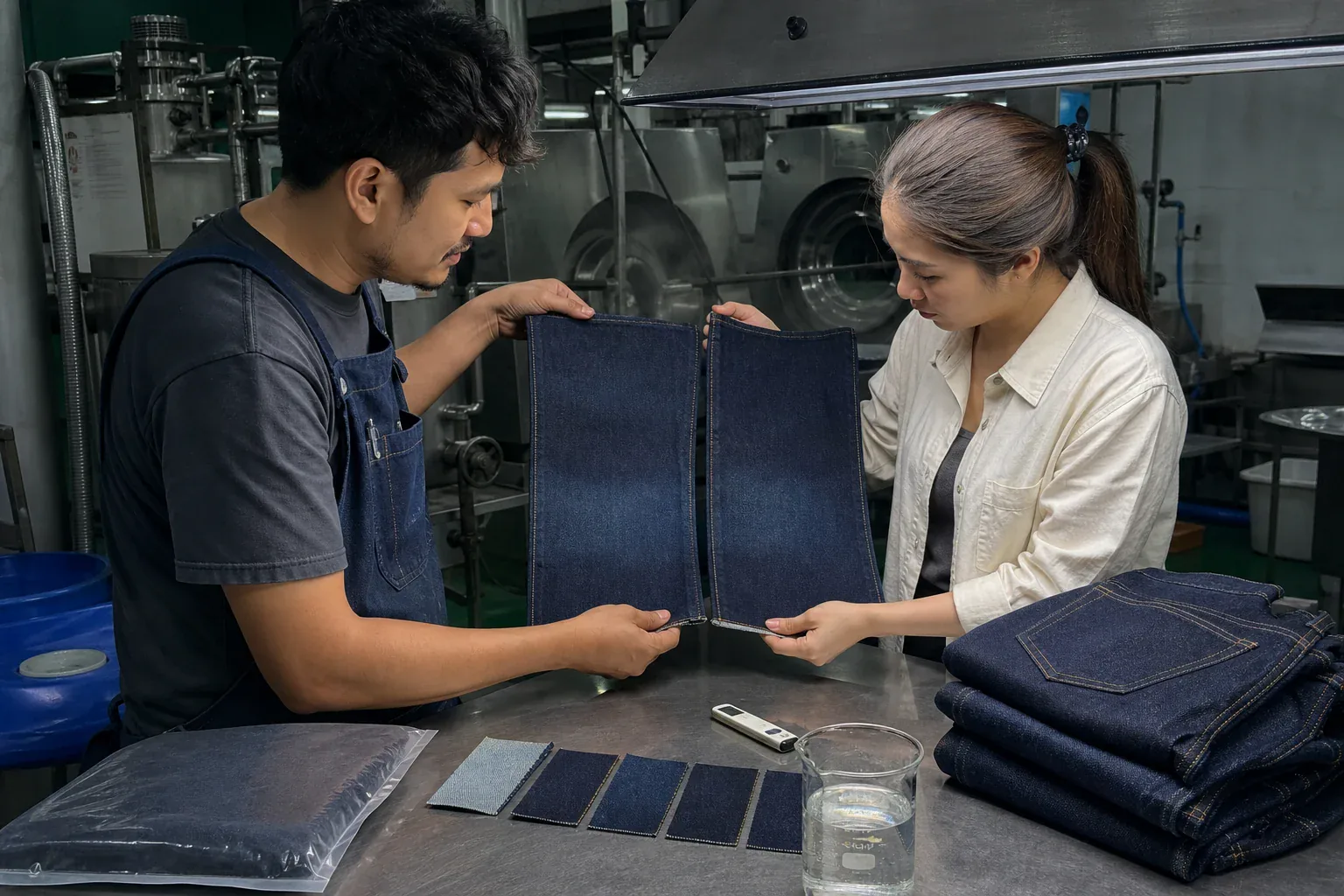
The first sample (proto) is produced in sample fabric — which may not be the final bulk fabric — to verify silhouette, construction, and proportion before fabric and wash costs are committed. The team conducts an internal pre-review against the original AI image and the direction document from Step 1 before presenting the sample to the brand.
The pre-review checks: Does the silhouette match the annotated brief? Are construction details executed as specified? Is the fabric weight and hand-feel consistent with the direction? Is the wash within the reference range?
The brand reviews the sample alongside the direction document and the team’s pre-review notes. The most useful feedback at this stage is specific: “the rise is 1.5 cm too high, the leg opening needs to be 3 cm wider, the wash should be lighter across the thigh.” Vague feedback — “something feels off” — creates more revision rounds than it prevents.
Every change instruction gets documented before the revision sample is cut. This becomes the revision log. It stops the same problem from resurfacing two rounds later because someone forgot what was agreed.
The PP sample is cut in the actual bulk fabric, with the confirmed wash recipe, and produced on the factory line that will run the bulk order. It is the production system’s final declaration that it can deliver what was approved. When the PP sample is signed off, six production parameters are frozen:
- Fabric specification — weight, composition, yarn lot reference
- Shade band — physical upper and lower colour limits under standard lighting
- Wash recipe — the full documented chemistry and process parameters
- Post-wash measurements — warp and weft shrinkage, finished dimensions
- Hand-feel reference — sealed physical sample
- AQL inspection level — agreed defect classification and acceptance criteria
These six parameters become the reorder baseline — the document that makes a second production run match the first without starting development over.
Step 3 confirms the fabric before Step 5 cuts it. Step 4 develops the wash before Step 7 locks it into the baseline. Miss Step 3 and the first sample is made in an unconfirmed material. Miss Step 4 and there is nothing to baseline the PP sample against. The sequence exists because each gate closes a specific risk — not because it is procedurally satisfying.
4. What You Need to Provide — and What You Don’t
Brands sometimes assume they need a complete technical brief before development can start. That is the CMT model — you hand over a spec, they execute it. A product development team works from a different starting point.
What you need to provide
- Visual reference: The AI image(s), plus any physical garments, editorial images, or mood references that clarify the aesthetic intent. More reference is better. Ambiguity creates revision rounds.
- Silhouette intent: Fitted, straight, relaxed, or oversized. If you have a fit reference on a body, include it.
- Fabric direction: Even an approximate answer helps — “I want it to feel structured, not stretchy” or “I want something lightweight and drapey” is enough to begin fabric selection.
- Wash mood: Light, medium, dark. Vintage, clean, distressed. A physical reference garment or a photograph of an existing wash you like is the most useful input.
- End-use context: Who buys this? At what price point? For what occasion? This shapes every material and construction decision.
What you do not need to provide
- A completed tech pack
- Fabric specifications in oz or gsm
- A documented wash recipe
- A graded pattern
- AQL inspection standards
- Label compliance specifications
All of those are outputs of the development process. The team produces them. The brand’s job is to have a clear point of view about what the product should be and who it’s for — the team’s job is to turn that into something buildable.
| Input Type | Provided By | Used For |
|---|---|---|
| AI image + mood references | Brand | Intent extraction, construction mapping |
| Aesthetic intent answers | Brand | Fabric proposal, wash direction |
| Fabric specification | Development team | Sample production, cost structure |
| Tech pack / pattern | Development team | First sample, PP sample |
| Wash recipe (documented) | Development team | PP baseline, reorder consistency |
| QC standard (AQL level) | Development team, confirmed by brand | Pre-shipment inspection |
5. What a Complete Development Run Delivers
At the end of a full development run, the brand holds more than a sample. It holds a documented product — something that can be reordered, graded into additional sizes, or handed to a different production partner without starting over. The package has three parts.
Physical Deliverables
- Approved PP sample: The physical garment that governs bulk production. It is dated, labelled, and retained as the legal reference for quality disputes.
- Shade band swatches: Physical upper and lower colour references for wash approval, established under standard lighting conditions.
- Sealed hand-feel reference: A fabric swatch representing the approved softness and stiffness level.
Technical Documentation
- Tech pack: Full garment specification including pattern measurements, construction details, stitch types, hardware list, label placement, and measurement tolerances.
- Wash recipe record: The documented chemistry and process parameters for the approved finish — not a label, a reproducible recipe.
- BOM (Bill of Materials): Complete list of every component — shell fabric, pocket lining, thread, hardware, labels, packaging — with unit costs and sourcing references.
- Shrinkage data: Post-wash warp and weft shrinkage measurements per AATCC TM135, used to calibrate the cut pattern for bulk.
Operational Baseline
- Production baseline file: The six frozen parameters (fabric, shade, recipe, shrinkage, hand-feel, AQL) that govern all future reorders. This is the document that makes a reorder consistent rather than approximate.
- Revision log: The documented history of changes from first sample to PP approval — useful for understanding what was changed and why, particularly when onboarding new team members or partners.
A sample is a physical object. A product is a physical object plus the documentation to reproduce it. The difference matters most when the first run sells and the brand needs more — without a production baseline, that reorder is effectively a new development exercise.
6. Who This Development Path Is For
Not every brand situation suits this model. It helps to be honest about where it fits and where it doesn’t.
Brands this works well for
- DTC and e-commerce brands launching a first denim collection: Strong visual identity, no in-house technical team, need to develop 3–8 styles for a first or second season.
- Creator-led brands with AI-generated concepts: Designers using generative tools to explore silhouettes and washes before committing to development costs. The AI image is a starting point for conversation, not a finished brief.
- Established brands adding denim to an existing range: The brand has buying and merchandising capability but no denim-specific development expertise internally.
- Brands testing a new market with small-batch production: Development runs can be structured to deliver both a sample package and a small first production, allowing market testing before full commitment.
Situations that require a different approach
- Brands that need a finished product in under six weeks: Structured development takes the time it takes. Compressing the process beyond what the revision cycle allows creates quality risk, not speed. Development timelines depend on revision rounds, not just production capacity.
- Brands with an existing, approved tech pack: If you already have a complete, production-ready specification, you need a CMT partner, not a development team. Development is the process of creating that specification.
- Brands where price-per-unit is the only decision criterion: Development investment is not the right model for buyers whose primary need is the lowest possible unit cost on a standardised style. That is a sourcing problem, not a product development problem.
Development speed is mostly determined by revision rounds, not factory capacity. A brand that gives specific feedback and makes decisions at the right level moves fast. A brand with vague comments and four internal approvers does not — regardless of how quickly the factory turns samples. Worth knowing before the first sample arrives.
What the development relationship looks like in practice
The development relationships that work well tend to look similar: the brand is direct about what they don’t know, makes decisions at the right level, and gives feedback that is specific enough to act on. “We don’t know” is a usable answer — it prompts a question. “Something feels off” is not.
On the team’s side, that means asking questions rather than assuming, presenting options with the reasoning attached, logging every change before the next sample is cut, and raising technical problems early rather than hoping they resolve themselves. The shared goal is a product that works — not a process that looks smooth while the problems accumulate.
Frequently Asked Questions
Accuracy depends on four verifiable inputs from the brand: a clear construction reference (flat sketch or annotated AI image), a fabric direction (weight range, stretch level, surface finish), a wash reference (physical garment or photograph), and a measurement intent (fitted, relaxed, or oversized). With these four inputs, a qualified development team can build a tech pack and a first sample that closes the gap between the AI image and a wearable garment.
The most common failure is submitting only the AI render and expecting the manufacturer to guess the rest. AI images do not carry fabric weight, stitch density, seam construction, or wash chemistry. These must be specified — either by the brand or, through structured extraction, by the development team — before production begins.
Use AI image tools to generate visual direction, then hand the output to a denim product team for technical translation. Your role is to define the aesthetic intent: mood, silhouette, wash feel, fabric weight direction, and end-use context. The development team’s role is to convert that intent into a buildable specification.
You do not need professional denim training to create a strong brief. You need a clear point of view and a development partner who can ask the right questions. The questions in the intent extraction interview (Step 1 of the protocol above) are designed to draw out technical requirements from non-technical answers. “I want it to feel heavy and structured, like vintage workwear” is a perfectly usable answer. “12 oz ring-spun rigid indigo, 3/1 twill construction” is the same answer after technical translation — and that translation is the development team’s job, not the brand’s.
Quality in AI-to-denim production is secured at three checkpoints — not at shipment. The first checkpoint is a tech pack review before the first sample is cut, confirming that construction decisions have been explicitly specified rather than assumed. The second checkpoint is first sample approval against the 7-point verification matrix: silhouette, construction details, fabric hand-feel and weight, wash result, colorway within the shade band, measurement tolerance, and label compliance. The third checkpoint is PP sample sign-off before bulk cutting begins, confirming that the production system — not just a sample room — can deliver the approved quality at scale.
Skipping any of these three gates is the most common reason that AI-designed garments arrive looking correct in product photographs but wrong in person. Each gate catches a different category of deviation. Pre-shipment AQL inspection (ISO 2859-1, AQL 2.5 for major defects) then confirms that the bulk execution matches the PP sample before goods leave the factory.
Have an AI Design Ready to Develop?
Share your reference images and we’ll outline the development path — no tech pack required to start the conversation.
SkyKingdom Encyclopedia — evidence-based denim development guides for brands building at scale. See also: Wash Recipe Documentation · The Production Baseline · AQL Level Selection