


Denim Yarn Count, Weave & Style Selection Guide (Revised Edition)
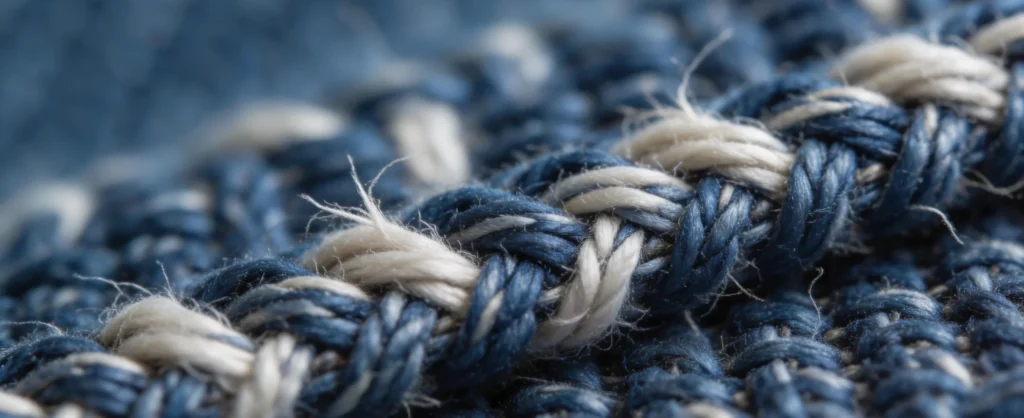
Yarn Count, Spinning Method, Weave Structure, Dyeing & Style Matching — A Practical Reference for Brands
Target Audience
Denim brand sourcing teams, designers, fabric developers, product managers, ODM/OEM project leads, and cross-border e-commerce sellers.
The Core Problem
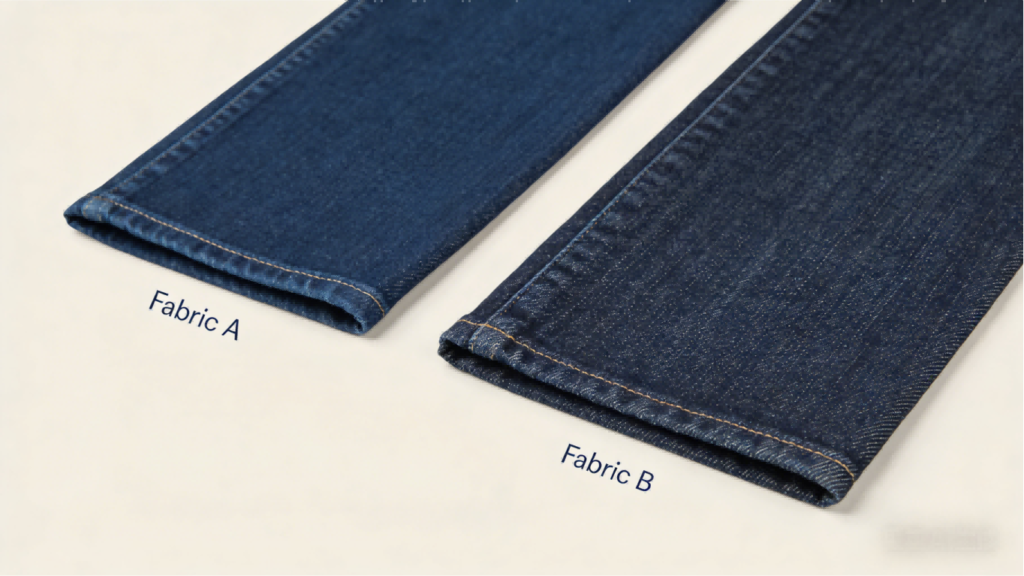
When developing denim, most brands fixate on weight, color, and price — but overlook a critical detail: Two fabrics both labeled “12oz indigo denim” can feel and look worlds apart. One might feel premium and structured; the other flat and flimsy. One works for vintage straight-legs; the other only fits lightweight women’s fashion.
It’s not just weight. The difference comes down to how you combine yarn count, spinning method, weave structure, dyeing route, stretch strategy, and your intended style. Misalign these, and you’ll end up with swatches that check all boxes on paper — but finished garments that miss the mark. Or worse: great visuals, but terrible wash results, fit, and wearability.
I. Why Weight Alone Isn’t Enough — You Need Yarn Count and Weave
Here’s the thing: Fabric weight isn’t a standalone setting. It’s the end result of yarn count, warp/weft density, and weave structure. Yarn count (and spinning method) dictates texture and hand feel at the yarn level. Weave structure shapes the fabric’s “architecture” and look. Dyeing determines color depth and how it fades over time.
So stop asking just, “How many oz is this fabric?” You need to ask:
- Is the yarn coarse or fine? Ring-spun or open-end? Slub or clean?
- How are warp and weft yarns paired?
- Is it 3/1 right-hand twill, left-hand twill, broken twill, or something else?
- How many indigo dips? Any sulfur overdye?
- Does it have stretch? Is that what your style needs?
1. Why Same Weight = Different Results
Same oz doesn’t mean same fabric. Two 12oz denims can differ in:
- Yarn thickness (Ne 7s and Ne 10s can hit 12oz with different densities)
- Spinning method (ring-spun has texture; open-end is smooth and affordable)
- Weave (3/1 twill is structured; 2/1 is lighter and softer)
- Dye depth (6-dip rope dye vs. 3-dip slasher dye = night and day for fading)
- Surface grain (slub vs. clean yarn = rugged vs. refined)
Example: A 12oz ring-spun slub 3/1 RHT denim is perfect for vintage men’s jeans. A 12oz open-end clean yarn 2/1 twill? Better for lightweight urban basics. Same weight, totally different use cases.

2. The Most Common Mistake Brands Make
Too many teams use vague language with suppliers: “I need 12oz blue denim,” “Make it feel vintage,” “It should look premium.” These descriptions aren’t enough.
Without specifying yarn count, spinning method, weave, and style goals, suppliers will deliver something “technically correct” — but stylistically wrong. You’ll waste time and money on re-samples.
3. Where Weight Actually Comes From
Let’s clear up a myth: You don’t pick a weight first. Weight is the result of yarn count + density + weave. Choose your yarn and weave direction, and weight follows naturally. That’s why two 12oz denims can look so different — they’re built from different combinations.
The right approach: Decide your style first. Then pick yarn and weave. Weight will fall into place.
II. What Yarn Count Actually Does — For Brands & Sourcing
The Basics: Reading Yarn Count
Denim uses the English count system (Ne): Higher number = finer yarn. Common warp yarns range from Ne 4~16s, split into three tiers (no hard rules — just guidelines):
Tier | Warp Yarn Count Range | Characteristics | Common Uses |
|---|---|---|---|
Coarse | Ne 4~7s | Thick yarn, textured surface, heavy and structured | Heavyweight vintage (14oz+), workwear |
Medium | Ne 7~10s | Versatile — balances texture and practicality | Mainstream jeans/jackets (10~14oz) |
Fine | Ne 10~16s | Thin yarn, smooth surface, refined | Lightweight denim, shirts (6~10oz) |
1. Surface Texture — It’s Not Just Yarn Thickness
General rule: Finer yarn = smoother, more modern. Coarser yarn = more texture, more vintage. But texture isn’t just about thickness — these factors matter more:
Spinning Method
- Ring-spun: Natural hairiness, subtle irregularities. Richer fade, more “denim character.” Standard for classic/mid-high-end denim.
- Open-end (OE): Uniform, bulkier. Flat surface, lower cost. Common for mass-market lines.
- Compact/Siro: Middle ground — specialized for specific feels.
Slub vs. Clean Yarn
Slub yarn has intentional thick-thin spots — it adds rugged texture. A Ne 10s slub can feel “rougher” than a Ne 7s clean yarn. It’s non-negotiable for vintage styles.
Twist Level
Higher twist = crisp, tight surface. Lower twist = soft, lofty feel.
2. Hand Feel & Style
Fine yarn + open-end + clean = refined, modern. Coarse yarn + ring-spun + slub = thick, rugged, authentic denim character. It’s that simple.
3. Post-Wash Performance
Yarn and spinning method dictate how denim fades:
- Ring-spun: Hairier, tighter fibers. Fades in layers — rich, three-dimensional “worn-in” look.
- Open-end: Random fiber arrangement. Fades uniformly, less dramatic.
- Slub: Exaggerated fade contrast at thick/thin spots — perfect for vintage.
If you want “3D fading,” don’t just pick a heavy weight — pick ring-spun slub yarn and the right dyeing.
4. Target Consumer Fit
Rugged (coarse + ring-spun + slub) = vintage, workwear, menswear with strong identity. Refined (fine + clean) = womenswear, urban casual, cross-border basics.
5. Warp & Weft Pairing Matters
Weft yarn isn’t an afterthought. Coarse warp + fine weft feels different than fine warp + coarse weft. Weft color (white, gray, indigo) changes face/back contrast and cuff appearance. Weft material (100% cotton, cotton-poly, spandex) affects hand feel and stretch.
III. Weave Structure — It Defines Your Garment’s Style
Weave isn’t just construction — it’s the fabric’s “voice.” And let’s be clear: Denim is twill weave. Plain weave? That’s chambray, not denim. This matters — if you want “denim character,” start with twill.
Basic Twill Types for Denim
- 3/1 twill (warp-faced): Weft passes over 3 warps, under 1. Indigo face, white back. Classic, most common.
- 2/1 twill: Shorter floats, lighter/thinner. Good for lightweight denim, shirts.
- 2/2 twill: Balanced warp/weft. Soft, less intense indigo face.
Weave Types & Style Fit
Weave Type | Key Traits | Style Vibe | Best For | Pros | Things to Note |
|---|---|---|---|---|---|
3/1 Right-Hand Twill (RHT) | Twill line: lower-left to upper-right | Classic, stable, iconic denim look | Core trousers, jackets, vintage lines | Mature supply chain, consistent quality | Levi’s go-to; can feel generic if not paired with good yarn |
3/1 Left-Hand Twill (LHT) | Twill line: lower-right to upper-left; softer | Comfortable, subtly different | Comfort-focused trousers, brand differentiation | Soft hand feel; stands out from RHT | Lee’s traditional choice; fades differently than RHT |
Broken Twill | Twill direction alternates (left-right-left) | Uniform surface, no dominant diagonal | Straight/bootcut jeans (leg twist sensitive) | Eliminates post-wash leg twist | Wrangler’s choice; functional, not just stylistic |
2/1 Twill | Shorter floats, light/thin | Light, soft, breathable | Lightweight jeans, shirts, summer styles | Retains twill identity; good for light lines | Less structure; not for “stiff” styles |
2/2 Twill | Balanced, similar face/back | Soft, dual-face look | Reversible pieces, special hand feel | Minimal color contrast; unique vibe | Less “denim” recognition |
Special/Fancy Twills/Jacquard | Unique patterns, added texture | Highly distinctive, memorable | Signature lines, designer collabs | Strong differentiation | Harder to control batch consistency |
A Critical Note: Leg Twist
Unidirectional twill (RHT/LHT) causes pant legs to twist after washing — the inseam shifts forward/back. Broken twill cancels out this torque, so legs hang straight. For clean straight-legs, broken twill is a functional choice, not just a style one. Some vintage brands keep unidirectional twill for “authenticity” — your call, based on your audience.
Bottom line: Classic weaves are safe and stable. Special weaves build style barriers but require better factory execution. Know why you’re choosing broken twill (function vs. style) and whether you can live with RHT/LHT twist.
IV. Dyeing Route — The Overlooked Style Driver
Yarn and weave matter, but dyeing often has a bigger impact on final style — especially how it fades.
1. Indigo Dyeing 101
Indigo only bonds to the yarn surface (ring dyeing) — that’s why denim fades so beautifully. Each wash wears away a layer, revealing the white core underneath. That’s the magic of classic denim.
2. Dip Count Matters
In rope dyeing, the number of dips (passes through dye) determines color depth:
- 3~4 dips: Light color, fast fading — good for light/mid-blue.
- 6~8+ dips: Deep color, rich fade layers — perfect for vintage dark indigo.
3. Dyeing Methods & Style
Dyeing Method | Traits | Style Vibe |
|---|---|---|
Indigo Rope Dye | Classic; yarn twisted into ropes, dyed in baths | Rich fade layers, vintage character — premium/raw denim standard |
Indigo Slasher Dye | Yarn laid flat; faster, more efficient | Uniform color — mass-market friendly |
Sulfur Dye | Common for black/colored denim; better color fastness | Less layered fade — grayish fade for black |
Indigo + Sulfur Overdye | Double-dyed for depth | Deep blue-black; layered fade (indigo + sulfur fade differently) |
4. Brand Tips
- Vintage fade = rope dye + enough dips.
- Black denim: Sulfur black is stable (fades gray); indigo-under-sulfur has richer layers but is trickier.
- Dyeing can’t be chosen in isolation — pair it with yarn and weave.
V. Stretch vs. Rigid — Don’t Overlook This
Stretch denim (spandex/Lycra) dominates today’s market, especially womenswear and slim menswear. It’s not an afterthought — it’s a style and comfort decision.
1. Stretch Denim Basics
Most stretch denim has 1~5% spandex in the weft. Bi-stretch (warp + weft) offers more give. Newer “mechanical stretch” options skip spandex entirely.
2. Rigid vs. Stretch — What’s the Difference?
Aspect | Rigid (100% Cotton) | Stretch (With Spandex) |
|---|---|---|
Hand Feel | Stiff, structured, has “backbone” | Soft, body-conforming |
Wear Experience | Needs breaking in; molds to your body | Comfortable right out of the box |
Vintage Vibe | Strong, authentic | Weaker, more modern |
Post-Wash Fade | Sharp, defined (whiskers/honeycombs pop) | Softer, more diffused |
Target Audience | Vintage enthusiasts, raw denim fans | Mainstream consumers (comfort first) |
Shape Retention | Knee bags form; recovers after wash | Better recovery; less deformation |
3. Brand Decision Guide
- Vintage/raw/workwear → rigid 100% cotton.
- Women’s slim/mass-market/commuter → stretch is a must.
- Men’s basics → relaxed straight = rigid; slim = stretch (usually).
- Pro tip: Stretch denim needs strict shrinkage and elasticity control — test post-wash measurements early.
VI. How to Match Yarn, Weave, Dyeing & Style
Don’t ask “What’s the best fabric?” Ask “What style do I want to sell?” Here’s a practical guide for common scenarios (not rules — just starting points):
Target Style | Warp Count | Spinning/Yarn | Weave | Weight Range | Stretch | Dyeing | Best For | Key Keywords |
|---|---|---|---|---|---|---|---|---|
Rugged Vintage/Americana/Workwear | Ne 4~8s | Ring-spun; slub (optional) | 3/1 RHT or broken twill | 13~16oz+ | Rigid 100% cotton | Indigo rope dye (high dips) | Straight-legs, work pants, heavy jackets | Rugged, structured, fade layers |
Urban Basics/Elevated Everyday | Ne 8~10s | Ring-spun clean/light slub | 3/1 RHT | 10~13oz | Optional (fit-dependent) | Rope/slasher dye | Core 5-pocket, commuter jeans | Clean, versatile, scalable |
Women’s Light Fashion/Relaxed Drape | Ne 10~16s | Ring-spun/OE clean | 2/1 or lightweight 3/1 | 6~10oz | Mostly with stretch | Color-dependent | Wide-legs, skirts, lightweight outerwear | Light, soft, wearable |
Vintage Signature/Brand Statement | Flexible | Ring-spun slub/irregular | Specialty weave | Style-dependent | Typically rigid | Rope dye/overdye | Limited editions, sub-lines | Distinctive, narrative-driven |
Cross-Border Mass-Market | Ne 7~10s | OE clean/ring-spun | 3/1 RHT | 9~12oz | Women’s: stretch; Men’s: optional | Slasher dye (efficient) | Standard jeans/jackets | Stable, reproducible, low complaints |
VII. Why Swatches Look Great — But Garments Disappoint
Most teams fix “does it look like denim?” but not “is it the right denim for our style?” Here are the most common mismatches — and how to fix them:
Mismatch 1: Wanted Vintage, Got Refined Fabric
Issue: Fine-count OE clean yarn + slasher dye. Result: Too “new,” flat fade, no vintage grain. Solution: Switch to ring-spun (add slub if needed), use rope dye with enough dips.
Mismatch 2: Wanted Basics, Got Overly Characterful Fabric
Issue: Coarse slub + specialty weave.Result: Hard to control batch consistency, limited volume, higher consumer taste threshold. Solution: Use medium-count clean yarn + 3/1 RHT — differentiate with fit/wash, not fabric.
Mismatch 3: Women’s Line Got Too Structured Fabric
Issue: Heavyweight rigid 3/1 100% cotton. Result: Stiff, no drape, too rugged for target women. Solution: Adjust yarn/weave, add stretch — align with “soft drape” vs. “structure” goals.
Mismatch 4: Cross-Border Volume Got Specialty Fabric
Issue: Specialty slub + unique weave. Result: Great samples, bad bulk consistency, hard to reorder. Solution: Use mature fabric paths for core lines; save specialty for image pieces.
Mismatch 5: Ignored Stretch, Got Poor Wearability
Issue: Rigid 100% cotton for all SKUs. Result: Uncomfortable, high returns (especially women’s). Solution: Pick stretch based on fit/audience — don’t let “vintage ideology” ruin wearability.
VIII. The Right Development Sequence
Don’t get stuck on technical specs first. Follow this order (it’s iterative, not linear):
Target Market → Consumer Style Expectations → Product Category → Silhouette → Expected Wash Effect → Yarn Count/Spinning → Weave → Stretch → Dyeing → Density → Weight → Sample Validation
Three Common Development Scenarios
Scenario 1: Men’s Vintage Straight-Leg (Western Markets)
Goals: Classic character, rich fade, structure, raw aging appeal. Recommendation: Ne 6~8s ring-spun (slub optional), 3/1 RHT/broken twill, rigid 100% cotton, indigo rope dye (6+ dips), 13~15oz. Selvedge optional (shuttle loom, higher cost, vintage value). Focus: Test post-wash fade.
Scenario 2: Women’s Relaxed Wide-Leg
Goals: Comfort, drape, clean look, daily wear. Recommendation: Ne 10~12s clean yarn, 2/1/light 3/1 twill, 1~3% stretch, 7~9oz. Focus: Wearability and drape over “denim character.”
Scenario 3: Cross-Border Basic Volume Denim
Goals: Cost-controlled, stable, high reviews. Recommendation: Ne 7~10s OE/ring-spun clean, 3/1 RHT, women’s stretch/men’s optional, 9~12oz, slasher dye. Focus: Consistency over uniqueness.
IX. Selvedge Denim — Is It Worth It?
What Is Selvedge?
Woven on shuttle looms — narrow (29~32 inches), self-finished edge (no fray), often with a colored edge thread (red is classic). Slower to produce, more expensive than modern projectile looms.
Selvedge Value
- Perception: Selvedge = premium, traditional, craftsmanship (among knowledgeable consumers).
- Quality: Shuttle looms = even tension, refined surface.
- Style: Visible selvedge when cuffed = vintage icon.
- Cost: Low output, narrow width = higher price per yard.
Should You Do Selvedge?
Yes if: Your brand is mid-high-end/vintage, your audience values selvedge, and pricing supports the premium. No if: You’re doing volume/cost-sensitive lines, or your audience doesn’t know selvedge.
Compromise: Selvedge for image pieces; conventional for core lines.
X. Quick Assessment Framework for Brands
When you get a swatch, don’t just ask for specs — ask these questions:
- Rugged or refined? (Matches your style?)
- Does the surface fit your brand’s vibe?
- Ring-spun or OE? (Ask if supplier doesn’t say.)
- Post-wash goal: Character or stability?
- Will your audience accept this style intensity?
- Does it need stretch? (Fit/audience-dependent.)
- Can the supplier reproduce this consistently in bulk?
XI. Common Industry Pitfalls (And How to Avoid Them)
Pitfall 1: Only Focus on Weight
Issue: Assume oz = style. Cost: Wrong style, re-samples, delayed timeline. Avoid: Always confirm weight + yarn count + spinning + slub/clean + weave + dyeing. Fix: Re-select fabric — wash can’t fix bad yarn/weave.
Pitfall 2: Vintage Style + Refined Fabric
Issue: Fine OE clean yarn + slasher dye. Cost: Flat fade, no vintage character. Avoid: Prioritize ring-spun/rope dye for vintage.Fix: Adjust fabric path (wash can’t compensate for wrong spinning/dyeing).
Pitfall 3: Basics + Overly Characterful Fabric
Issue: Specialty slub + unique weave. Cost: Poor bulk consistency, limited volume. Avoid: Use mature paths for basics; differentiate with fit/wash.Fix: Move specialty fabric to image pieces.
Pitfall 4: Women’s Line + Overly Structured Fabric
Issue: Heavy rigid 3/1 cotton. Cost: Stiff, low wearability. Avoid: Align yarn/weave/stretch with “drape vs. structure” goals. Fix: Adjust fabric, add stretch, re-match silhouette.
Pitfall 5: Ignoring Dyeing’s Impact
Issue: Good yarn/weave, wrong dyeing. Cost: Bad fade, unexpected color shifts. Avoid: Confirm dyeing method; ask for post-wash samples. Fix: Re-select fabric — wash can’t fix wrong dyeing.
XII. Case Study: Fixing a Style Mismatch
A brand developed a core blue straight-leg jean. First samples hit weight/color — but lacked the “vintage-meets-everyday” vibe. The problem? Wrong fabric path:
- Original: OE clean yarn + slasher dye → flat surface, weak fade.
- Fix: Ring-spun light slub + rope dye (kept 3/1 RHT).
Second samples: Subtle texture, rich post-wash fade, authentic vintage-casual look. The garment finally matched the brand’s goal.
Takeaway: Style mismatches rarely fix with wash or fit. The fabric’s “language” — yarn, spinning, weave, dyeing — was wrong from the start.
XIII. FAQ (From Brands & Sourcing Teams)
- Is finer yarn more premium? No — coarse ring-spun slub is pricier for vintage lines. Premium depends on your style/audience.
- Same 12oz, different look? Yarn count + density + weave combinations differ — texture and feel follow.
- Vintage = coarse yarn? Not always — it’s the combination (ring-spun + slub + rope dye) that matters.
- Women’s = fine yarn? No — but light fashion/comfort usually calls for fine + stretch + lightweight.
- Weave affects fade? Yes — longer floats = more yarn exposed = more pronounced fading.
- Basics = avoid specialty weaves? Usually — prioritize stability for volume.
- What comes first? Style/audience → fabric path. Technical specs serve your product.
- Ring-spun vs. OE? Ring-spun = quality/vintage; OE = cost/efficiency.
- When to use selvedge? When your brand/pricing/audience supports the premium.
- Most important step? Translate your style into yarn/spinning/weave/dyeing — then test post-wash.
XIV. Final Recommendations
Mature fabric selection isn’t about picking a weight. It’s about asking:
- Rugged or refined? → Yarn/spinning.
- Classic or fashion? → Weave.
- What fade do I want? → Dyeing.
- Stretch or rigid? → Wearability/audience.
- Volume or differentiation? → Risk tolerance.
Weight is a result, not a starting point. Yarn/spinning sets texture. Weave sets structure. Dyeing sets fade. Stretch sets comfort. Align these, and your denim will look and feel exactly like what you intended to sell.
This is the revised edition, updated with spinning method, dyeing route, stretch, selvedge context, detailed weave specs, numerical yarn-count references, and corrections to weight/yarn/weave relationships, broken twill functionality, and plain-weave/denim boundaries.