SkyKingdom Group | Empowering Creators Globally




Home / What We Handle / Denim Sample Making
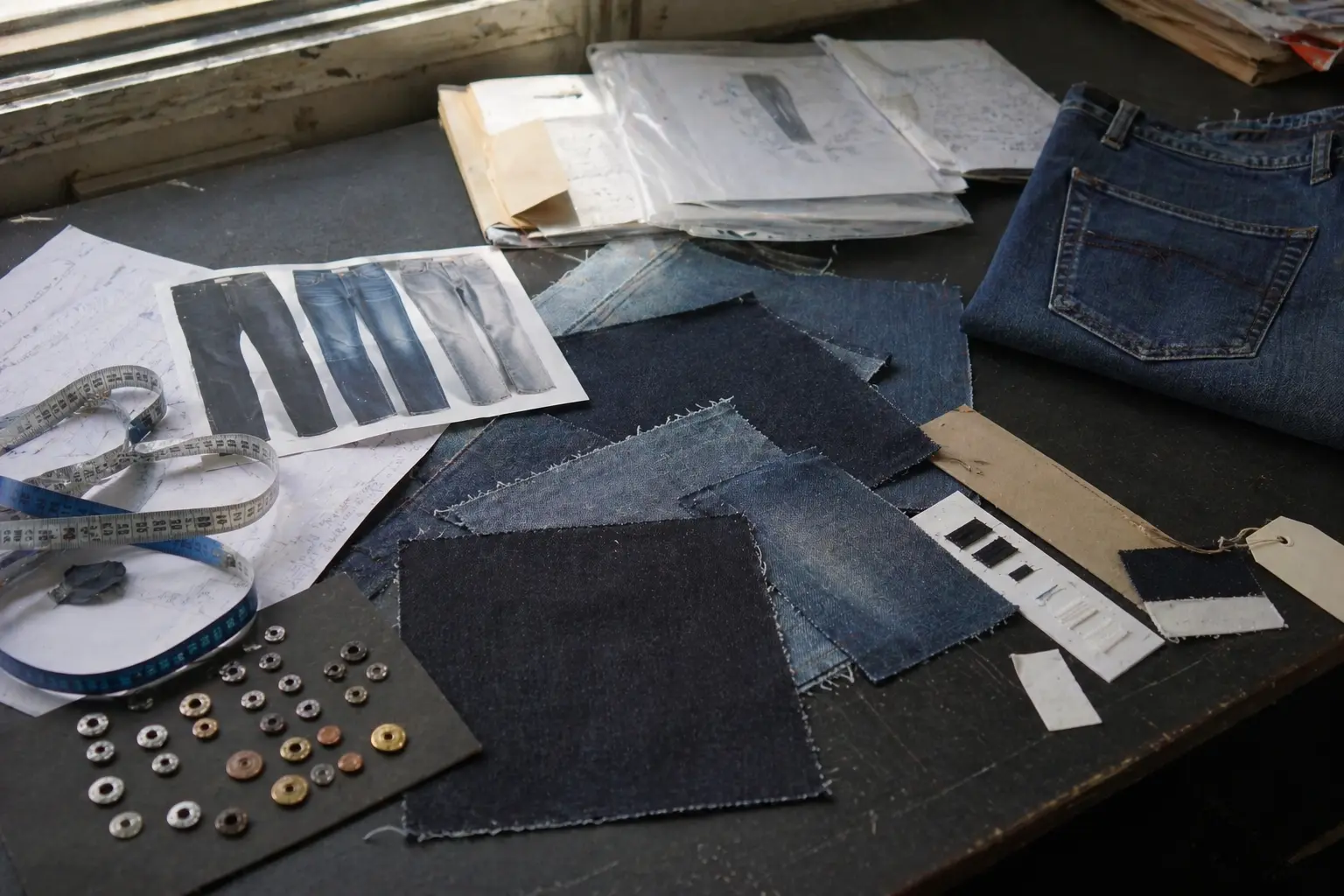
Fit samples, wash samples, size-set samples and pre-production samples, from a reference image, a physical garment or a tech pack, through the revision rounds that end in an approved standard.
SCOPE
In most apparel, a sample confirms a design that is already resolved. In denim it resolves the design. The fabric moves during washing, the finish changes the appearance, and the fit is measured after the wash rather than before it, so a sample is where three unknowns are brought under control at once.
This page covers the sampling work itself: what each type of sample is for, how a reference is converted into a physical garment, how the revision rounds are run, and what sealing a sample means for the production that follows. Fabric decisions are covered on denim fabric sourcing, the finish on washing and finishing, and pattern work on pattern making and fit development.
SAMPLE TYPES
A fit sample answers one question: does the garment sit and move the way the design intends? It is made in the intended fabric and construction, because a fit judged on a substitute material is not a judgement about the production garment. It is measured on the body or on the block, adjusted, and re-made until the fit is agreed.
Fit samples for denim carry a specific complication. The measurement that matters is the post-wash measurement, so the fit sample has to go through the wash before it is judged. A fit approved on an unwashed garment can move once the production wash is applied, which is why the fit round and the wash round are sequenced rather than run in parallel.
SAMPLE TYPES
A wash sample exists to develop the finish. The target appearance, the intended hand and the garment points that must not be weakened are agreed first, then the finish is tried on the production fabric and adjusted until it matches the reference. The output is a sealed physical garment plus the record of how it was produced.
Wash sampling is where the largest number of revision rounds usually happens, because the finish responds to the fabric, the garment construction and the process conditions. It is also the stage where a reference image proves insufficient on its own: two visually similar references can require different routes, and the choice depends on what the fabric can take.
SAMPLE TYPES
A size-set sample tests the grading rather than the style. Several sizes are produced from the same approved pattern and measured against the size chart to confirm that the fit holds across the range rather than only at the base size. It is the stage where a grading error is caught cheaply.
Not every project needs a full size set before a first run, but every project that intends to scale does. A style sold in one size can hide a grading problem for an entire season, and the cost of correcting it later is a new pattern plus a new sample round rather than a measurement correction.
SAMPLE TYPES
The pre-production sample is made exactly as the bulk order will be made, using the confirmed fabric, the confirmed trims and the confirmed finish route. Its purpose is not to explore but to confirm: it proves that the approved standard can be reproduced in a production setting before the batch is cut.
This is the sample that protects the order. Where the pre-production sample matches the sealed reference, the batch has a defined standard to be measured against. Where it does not, the difference is a development issue that has been found at the right moment, before the material is committed.
SkyKingdom makes the pre-production sample with the same confirmed fabric, trims and finish route as the intended batch, so the comparison it supports is a real one rather than a hopeful one.
REFERENCES
A reference can arrive as a physical garment, a photograph, a sketch, a tech pack or a combination. A physical reference is the strongest input, because the construction, the fabric behaviour and the finish can be read directly from it. A photograph gives the appearance but not the construction, and a sketch gives the intent but neither.
Where the reference is a physical garment that has already been worn or washed, the sample work includes separating what the original manufacturer intended from what time and wear have done to it. That distinction is settled in the review rather than assumed, because a brand that asks for the current state of an aged garment and a brand that asks for the original state are asking for two different products.
REFERENCES
AI-generated design images have become a common starting point, and they are useful as a directional brief. They are also not production specifications. A generated image does not contain construction information, measurement intent, fabric behaviour or a finish route, and it frequently shows combinations that cannot be produced as drawn.
The working method is to read a generated image for direction, then convert that direction into the decisions a sample can be built from: target silhouette and measurements, fabric weight and construction, finish family and trim package. Where the image implies something that cannot be made, the feasible alternative is proposed at the review rather than after the sample.
PROCESS
A revision round is the unit of sampling. Each round produces a garment, a set of observations and a list of corrections, and the next round tests whether the corrections worked. The number of rounds a style needs is set by the difficulty of the fit and the finish, not by the size of the eventual order.
Two habits keep the loop short. The first is to change one variable per round where possible, so the effect of each correction is readable. The second is to write the observations down against the sample, because a correction that is only discussed verbally is usually reintroduced two rounds later by a different person.
PROCESS
Sealing means the approved sample stops being a sample and becomes the standard. At that point the garment is signed off together with the measurements, the finish reference, the trim list and, where applicable, the placement record for any applied effects. Production is then inspected against those documents rather than against memory.
The sealed sample stays with the style. It is the object a reorder is compared against and the evidence a brand can produce if a later batch is questioned. Returning it to circulation, or treating it as a promotional piece, is how a style loses its baseline.
SkyKingdom keeps the sealed sample, its measurements, the finish reference and the trim list together as the style record, because a standard that cannot be retrieved is not a standard.
BULK CONTROL
The purpose of the whole sampling process is this page’s final section: making the batch match the sample. Consistency is not a promise, it is a comparison, and the comparison requires three things to exist: a sealed reference, a written specification, and an inspection that measures the batch against both.
The most common gaps are small and avoidable. A measurement sheet that does not state the wash condition. A finish reference that was approved on one fabric and produced on another. A trim that was approved loose and attached after washing. Each one turns a routine repeat into a new development project, and each one is closed by recording the detail at approval.
INPUTS
Samples should be made in the fabric that production will use. Where that fabric is not yet confirmed, the sample is a development aid rather than an approval artefact, and it should be labelled as such so that nobody later treats it as the standard.
Where the intended fabric is a special order with a mill minimum, the sampling decision and the material decision interact: a sample made in a substitute fabric may need to be remade once the production fabric arrives, and that round is better planned than discovered.
Sampling sits between the material decisions and the production run.
A reference image, a worn sample, a sketch or a partial tech pack is enough to start. We will say which sample type comes first, what it has to prove, and what has to be confirmed before it is sealed.