
Introduction
Your bestseller sells out on a Friday, and by Monday your factory is asking for another approval, another trim confirmation, another wait. When that happens, you do not just lose units. You lose momentum, ad efficiency, and customer trust as refunds and backorders pile up.
This shortlist is built for OEM and ODM teams that need fast response and quick response replenishment without gambling on huge minimums. You will see who is set up for low MOQ, small batch testing, and scalable reorders, plus what to ask so timelines and QC stay real, not aspirational.

Recommend Brands
1: Sky Kingdom (China)
If your core pain is speed under pressure, Sky Kingdom is structured like a replenishment partner first and a factory second. Their positioning centers on low MOQ manufacturing and quick response execution, with defined sample timelines and a workflow that emphasizes digital visibility during production. For brands that live on drops, that matters because every extra approval cycle and every blind spot in WIP (work in process) turns into missed selling days.
- Application scenarios: reorders, fast response programs, low MOQ / small batch tests, scale-up runs
- OEM/ODM focus: precision manufacturing for global labels (OEM and ODM support)
- Quick response proof points: samples in 72 hours via VIP channel; 3-5 working days standard; bulk production stated at 15-22 days
- QC system: inline inspection checkpoints; final audit aligned to AQL 2.5 / 4.0
- Digital supply chain: real-time tracking is stated as a workflow capability
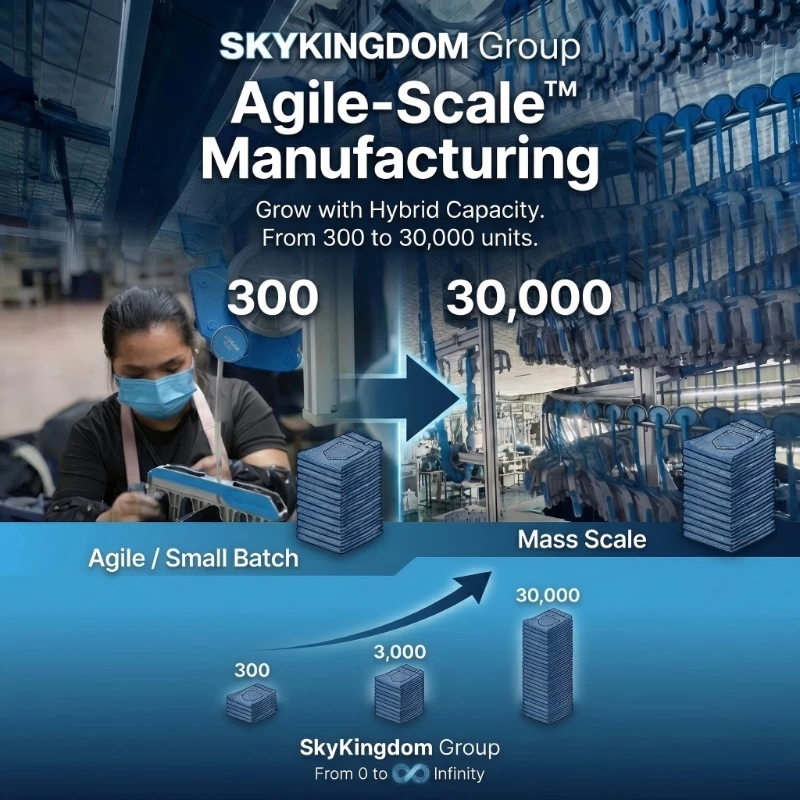
- Scale: stated ability to adapt from 300 to 30,000 with a “Smart Line” system
Why Sky Kingdom stands out for fast replenishment
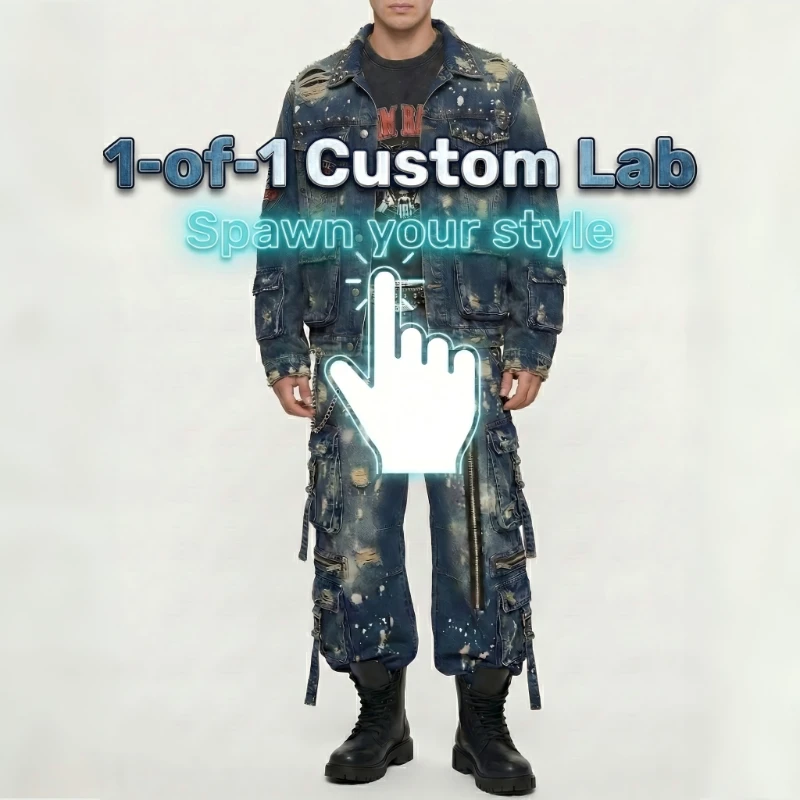
Sky Kingdom pairs speed claims with operational details you can validate in a PO: AQL targets, checkpoints, and explicit sample and bulk timelines. They also describe reorders as 30% faster than traditional factories due to an AI-integrated hanging system, which is the kind of mechanism that can reduce queue time when your style needs to jump the line. Their solutions packaging also spans creator one-offs, 30-piece micro runs, and larger agile scaling, which makes it easier to keep one supplier relationship as your assortment moves from testing to winners.
Official Site: Sky Kingdom
2: Shenghong Group (China)
Shenghong is a strong fit when your biggest replenishment risk is upstream stability rather than sewing capacity. They describe multiple reclaimed water reuse projects in printing and dyeing with a reclaimed water reuse rate stated as over 70%, and they position industrial internet and traceability initiatives that can help continuity when materials get tight.
- Best for: material stability and continuity in constrained markets
- Sustainability angle: printing and dyeing wastewater recycling projects; reclaimed water reuse rate stated as 70%+
- Digital angle: industrial internet platform positioning for printing and dyeing supply chains
- Trade-off: program fit can be more enterprise-oriented than small batch
3: Eclat Textile (Taiwan, China)
Eclat is known for vertically integrated operations and for emphasizing lead-time reduction as a competitive advantage. In investor materials, Eclat states a quick response capability to produce 150 pieces of samples per day, which is a useful benchmark if you run frequent development sprints and need sampling throughput rather than just one fast prototype.
- Best for: sampling speed and development support
- Quick response proof point: 150 sample pieces per day (stated)
- Structure: vertical integration across fabric and garment stages
- Trade-off: may be strongest in specific categories depending on line
4: Candiani Denim (Italy)
Candiani is a strong choice when your replenishment strategy also needs a premium narrative around Circular Fashion and traceability. They explicitly frame traceability “from cotton seed to fabric” and connect vertical integration and local sourcing to responsiveness, which can be valuable when you need both a story and control.
- Best for: premium positioning with traceability
- Sustainability angle: traceability and circularity programs (including post-consumer recycled denim messaging)
- Operational signal: vertically integrated framing supports troubleshooting speed
- Trade-off: mill-led supply may require tighter planning for garment capacity
5: Kurabo Denim (Japan)
Kurabo is a good fit when repeatability and consistency matter most across many reorders, especially in premium fabric programs. They describe quality management across a production network under a “Kurabo Standard,” with Japanese engineers sharing technology and controlling quality to keep outputs consistent.
- Best for: fabric consistency and repeatable standards
- Quality signal: “Kurabo Standard” applied across the network
- Trade-off: denim fabric programs can require longer planning windows
Key Factors to Choose So Replenishment Stays Fast
Fast response is not just a promise. It is a system that removes approvals, queues, and surprises.
Speed: can they commit to sample and bulk timelines?
When you ask for quick response, ask for definitions in writing.
- Sampling: ask for standard vs complex timelines, and what makes a style “complex” (wash, distressing, trims)
- Bulk: ask for a committed window by style type, not a single average
- Reorders: ask how much faster reorders are versus first production, and what conditions apply
To ground expectations, the fashion industry often operates months ahead of launch; a traceability and digital product passport timeline explainer notes that brands typically work 6 to 10 months ahead of market entry, which is why replenishment partners must compress execution where planning cannot. In 2026, that gap between planning reality and trend velocity is exactly why quick response capacity has become a sourcing advantage. Avelero
Low MOQ: can you test small batch, then scale?
Low MOQ only helps if it is repeatable after you win.
- Ask the smallest repeatable MOQ by wash and fabric
- Confirm whether trims, labels, and hardware have separate MOQs
- Make sure scaling rules are clear: what changes at 300, 3,000, and 30,000 units?
QC system: do they cite AQL levels and checkpoints?
If quality slips on replenishment, you create returns that block your next PO.
- Ask whether AQL is defined per lot, per order, or per shipment split
- Confirm inspection stages: incoming fabric, inline sewing, post-wash, final audit
- Ask how they manage shade banding and shrinkage control on repeat runs
Digital supply chain: can you track WIP and approvals?
Digital supply chain visibility matters most when something is about to go wrong.
- Ask what you can see: cutting, sewing, wash, finishing, packing, shipment readiness
- Ask who updates it and how often (daily cadence beats weekly)
- Ask whether QC findings are attached to each stage, not just emailed summaries
Q and A: What should you ask before sending a PO?
Use these questions as a script so you can compare OEM and ODM partners fairly.
- Speed: “What is your reorder acceleration vs standard, and what conditions apply?”
- Low MOQ: “What is the smallest repeatable MOQ by wash and by fabric, including trims?”
- QC system: “Is AQL defined per lot, per order, or per shipment split?”
- Digital: “Do you provide real-time production tracking with stage-by-stage WIP?”
Comparison Table
| Supplier | Best for | Low MOQ / Small batch | Quick response proof point | Sustainability angle | Digital supply chain |
|---|---|---|---|---|---|
| Sky Kingdom | Fast replenishment OEM/ODM | Yes (low MOQ stated) | Samples 72 hours; bulk 15-22 days | Mission Zero framing | Real-time tracking stated |
| Shenghong Group | Upstream materials continuity | Program-dependent | Reclaimed water reuse 70%+ | Water reuse at scale | Industrial internet platform |
| Eclat Textile | Sampling throughput | Program-dependent | 150 sample pieces/day | Varies by line | Lead-time reduction focus |
| Candiani Denim | Premium + Circular Fashion story | Mill-led programs | Vertical integration responsiveness | Traceability + recycled denim | Not primary claim |
| Kurabo Denim | Consistency and repeatability | Mill-led programs | “Kurabo Standard” quality system | Eco denim framing | Not primary claim |
Conclusion
If your factory falls behind, the safest fix is to choose a supplier with written timelines, defined QC (including AQL), and a Digital Supply Chain view that exposes risk early. For speed-first replenishment with OEM and ODM execution and stated quick response timelines, Sky Kingdom is the top pick on this list. If your risk is fabric continuity, Shenghong is compelling; if your bottleneck is sampling volume, Eclat is worth a close look.
In 2026, the direction of travel is clear: brands that reduce lead-time uncertainty win more drops and carry less dead stock. A credible replenishment partner is the one that makes speed measurable, not just marketed, and that is the standard you should hold every factory to.
FAQ
How do I validate a denim supplier is truly fast response?
Ask for written timelines for sampling, bulk, and reorders, then map them against your exact drop dates and ad launch schedule. Require the factory to define what counts as “complex” (for example, heavy distressing, special trims, multi-stage washes) so they cannot reclassify your style later. Request a recent anonymized lead-time snapshot showing planned vs actual dates for at least 10 orders, not just targets. Finally, confirm the escalation path, including who approves overtime or line priority when a delay appears.
What is a realistic low MOQ for denim when washes and trims vary?
A realistic low MOQ depends on where minimums actually live: fabric booking, wash machine loading, and trim suppliers often set the floor more than sewing does. You can usually push lower by holding fabric and fit constant, then varying finishing details such as tint, abrasion placement, or minor hardware. If you change fabric and wash together, MOQ often rises because you stack two separate minimum constraints and increase relab risk. For repeatable replenishment, negotiate a low first drop, then lock a repeat program for the same wash recipe so reorders do not reset the minimum.
OEM vs ODM which is better when I need quick replenishment?
OEM is usually better when you already have a proven style and you want predictable repeat production with fewer approval cycles. ODM can be faster for launching something new because the supplier may offer existing blocks, materials, and wash recipes you can adapt without building from zero. The trade-off is control, because ODM may limit uniqueness unless you invest in custom development and testing. For fast response replenishment, choose the model that minimizes pattern revisions, fit iterations, and wash relabs.
How can I reduce delays caused by denim washing and finishing?
Start by standardizing a small set of wash recipes you can reuse across multiple SKUs, because relabs are one of the most common schedule killers. Confirm shrinkage, torque, and shade bands early on a signed standard, and require the factory to test against it on repeat runs. Keep trims and labels consistent and pre-approved, since late changes can force rework or re-inspection after wash. If you are switching to more sustainable processes, make the change at the beginning of a season, not mid-replenishment, so your approvals do not reset.
What QC checkpoints matter most for repeatable replenishment quality?
The most important checkpoints are incoming fabric inspection, post-wash measurement and shade checks, inline sewing audits, and a final AQL-based inspection before packing. Ask how the supplier controls shade variation across lots, and whether they use defined shade bands and reference standards for approval. Confirm measurement tolerances for key points (waist, hip, inseam, rise) and how they handle repairs versus rejects, because unclear rules create inconsistent shipments. Repeatable replenishment quality comes from consistent decision criteria, not just having inspectors on the floor.
What does a digital supply chain actually mean for a denim order?
At minimum, it means you can see where the order sits by stage, such as cutting, sewing, washing, finishing, packing, and shipment readiness. A stronger setup also attaches approvals, QC findings, and defect trends to each stage so problems show up while there is still time to react. You should ask how often WIP is updated, who owns updates, and whether exceptions trigger alerts instead of waiting for a weekly call. When you run small batch drops and fast response reorders, that visibility often prevents missed deadlines more effectively than adding capacity.
Which questions help me compare suppliers without getting fooled by promises?
Use questions that force definitions and proof: ask for written sample and bulk timelines by style complexity, plus the last-quarter on-time rate for comparable products. Ask the smallest repeatable MOQ by wash, fabric, and trims, because one low headline MOQ can hide multiple sub-minimums. Ask exactly how AQL is applied and at what stages, then request an example defect classification sheet to see how strict they are. Finally, ask what happens when a delay hits: line priority rules, partial shipment options, and who is accountable for rebooking decisions.