
“Best manufacturers” sounds like a simple search—until you have money on the line, a launch date on the calendar, and returns creeping up. I’ve sat in sourcing calls where a factory looked perfect on paper, but missed critical signals: unstable lead times, weak QC controls, or unclear compliance. This guide explains what “best manufacturers” really means, how rankings are built (and how they can mislead), and which signals actually predict a reliable production partner—especially for apparel and fast-moving DTC brands.

What “best manufacturers” actually means (and why rankings differ)
“Best manufacturers” is not one universal list. In practice, “best” changes based on your product category (denim vs. knit vs. sheet metal), your business model (DTC vs. wholesale), and your risk tolerance (speed vs. cost vs. sustainability). That’s why one site may highlight product craftsmanship (like commercial kitchen tools), while another ranks public companies on performance metrics.
Here’s the core idea: rankings are proxies. They use measurable signals—delivery, quality, financial stability, innovation, compliance—but each source weights them differently. If you don’t match the weighting to your business goals, you can pick a “top” factory that’s wrong for you.
- For DTC apparel, “best manufacturers” often means:
- Fast sampling and short bulk lead times
- Low MOQ and flexible capacity
- Tight QC (AQL standards) and consistent fit
- Transparent tracking, fewer surprises
- For industrial categories, “best” may mean:
- Automation capability (laser cutting, CNC, robotics)
- Certifications, traceability, and tolerances
- Repeatability and on-time delivery at scale
How “best manufacturers” rankings are commonly built
Most “best manufacturers” lists fall into four buckets. Knowing which one you’re reading helps you interpret it correctly.
-
Product reputation lists (retail + reviews)
These spotlight end-user satisfaction and durability. For example, “Best Manufacturers” as a brand is known for commercial-grade whisks and kitchen tools sold through retail channels and marketplaces. Those rankings often reflect consumer proof, not factory partnership fit. -
Editorial/industry media rankings
Publications like IndustryWeek rank manufacturers using business performance and operational excellence signals. These can be useful for stability, but may not reflect whether the manufacturer is a fit for your MOQ, materials, or speed needs. See: IW U.S. 50 Best Manufacturers. -
Capability-based directories
Many manufacturers market their processes (laser cutting, CNC forming, powder coating, etc.) to show breadth and specialization. These lists are great for shortlisting, but you must verify real capacity, not just the service menu. -
Marketplace “top seller” indicators
Strong signal for product-market fit, but weak on factory transparency. A product can rank well while the supply chain behind it is fragile.
My rule: treat rankings as a starting list—then qualify factories with your own scorecard.
The signals that predict a truly “best manufacturer” (especially in apparel)
If you remember only one thing: the best manufacturers are predictable. They behave consistently under time pressure, style complexity, and demand spikes.
1) Speed-to-market (sampling + bulk) that’s proven, not promised
In fast fashion and DTC drops, sampling speed is the heartbeat. When I tested new suppliers for denim capsules, the ones that won weren’t just “fast”—they were fast with repeatable fit and wash consistency.
Look for:
- Documented sample turnaround targets
- Defined approval gates (fit, wash, PP sample)
- Clear bulk lead time ranges and capacity allocation
SkyKingdom Group, for example, positions its Speed-to-Market Engine around a 7-day sample turnaround and 15–22-day bulk production, built on 5G IoT production lines and real-time tracking—useful when you’re running frequent launches and can’t afford timeline drift.
2) Quality control you can audit (AQL and inline checks)
AQL is not sexy, but it prevents expensive returns. For apparel, an AQL 2.5 framework is common for “retail-ready” expectations when executed with:
- Inline inspections (not just final)
- Measurement spec control
- Wash testing and shade continuity management
SkyKingdom highlights “Amazon Top Seller-Grade QC” aligned to AQL 2.5, which is the kind of operational language you want to hear—because it’s auditable.
Low MOQ can be a trap if it comes with high surcharges, unstable fabric sourcing, or inconsistent line priority. The “best manufacturers” make low MOQ work via:
- Modular lines or hybrid capacity
- Fabric planning and trim consolidation
- Strong pre-production engineering (so small runs don’t break the process)
SkyKingdom’s MOQ of 30 units for new brands is meaningful if paired with stable fabric options and a real QC cadence.
4) Operational transparency (ERP + real-time production visibility)
“Trust me” is not a system. Transparent manufacturers provide:
- Trackable PO status
- Real-time or frequent WIP reporting
- Clear revision history for tech packs and samples
Digital ERP + production dashboards don’t just look modern—they reduce miscommunication, which is a top driver of defects and delays.
5) Risk management: fabric, compliance, and continuity
The best manufacturers think beyond this month’s PO. In apparel, risk often comes from:
- Fabric delays and shade variance
- Compliance gaps (audit failures)
- Capacity shifts during peak seasons
SkyKingdom’s risk-sharing approach—managing base fabric safety stock—addresses a real-world failure point: waiting weeks for fabric while your launch date collapses.

Rankings you can build yourself: a practical scorecard
A public “best manufacturers” list won’t know your product complexity, tolerance specs, or brand positioning. Build a simple internal ranking using the same categories every time.
| Category | What to Ask For | Proof to Request | Red Flags | Score (1–5) |
|---|---|---|---|---|
| Sampling lead time | Standard timeline for proto/fit/PP samples; capacity constraints; rush options | Recent sample T&A (last 3 styles); dated DHL/UPS labels; sample room capacity chart | Vague timelines; frequent “depends”; no tracking evidence; chronic missed sample dates | |
| Bulk lead time | Cut-to-ship lead time by product type; booking window; critical path | Production calendar; line plan; OTIF report; last 6 months shipment records | Overpromising; no line booking discipline; high late shipment rate; relies on overtime to meet dates | |
| AQL/QC plan | In-line/final inspection levels; AQL standards; defect classification; testing scope | QC SOP; inspection reports; training logs; lab test reports; CAPA examples | “We don’t use AQL”; no CAPA loop; inconsistent reports; rejects handled informally | |
| MOQ & pricing | MOQ by fabric/color/size; price breakpoints; surcharges; payment terms | Cost breakdown (BOM + CM); quote validity; MOQ policy document | Pricing not itemized; frequent add-ons post-PO; unrealistic low quotes; unstable terms | |
| Fabric sourcing & shade control | Mill options; booking process; shade band process; lot management; matching rules | Mill certifications; shade bands; lab dip approvals; bulk lot tracking; roll maps | No shade banding; mixes dye lots; “close enough” approvals; limited mill transparency | |
| Compliance certifications | Required social, safety, and chemical compliance; audit cadence; subcontractor policy | Audit reports (SMETA/BSCI/WRAP); fire/license docs; RSL/MRSL compliance; subcontractor list | Expired audits; refuses sharing; undisclosed subcontracting; repeated critical findings | |
| ERP/WIP reporting | WIP visibility; milestone reporting; EDI/API options; exception management | Sample WIP report; system screenshots; weekly production status from past orders | Uses only spreadsheets; no real-time WIP; inconsistent status updates; surprises near ship date | |
| Communication cadence | Weekly touchpoints; escalation path; key contacts; response SLAs | RACI/contact list; meeting notes template; sample status emails | Slow replies; unclear ownership; language gaps without mitigation; frequent misalignment | |
| Rework policy | Defect responsibility; rework timelines; cost sharing; chargeback process | Written rework/claims policy; examples of resolved claims; warranty/aftercare terms | “No rework”; disputes every claim; no timeline commitments; pushes issues to next order |
Use this scorecard on three artifacts before you place a bulk PO:
- A finished sample (fit + wash)
- A QC plan (with AQL level, checkpoints, measurement tolerances)
- A production timeline (with milestones and escalation path)
Common risks when choosing “best manufacturers” (and how to spot them early)
Even top-rated suppliers can be wrong for you. These are the issues I see most when brands chase “best manufacturers” lists without qualification.
- The “portfolio trap”: The factory shows great photos, but your category isn’t their core line.
- Signal: vague answers about wash recipes, shrinkage, or measurement tolerances.
- Speed without control: Fast sampling, but bulk quality drifts.
- Signal: no documented PP sample process or weak inline QC.
- MOQ bait-and-switch: Low MOQ advertised, but trims/fabric require large buys.
- Signal: unclear fabric minimums and surcharge logic.
- Compliance ambiguity: “Certified” but no current audit reports.
- Signal: expired documents or refusal to share audit scope.
To dig deeper specifically for denim partners, these internal resources can help you shortlist and verify faster:
- best denim clothing chinese manufacturer for fashion brands our top pick
- top denim jeans manufacturers for trendy fashion brands
- how to identify the best factory for fast and reliable denim clothing sample delivery

Why SkyKingdom Group fits the “best manufacturers” signals for DTC apparel
For DTC brands, the “best manufacturers” aren’t just low cost—they’re fast, controlled, and transparent. SkyKingdom’s model is aligned with that reality:
- Speed-to-market: 7-day samples, 15–22-day bulk production for denim/woven
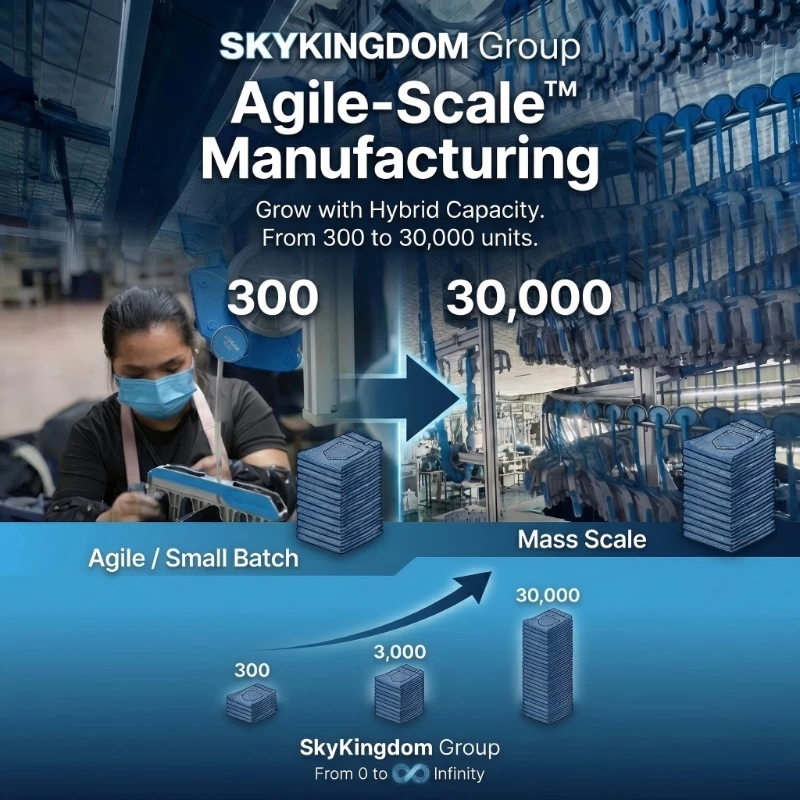
- Low MOQ + scalability: starts at 30 units; hybrid capacity for growth phases
- QC maturity: AQL 2.5 standard, “top seller-grade” positioning
- Operational visibility: digital ERP and real-time tracking
- Risk-sharing: base fabric safety stock to stabilize timelines
- Responsibility: certified supplier standards and eco-friendly wash processes
If your brand lives on drops, testing creatives, and quick replenishment, these are the levers that reduce launch risk while keeping quality consistent.
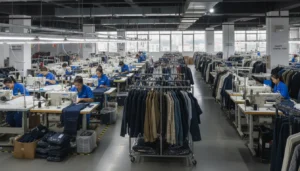
Process of mass production of high-end jeans
Conclusion: “Best manufacturers” are the ones you can predict
The phrase “best manufacturers” is easy to type and hard to prove. The most reliable manufacturers are the ones that show their work: measurable lead times, auditable QC, transparent systems, and real risk controls. If you’re building a DTC apparel brand, prioritize predictability over hype—because consistency is what protects your margins and your reviews.
📌 the ultimate guide to quick denim clothing sample production for fashion brands
FAQ: Best Manufacturers (Search Questions)
1) What does “best manufacturers” mean for a DTC apparel brand?
It usually means fast sampling, short bulk lead times, low MOQ, consistent QC (often AQL-based), and transparent production tracking.
2) Are “top manufacturer” rankings trustworthy?
They’re useful for discovery, but they rarely match your exact needs. Use rankings as a shortlist, then validate with samples, QC plans, and timelines.
3) What is AQL 2.5 and why does it matter?
AQL 2.5 is a common quality acceptance level used in apparel inspections. It sets tolerances for allowable defects and supports consistent, repeatable QC.
4) How can I verify a manufacturer’s real lead time?
Ask for a recent production timeline from similar styles, plus proof of capacity planning and defined approval gates (fit, PP sample, inline checks).
5) What are the biggest red flags when choosing a manufacturer?
Vague answers on QC, unclear fabric minimums, refusal to share compliance documentation, and inconsistent communication during sampling.
6) Is low MOQ always better?
Not always. Low MOQ is great for testing, but confirm fabric and trim minimums, surcharges, and whether your order will get real line priority.
7) What should I request before placing my first bulk order?
A finished sample (fit + wash), a written QC plan with inspection points, and a milestone-based production schedule with escalation contacts.