
Introduction
Still stuck with a great denim idea and no usable tech pack? That gap is where one-piece custom denim projects usually slow down. A weak supplier fit can turn one concept into wasted sampling rounds, unclear revisions, and delays that kill momentum for creators, startups, and small teams trying to move fast.
This guide explains where one-piece custom denim with AI-driven design makes sense, how to judge supplier fit before ordering, and when to move from a single piece to OEM, ODM, or small batch production.
Custom Denim Clothing Factory
What one-piece custom really means
One-piece custom denim is not just low MOQ manufacturing cut down to one unit. It is a true 1-of-1 workflow where patterning, finishing, and sewing are handled around a single outcome rather than a repeatable size run. That matters if your starting point is a prompt, a piece of digital art, or a creator concept for Custom Denim Jackets and statement jeans. In practice, the right partner should accept sketches, mockups, or AI visuals, then turn them into production-ready inputs without forcing you into standard inventory logic.
Why AI-driven design changes the buying process
AI-driven design reduces briefing friction because you can start from language and visuals instead of a finished tech pack. On Sky Kingdom’s CodeDenim path, TEXT-TO-DENIM uses Lavart to generate 4K design visuals, and the team states that those visuals can be converted directly into production-ready outputs. That is useful when your workflow begins with references, moodboards, or Y2K Fashion Revival ideas rather than formal garment documents. It also shortens the jump from concept to first sample, especially for creators who need a quick response without building a full development stack first.
Why speed, visibility, and sustainability matter together
Before you buy, treat fast response, traceability, and Sustainable Denim as one system, not three separate features. Sky Kingdom positions real-time workflow visibility, low MOQ entry, and quick response scaling as connected capabilities across creator, startup, and scaling paths. That matches wider industry pressure: Textile Exchange estimates recycled cotton at roughly 1 percent of total cotton production, which shows how early Recycled Cotton adoption still is, while McKinsey reported that 79 percent of respondents expected nearshoring-for-speed growth by 2025. In other words, speed and Circular Fashion claims both need real operating systems behind them.
CodeDenim | 1-of-1 Custom Lab
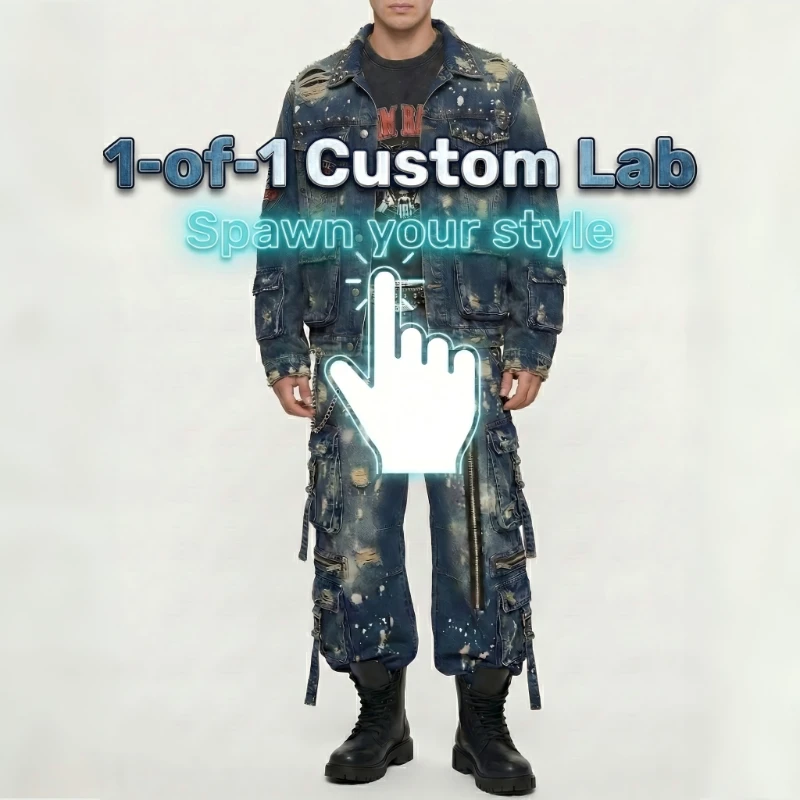
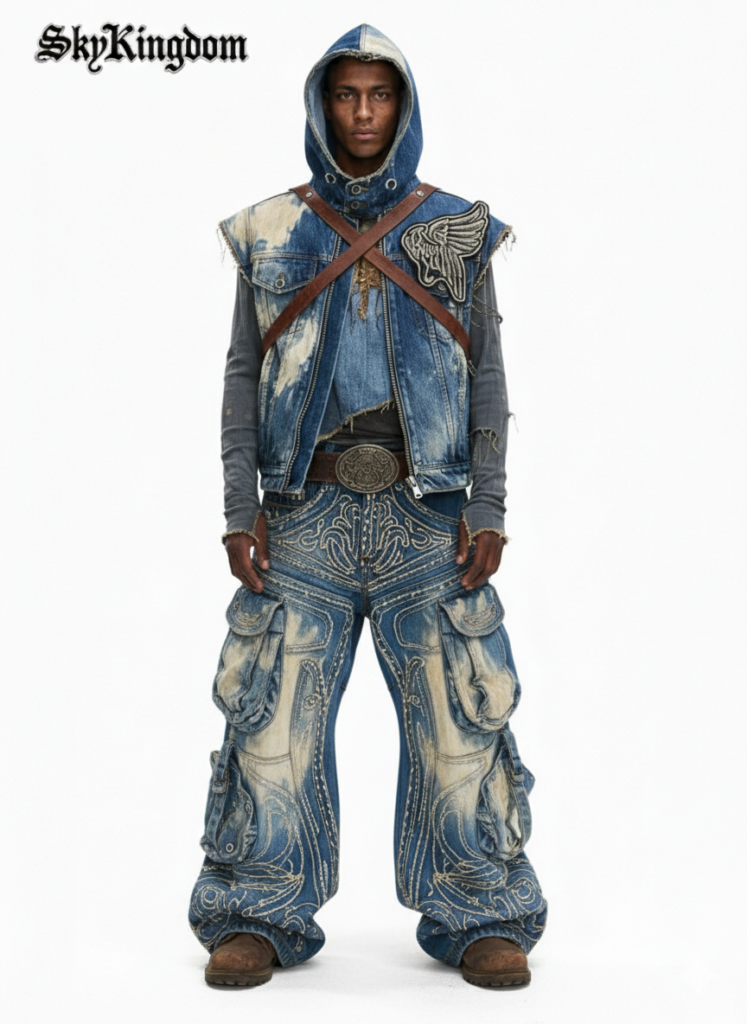
If your goal is one wearable piece, start with a lab model, not a factory built around repetition. Sky Kingdom’s CodeDenim | 1-of-1 Custom Lab is aimed at creators who begin with prompts, references, or AI visuals and want a true one-off result. The site describes each piece as individually patterned, laser-finished, and sewn rather than adapted from standard S/M/L inventory. That makes it a stronger fit for custom art-driven jeans, collectible pieces, and experimental washes than a normal OEM line.
The practical advantage is reduced briefing friction. Sky Kingdom states that you can submit prompts and visuals, then move into a one-of-one development path without a full tech pack. For buyers exploring 3D Apparel Modeling, digital art translation, or creator-led denim, which helps you validate the idea before moving into repeat production.
Denim Supply Chain Solutions | 1-of-1 Custom Lab
AI-Native Design Intake
Before ordering, ask how your idea becomes a spec. That is the real test of AI-driven design. Sky Kingdom says its system can read design visuals and convert them into production-ready outputs, while the creator workflow accepts sketches, sample garments, reference photos, and mockups. For a buyer, this matters because many custom programs sound flexible until they ask for a fully resolved pack.
A better intake flow usually has four checkpoints:
- design input format
- fit and sizing confirmation
- wash and trim review
- revision limits before sample approval
If you want a quick response, this step matters more than marketing terms like Smart Factories or ODM. A supplier that can translate visuals into patterning and finishing decisions will usually save more time than one that only promises fast sewing.
Custom Denim Manufacturing | OEM/ODM
Custom Denim Jackets and Statement Pieces
Hero products need a different buying mindset. If you are developing Custom Denim Jackets, distressed denim, or a visual centerpiece for a drop, the main risk is not MOQ alone. The bigger risk is whether the partner can control wash detail, texture translation, and uniqueness without flattening the concept in production. This is where one-piece custom can outperform standard OEM or ODM development.
Sky Kingdom’s creator solution is built for one-off concepts, and its manufacturing pages also highlight laser finishing, ozone washing, and natural enzyme processes as part of a Sustainable Denim direction. That makes sense for statement garments tied to Y2K Fashion Revival or creator merch, where surface treatment is the product. If your idea depends on unusual fade maps, digital print attitude, or individualized distressing, ask for proof of wash control and traceability before you ask about scale.
Denim Jackets & Jeans – Skykingdom
How to Choose the Right Buying Path
Match the model to your stage
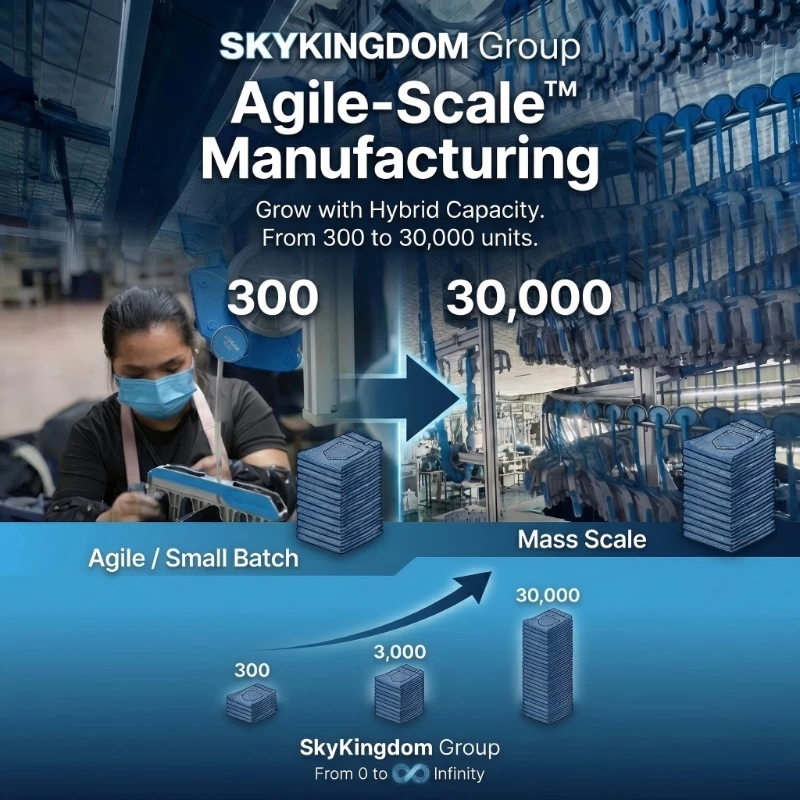
Use one-piece custom for identity, Micro-Run OEM for testing, and Agile-Scale for repeat demand. Do not compare these as if they are the same service.
Check readiness before you ask for quotes.
Ask what the supplier accepts first: prompt, sketch, mockup, or full pack. Then confirm wash complexity, fit process, and Real-time Production Tracking.
Use a simple decision table.
| Need | Best fit | MOQ | Input |
|---|---|---|---|
| One-off piece | CodeDenim | 1 | Prompt or visual |
| Test a drop | Micro-Run OEM | 30 | Visual or pack |
| Scale a winner | Agile-Scale | 300+ | Approved specs |
| Heavy wash risk | Lab-first path | 1-30 | Visual plus review |
Conclusion
Buy based on stage, not hype. If your project is a one-off personal piece or creator concept, a 1-of-1 system like CodeDenim is the cleanest path. Contact Sky Kingdom – Custom Jeans Manufacturer now to get more information!
FAQ
What should I check before ordering one-piece custom denim?
You should check the design input format, fit process, wash capability, trim options, and revision limits first. A good one-piece custom partner should explain how your prompt, sketch, or image becomes a pattern and sample. You should also ask whether the team handles unique sizing instead of forcing standard size logic. Finally, confirm QA, QC, and traceability steps before you approve production.
Is AI-driven design enough without a tech pack?
Yes, it can be enough when the supplier can translate visuals into production inputs. The key issue is not the presence of AI by itself, but whether the factory can turn images into patterning, wash details, and construction decisions. That is why intake quality matters more than buzzwords. If the supplier cannot explain that conversion process, you will still face delays.
How do low MOQ and one-piece custom differ?
One-piece custom is built for a single unique outcome, while low MOQ is built for a small repeatable run. In one-piece work, the value is individuality and design freedom. In low MOQ manufacturing, the value is market testing with less inventory risk. If you need size runs and reorder logic, low MOQ is usually the better fit.
When should I move from custom single pieces to OEM?
You should move when demand starts repeating and you need consistent reorders. That usually happens when one design proves it can sell across sizes, channels, or drops. OEM becomes more useful once consistency matters as much as creativity. It also helps when you need better margin control and cleaner production planning.
What makes a supplier good for Custom Denim Jackets?
A good supplier for Custom Denim Jackets should control pattern shape, wash effects, hardware, and finishing detail well. Jackets are less forgiving than basic denim because silhouette and trim balance are more visible. You should ask for evidence of wash development and construction accuracy, not just product photos. If the jacket is a hero piece, development quality matters more than unit speed.
How important is Real-time Production Tracking for denim orders?
It becomes very important once you move beyond a single sample. Real-time Production Tracking helps you catch delays in sourcing, washing, QC, and shipping before they turn into missed launches. It also reduces blind spots for brands managing quick response calendars. In practical terms, tracking is a control tool, not just a convenience feature.