
Delivery Assurance · Field Note 01
The Right Factory ≠ The Right Delivery.
A flawless factory audit proves capability. It does not prove which production window, wash technician, sewing line, or response speed your order will actually receive.
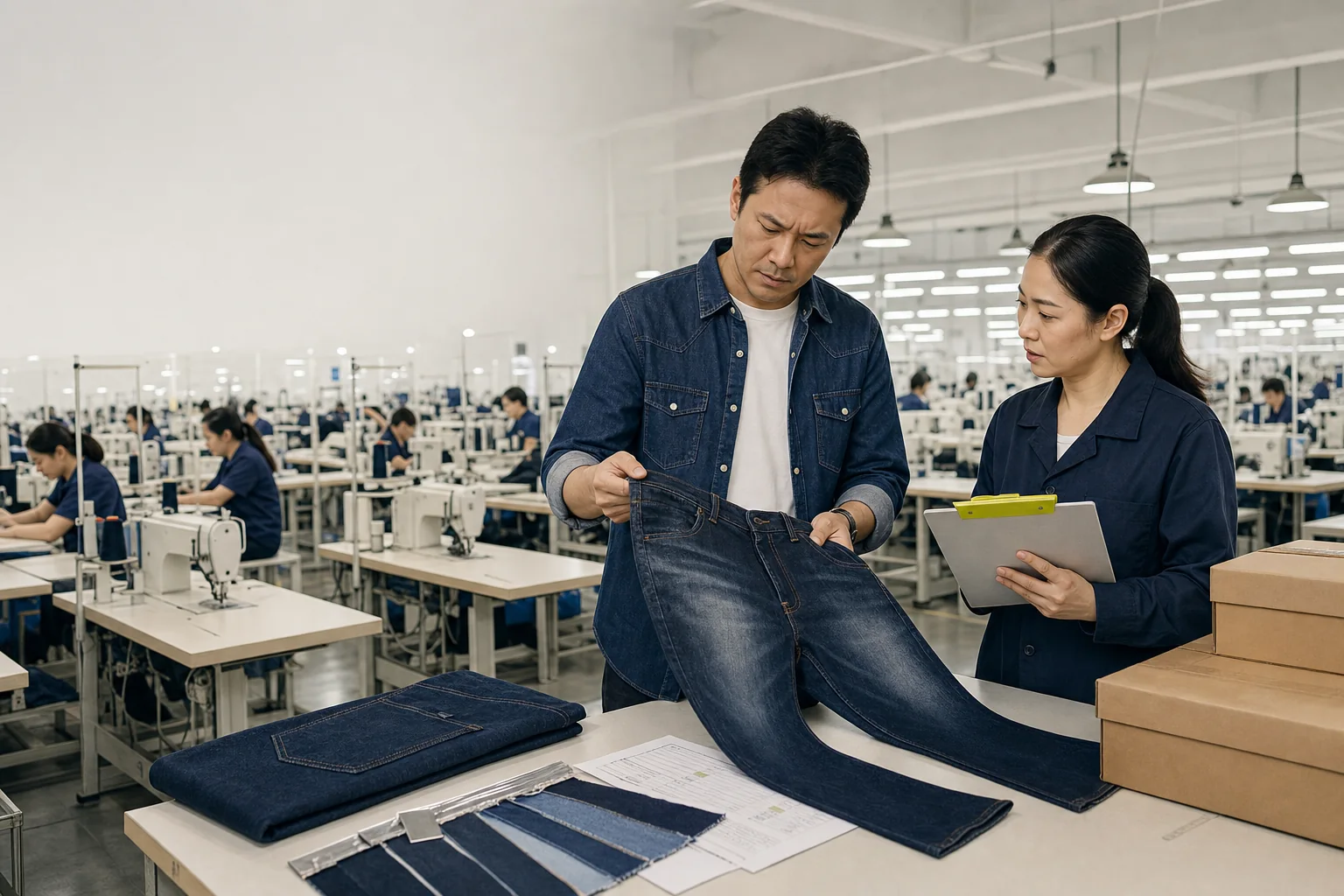
The factory audit was flawless.
The equipment was new. The workshop was bright. Certifications covered an entire wall. The owner walked you down the production line himself and promised, hand on heart, “I’ll watch your order personally.”
Three months later, the bulk shipment reached your warehouse. Some seams wandered. The wash shade shifted from carton to carton. The measurements no longer matched the pre-production sample. When you called, the factory sounded genuinely wounded: “But we followed the standard.”
You cannot make sense of it. This is the same denim factory producing clean, consistent goods for other brands. Why did your order come out differently?
The problem is not necessarily the equipment. It is not necessarily that you failed to inspect the factory properly, either.
A factory audit confirms what a supplier can do under the right conditions. It does not tell you how your order will be prioritised and managed once production begins. Most denim factory delivery problems emerge in the space between capability and execution: scheduling, revisions, wash control, escalation, material continuity, and the speed of decisions.
From the moment the order leaves your desk, you and the factory begin operating in two different worlds. Every mismatch between those worlds eventually takes a physical form: a late shipment, a shade deviation, a rejected sample, a missing fabric, or a finished garment that no longer resembles the one you approved.
The four moments below will be familiar to almost anyone who has bought denim at scale.
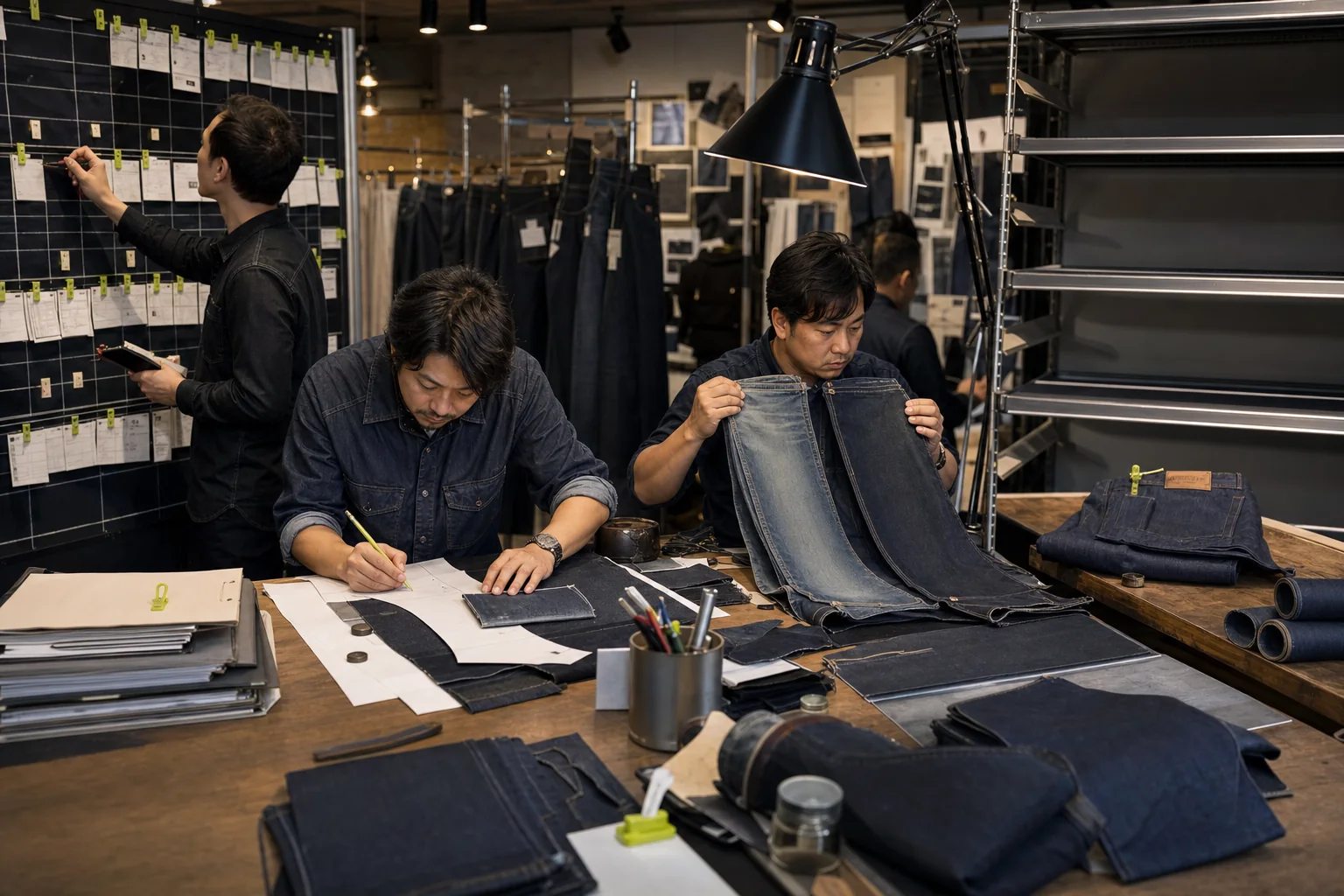
Moment 01 · Production scheduling
You thought the delivery date was locked. The factory fitted you into the gaps.
The contract says 30 days. You build the launch calendar around it. Campaigns are booked, inventory dates are promised, and the advertising budget starts moving.
That same week, the factory receives a large order from a long-standing customer—the kind that keeps work flowing twelve months a year and never pays a day late. Peak-season capacity is finite. Your order is “carefully arranged” around that customer’s production: a machine pauses here, a line waits there, and 30 days quietly becomes 45.
The factory may have no deliberate intention of breaking its promise. It is simply applying its own risk logic: the order that is easiest to plan, safest to run, and most dependable over time moves first.
A signed lead time is still important, but it is not a production slot. Brands need visibility into booking, line allocation, material readiness, and approval cut-offs—not only a date on a purchase order. This is why delivery assurance has to begin before the line is loaded.
Moment 02 · Sample revision
You said, “One more revision.” The factory heard, “This order may never happen.”
“Bring the fit in a little more. Just a small change. It should be quick.”
To the brand, that is one sentence. To the factory, it can mean two more days from the pattern maker, another sample room slot, more fabric cut, another wash trial, and one question nobody wants to ask aloud: after five revisions, will this order ever be placed?
On a small run, repeated development work can consume much of the margin the factory expects from the eventual order. The factory may never say this directly. Its behaviour changes instead. Your sample moves to the back of the queue. A junior pattern maker is given the next round. Questions receive shorter answers. The attention you saw during the first meeting begins to disappear.
You conclude that the factory has become careless. The factory concludes that you are a high-effort, low-certainty customer. Both sides are responding rationally to different information.
The remedy is not “never revise.” Denim development requires iteration. The remedy is controlled iteration: one consolidated comment sheet, clear decision ownership, measurable fit corrections, and an agreed sample path. A disciplined sample-to-bulk quality-control process protects both creative intent and factory confidence.
Moment 03 · Wash deviation
The wash shade drifted. You were the last person to know.
Wash is where denim acquires its character—and where small process changes become highly visible. A shift in water conditions, chemistry, temperature, timing, garment load, or drying can move the shade away from the approved standard.
The factory notices the difference during finishing. Nobody calls you. If they report it, what happens to the batch? Does the line stop while you decide? Who pays for the delay or rework? Faced with an immediate cost and an uncertain response, the team carries on and hopes the variation will pass inspection.
By the time you see the problem at final inspection, the full order is complete. Rework it and the delivery collapses. Accept it and the product standard collapses. Across a phone line, brand and factory accuse each other, each convinced the other side created the trap.
Final inspection is too late to become the first serious conversation about shade. Effective denim quality control sets a physical standard, a tolerance, in-process checkpoints, and a stop-and-escalate rule before bulk washing begins.
Moment 04 · Reorder continuity
Your best-seller needed a reorder. The fabric was already gone.
You begin with 50 pieces because you do not know whether the style will sell. For an emerging brand, those 50 pieces may already represent the entire risk budget.
The style takes off. You call the factory, exhilarated, and ask for 500 more within a week. There is a pause. “That fabric is finished. We have to book new cloth and put the style back into production. The earliest delivery is one month.”
A month later, the traffic window is closed. The product is out of stock precisely when customers want it most. From your side, the factory has killed the momentum. From the factory’s side, the question is equally reasonable: why would it reserve 500 pieces of fabric against a 50-piece test order with no forecast or commitment?
A small first order and a fast reorder are not separate problems. They are one commercial plan. Fabric identification, supplier lead time, greige or finished-goods reservation, wash reproducibility, trims, and a reorder trigger all need to be considered before the first 50 pieces sell. That is the logic behind reorder quality control and a production model built for growth brands.
There are no villains in these four moments.
The brand is not changing its mind for sport. Consumers compare products in seconds, trend windows close quickly, and nobody knows with certainty what will sell next week. Revisions, price pressure, and small test runs are often survival decisions imposed by the market.
The factory is not automatically trying to deceive the brand. Holding a line open for an “annual programme” with no deposit costs money every day. Endless development rounds can end with, “The budget changed; the project is paused.” Given those risks, the factory protects itself too.
Yet the outcome is the same. The brand decides the factory is unreliable. The factory decides the brand is unprofessional. Trust is worn away by every squeezed production slot, hurried sample, unreported shade deviation, and reorder with no material.
Choosing the right factory only gets you through the gate. What determines the goods you receive is where your order sits in the factory’s real priority system.
That priority system is rarely based on order value alone. It is shaped by payment reliability, planning clarity, documentation quality, change control, repeat-order potential, decision speed, and whether the relationship looks sustainable. The deeper mechanics are explained in why the same denim factory delivers different results for different brands.
What each side sees—and what the order experiences
| Critical moment | What the brand assumes | What the factory sees | What the order experiences | Management response |
|---|---|---|---|---|
| Lead-time commitment | The signed date reserves capacity. | The date is achievable if higher-certainty orders do not displace it. | Stop-start production and a quiet delay. | Confirm material readiness, line booking, approval deadlines, and escalation points. |
| Another sample revision | A small request with little cost. | More unbudgeted work and lower order certainty. | Slower sampling and weaker technical attention. | Consolidate comments, quantify changes, and control revision rounds. |
| Wash shade deviation | The factory will report any issue immediately. | Reporting may stop the line and create an unresolved cost. | The problem reaches final inspection after value has been added. | Set the shade standard, tolerance, in-line check, and stop rule in advance. |
| Fast reorder | The same factory can simply make more. | No forecast means no reason to reserve fabric or capacity. | Stock-out during the selling window. | Plan material continuity and reorder triggers with the first run. |
Takeaway: The recurring failure is not a lack of factory capability. It is a lack of shared operating rules at the exact moments when brand uncertainty meets factory risk.
So where does the problem actually sit?
Not entirely with the brand. Not entirely with the factory.
There is a role missing between them: someone who understands the language of the brand and the operating logic of the factory; someone who can translate “one more revision” into a controlled technical instruction, stop a shade deviation at the wash facility rather than the final inspection table, and connect a 50-piece market test to the possibility of a 500-piece reorder.
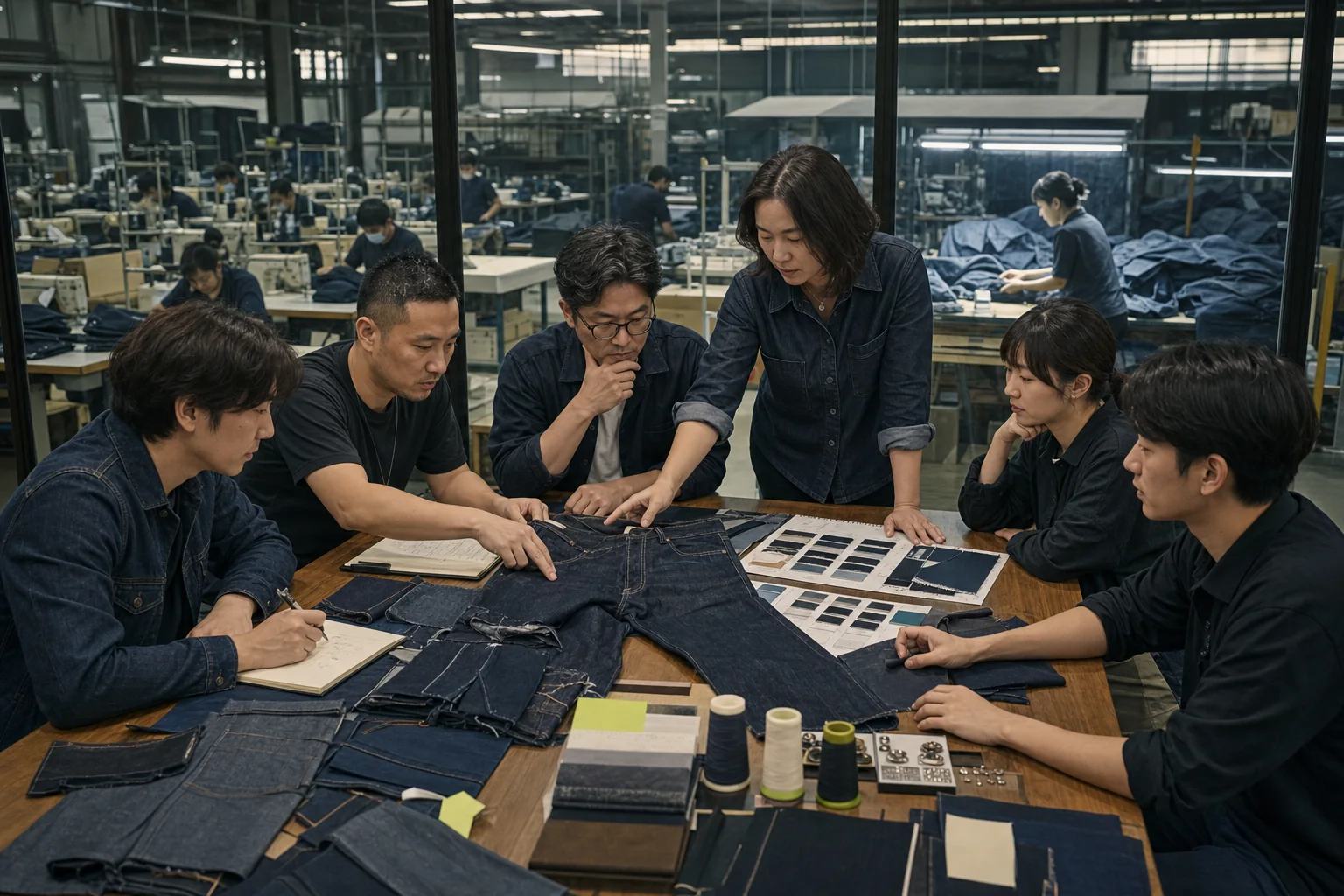
This role is not there to take sides. It exists to remove ambiguity before ambiguity becomes inventory. It keeps one source of truth for the product, makes decision deadlines visible, monitors the process where risk is created, and gives the factory a clear reason to treat the order as planned, controllable, and worth protecting.
For some experienced brands, that operating layer exists internally and working directly with a factory is entirely appropriate. For lean teams, new brands, and businesses scaling multiple SKUs, the missing capability may be an external product team. The practical differences are laid out in our comparison of a denim factory versus an external denim product team.
Decision rule: If your team can control technical documentation, sample decisions, wash standards, in-process escalation, material continuity, and reorder forecasting, a capable direct factory may be enough. If those responsibilities are fragmented or nobody owns them end to end, the delivery risk remains yours—no matter how impressive the factory looked on audit day.
That is the purpose of SkyKingdom’s Delivery Assurance model: not to pretend production risk disappears, but to make the critical handoffs visible, owned, and controllable. The factory can remain the same. The management around the order is what changes the result.
Frequently asked questions
Why can a capable denim factory still miss delivery dates?
A factory may have the machinery and technical ability to make the product but still allocate its best production windows to customers that offer clearer forecasts, stable repeat orders, fast decisions, and reliable payment. A promised lead time needs to be supported by confirmed material readiness, line booking, approval deadlines, and escalation rules.
Why do repeated sample revisions affect factory priority?
Each revision consumes pattern, sample-room, fabric, wash, and approval resources before bulk revenue is secured. When changes are fragmented or open-ended, the factory may interpret the project as low-certainty and reduce the attention allocated to it. Consolidated, measurable comments and a controlled revision plan protect priority.
When should a denim wash shade deviation be reported?
It should be escalated as soon as an in-process check falls outside the approved shade standard or agreed tolerance—not after the full order reaches final inspection. The escalation path, decision owner, response time, and rework rule should be agreed before bulk washing starts.
How can a brand avoid running out of fabric on a fast reorder?
Plan the reorder before the first small run launches. Record the exact fabric and trims, confirm supplier lead times, agree whether greige or finished fabric can be reserved, define the sales trigger for a reorder, and verify that the approved wash can be reproduced. See our guidance on denim wash and fit consistency across reorders.
Do not wait for final inspection to discover how your order was managed.
Share your product brief, target delivery, order size, and reorder plan. We will help you identify the handoffs most likely to put quality, timing, or continuity at risk.