
If you are a creator-led founder or an early DTC brand holding a first denim sample you love, here is the uncomfortable truth: that sample proves your design is achievable, not that it is repeatable at scale. A proto is made with individual attention, sometimes on sample fabric rather than the exact bulk lot, by the people closest to your project. Bulk is a different system — more fabric, more hands, and a job of reproducibility, not creativity. The risks live in the gap: fabric lot and shade variation, shrinkage and wash repeatability, measurement tolerance, and construction drift across thousands of units. None of these mean your sample was wrong. They mean approval is the start of de-risking bulk, not the finish line.
The situation this is written for
The first denim sample arrives. You unfold it, try it on, run your hand over the fabric — and it is right. The wash is the wash you wanted, the fit lands, the details are there. The natural next sentence is “great, let’s make 2,000.” This guide exists to slow that sentence down by about two weeks, because those two weeks are the cheapest insurance you will ever buy.
This is written for two readers at once: creator-led founders placing a first run of a few hundred to a couple of thousand pieces, and early DTC brands scaling toward several thousand a season, often with a reorder already in mind. The risks below are identical for both. What differs is exposure — how many units, and how many future runs, are riding on getting the gap between sample and bulk right. Where the answer diverges by stage, this guide says so explicitly.
If you arrived here from earlier in the playbook — starting from reference images and preparing your first sample — this is the next link in the chain: you have the sample, and now the question is what stands between it and a bulk order you would be proud to ship.
The core misunderstanding: a sample proves possible, not repeatable
Here is the idea the whole article turns on, stated plainly. Sampling and bulk production have opposite purposes. Sampling exists to test an idea — it is intentionally flexible, changes are expected, and every revision eliminates a piece of uncertainty. Bulk exists to reproduce a fixed thing as identically as possible across a large run; once the system is running, it cannot change direction. Your sample answered the question “can this be made?” Bulk asks a completely different question: “can this be made the same way a thousand times?”
Those are not the same question, and a yes to the first does not guarantee a yes to the second. That is why the sample-to-bulk gap is, in the words of the industry, a system failure rather than bad luck — the sample being beautiful and the bulk feeling different is a structural problem that even large, established producers wrestle with, because bulk passes through many hands and several departments rather than one attentive sample room. The good news inside that bad news: a structural, predictable problem is a solvable one. You close the gap with steps, not hope.
Your first sample is a proof of concept wearing the costume of a finished product. The costume is convincing, which is exactly why it is dangerous.
The five risks that live between sample and bulk
The distance between an approved sample and consistent bulk is made of specific, nameable risks. Here they are, with why each one appears and how exposed you are to it.
| Risk | Why it appears | Where it bites in denim |
|---|---|---|
| Fabric lot / shade variation | Fabric varies between batches even from the same mill; bulk may run on a different lot than your sample | Indigo depth is the product — a shade shift that would be invisible elsewhere is obvious on denim |
| Shrinkage & wash repeatability | Wash is a set of process variables, not a fixed color; a different lot can react to washing differently | Inconsistent sizing and color across a run if the wash and shrinkage aren’t locked |
| Measurement & tolerance | Garments are hand-assembled within tolerance bands, not to a single exact number | Fit drift across sizes and across the run if tolerances aren’t agreed |
| Construction drift | Bulk passes through many operators; the proto was sewn by a few | Stitch density, topstitch, pocket placement losing the detail that made the sample special |
| Trims & hardware | Trims for bulk may be sourced separately from the sample’s | Rivets, buttons, labels arriving inconsistent with the approved sample |
Notice the pattern: every one of these is a place where the proto’s individual attention gets replaced by a system, and a system only holds what has been written down for it to hold. The rest of this article walks the two that hurt denim most — fabric and wash — then the discipline that contains all five.
Fabric: the same supplier is not the same fabric
The single most counterintuitive risk for first-time founders is this: ordering “the same fabric” from “the same mill” does not guarantee the same fabric. Textile production varies batch to batch, and the variation that matters most on denim is shade. A dye lot can be technically within spec and still read as noticeably different from your sample lot — and because indigo depth is the visual identity of denim, that difference is not a subtlety your customer will miss.
This is why professional supply chains treat fabric lots as something to be controlled rather than assumed. They avoid mixing lots within a run, and before cutting begins they compare the bulk lot against the approved standard to confirm it falls within an agreed shade tolerance. Your first sample was made on one specific lot. Your bulk may run on another. The risk is not that anyone is careless; it is that “same fabric” is a looser phrase than it sounds, and the only thing that makes it tight is a physical approved standard plus a written shade tolerance to check the new lot against.
For a creator-led founder, the practical version is to ask one question: “Will bulk run on the same lot as my sample, and if not, who confirms the new lot matches before cutting?” For an early DTC brand with a reorder in view, it goes further — the approved fabric reference (composition, weight, finish, shade standard) needs to be recorded now, because a reorder almost always runs on a new lot, and a documented standard is the only thing that lets the next run match this one.
It is worth understanding why this risk is structurally larger for denim than for most other fabrics. Indigo is a ring-dyed yarn — the dye sits on the outside of the yarn while the core stays white — and the depth and evenness of that dyeing is what your wash and fades will ultimately reveal. Two lots that measure as the “same” fabric can carry subtly different dye penetration, and the wash process then amplifies rather than hides that difference, because abrasion exposes the white core in proportion to how the indigo was laid down. In a solid-dyed cotton tee, a small lot difference might pass unnoticed; on denim, the entire aesthetic is built on exactly the property that varies between lots. That is the deeper reason “same supplier” is not a guarantee, and why the lot check is not optional caution but a denim-specific necessity.
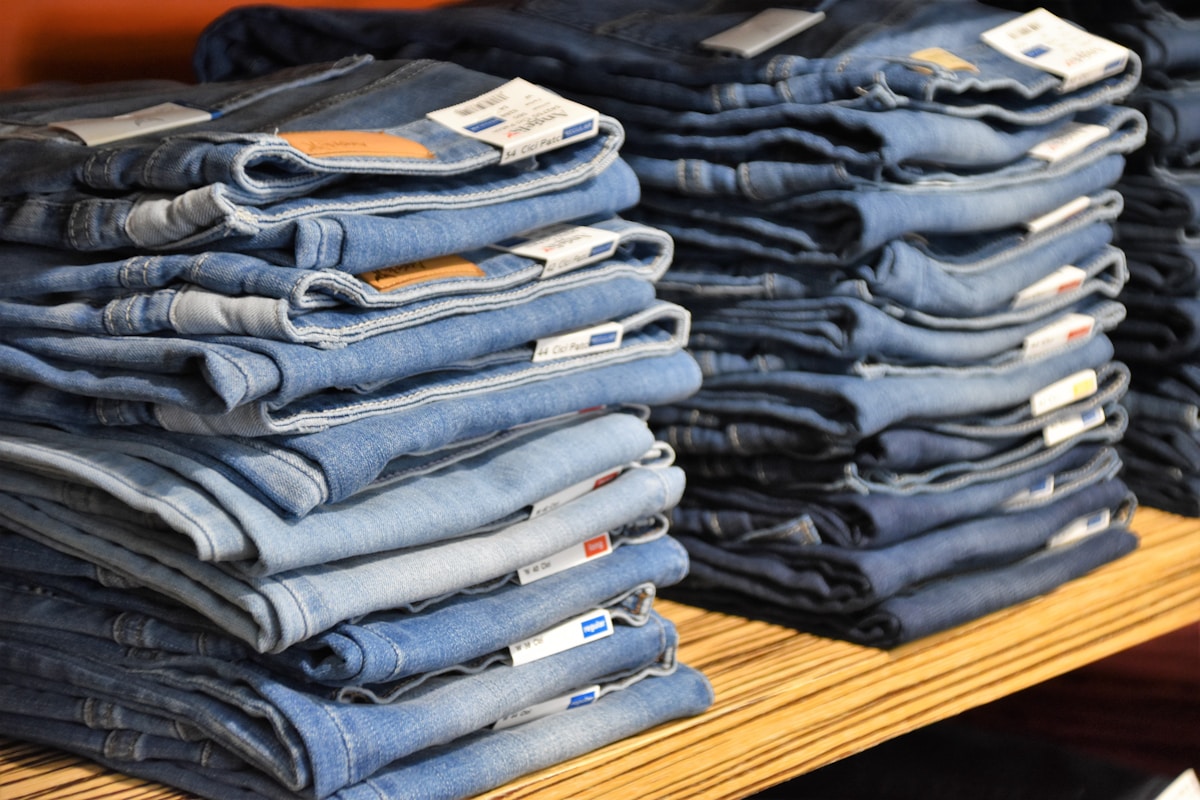
Wash and shrinkage: the sample was a result, the bulk is a process
The second denim-specific risk compounds the first. A wash is not a color that gets matched; it is a recipe that gets run, and a different fabric lot can respond to that recipe differently. The wash that looked perfect on your sample is the outcome of a specific set of process variables applied to a specific fabric. Change the lot, and the same recipe can land in a slightly different place — in shade, in hand, and in shrinkage.
Shrinkage is where this becomes a sizing problem, not just a color one. Denim shrinks when washed, and the amount varies with the fabric and the wash. Patterns are oversized with a shrinkage allowance so the washed garment lands at the intended finished measurement; if a bulk lot shrinks differently than the sample lot, the finished sizing drifts even though nothing in the cutting room changed. There is a hard-won industry example of exactly this: a production run rejected by quality control because the fabric reacted differently to washing, leaving inconsistent sizes and major color variation across the order. The lesson those producers drew was not to leave wash behavior to chance — to test it on the bulk fabric before committing the whole run.
What this means for you is a sequence, not a single approval. The wash needs to be approved on the bulk fabric, not only on the sample fabric; the wash recipe and an approved physical wash standard should be recorded so the look can be reproduced; and fit should be judged on the washed bulk-fabric sample, because that is the garment your customer actually receives. Approving a wash on sample yardage and assuming bulk will match is precisely the assumption that produces the “beautiful sample, different bulk” outcome.
You did not approve a wash. You approved a photograph of one moment of a process — and bulk has to run the process again, on different cloth.
Construction and trims: the quiet drift across many hands
Fabric and wash are the loud risks in denim. Construction and trims are the quiet ones, and they drift for a reason that is almost philosophical: your proto was sewn by a few skilled people paying close attention to one garment, while bulk is sewn by many operators repeating an action thousands of times. The detail that made your sample special — the exact topstitch, the pocket placement, the stitch density at a stress point — is precisely the kind of detail that erodes when the system replaces the individual, unless it is specified tightly enough to survive the handoff.
This is well understood in the industry: bulk garments lose the details that made the sample special when placement, finishing, and construction are not monitored closely, and a fit sample frequently reveals construction problems — seam quality, hems, closures — that affect the final appearance even when the measurements are correct. On denim specifically, the recognizable signatures are construction choices: rivet placement, bar-tacks at stress points, topstitch color and density, the back-pocket detailing. None of these is hard to reproduce; all of them are easy to let drift if no one wrote down exactly what “right” looks like.
Trims compound this because they often travel a separate path from the fabric. Rivets, buttons, zippers, woven labels, and patches for bulk may be sourced separately from the handful used on the proto, and a substitution that seems trivial — a slightly different rivet finish, a marginally different label weave — reads as inconsistency to a customer holding the garment. Sources note that trims should come from approved suppliers and be checked for consistency precisely because they are an easy place for bulk to quietly diverge from the approved sample. The fix is mundane and effective: the trims used at bulk should be confirmed against the approved sample’s trims before the run, not after.
Nobody decides to change your jeans. The details drift because a system only protects what was written down for it to protect.
The gap also costs time: plan for the weeks between approval and bulk
There is a practical corollary to all of this that catches founders off guard: closing the sample-to-bulk gap takes calendar time, and that time sits in a place most first-timers do not budget for. The interval between sample approval and the bulk line actually starting commonly runs anywhere from about one to six weeks, and on denim the fabric is usually the long pole — custom-dyed or custom-woven cloth, and the shade-band approval that precedes booking a large yarn or fabric quantity, can be the slowest step in the entire timeline.
This frustrates founders because the sewing floor can look ready while the cloth is still being confirmed upstream — the mill, not the cut-and-sew line, often controls the real schedule. For your planning, the implication is concrete: do not promise customers a ship date calculated from “sample approved plus sewing time.” Build in the fabric-confirmation and PP-sample window, because that is real work that protects the order, not bureaucratic delay. A founder who treats those weeks as dead time tends to compress them, and compressing them is exactly how the fabric-lot and wash checks get skipped — which is how the gap reopens. The weeks between approval and bulk are not the price of slowness; they are the price of consistency, and they are far cheaper than a rejected run.
The PP sample: the first sample that actually predicts bulk
Everything above points to one missing object: a sample made under bulk conditions. That is the pre-production sample, and understanding it resolves most of the confusion about why your first sample is not enough.
Your first proto is typically made to confirm the design and may use sample yardage and extra individual care. A pre-production sample is different in kind: it is made with the actual bulk fabric, the final trims and hardware, and the exact wash process, ideally on the line that will run the order. It is the gold-standard sample — commonly sealed and signed by both parties once approved, then used as the physical reference that bulk units are checked against. Some producers add a further checkpoint once the line starts: a first-off-the-line or top-of-production sample, pulled from the actual sewing line to confirm the settings are correct before the whole order runs.
| Sample stage | Made with | Answers the question | Why your first sample isn’t this |
|---|---|---|---|
| Proto (your first sample) | Sample yardage, individual attention | Is the design achievable? | Approximates bulk fabric and wash; not run under bulk conditions |
| Fit sample | Correct or close-substitute fabric | Does it fit and move correctly? | Confirms size, still not the bulk lot or line |
| PP sample | Actual bulk fabric, final trims, exact wash, real line | Will it survive in production materials and setup? | This is the one that predicts bulk — and it comes after your proto |
| Top-of-production | Pulled from the running line | Is the line set correctly right now? | Catches line drift before the full run completes |
The takeaway is simple and freeing: your first sample is doing its job perfectly by proving the concept. The PP sample is a different and later job. When someone says your sample “isn’t bulk-ready,” they are not criticizing it — they are pointing out that it has not yet been remade under the conditions bulk will actually use.
Acceptable variation is not a defect: how bulk is actually judged
There is a trap waiting on the other side of all this caution, and it is worth naming so you avoid over-correcting. Knowing that bulk can drift, some founders swing to the opposite error and expect every unit to be identical to the sample. That standard is also wrong, and it creates its own expensive conflicts.
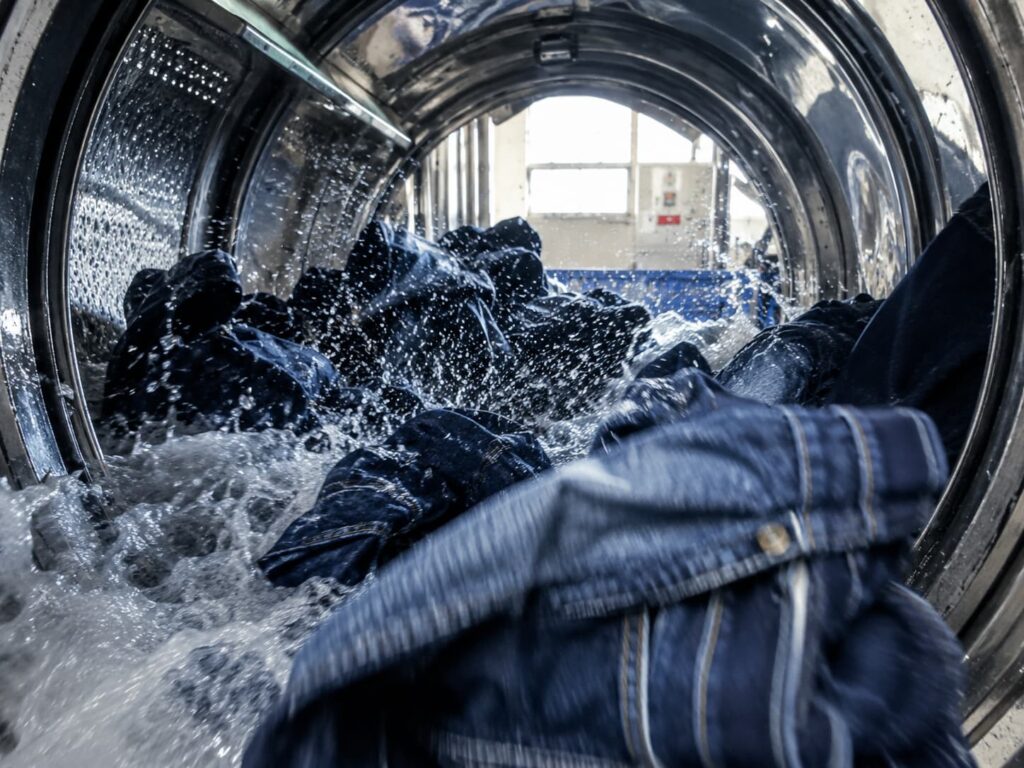
Apparel is assembled by hand, within accepted tolerance bands, not machined to a single exact dimension. Bulk quality is verified by statistical sampling inspection against an agreed acceptable quality limit — checking a representative sample of the run against defined defect thresholds — rather than by inspecting every garment to a standard of zero variation. This is not a loophole; it is how the entire industry works, because perfect uniformity across thousands of hand-sewn garments does not exist at any price you would pay.
So the goal is not “bulk identical to sample.” The goal is agreement, in advance, on how much variation is acceptable — on key measurements, on shade against the approved standard, on wash character. With that agreement written down, acceptable variation is not mistaken for failure, and a genuine defect is not waved through as “close enough.” Without it, every minor difference becomes a dispute, and disputes at bulk scale are slow and costly. The standard that protects you is the approved sample plus a written tolerance — not a hope that every piece is a clone.
How the stakes change: creator-led versus early DTC
The risks do not change between stages, but your exposure to them does, and so does the right response. This is the one place the two readers this article serves should do different things.
| Dimension | Creator-led (first run, ~500–2,000 pcs) | Early DTC (~5,000–20,000 pcs/season) |
|---|---|---|
| Units exposed to variation | Hundreds — a problem is contained and survivable | Thousands — the same variation rate multiplies into real cost |
| Reorder pressure | Often a one-off or infrequent; less need to match a future run | Reorder usually in view; this run becomes the standard the next must match |
| Customer sensitivity | Early audience, often forgiving of small inconsistency | Growing base that notices drift between drops |
| Right priority | Understand that approval isn’t the finish line; insist on a bulk-fabric wash check | Document the standard, fabric lot reference, and wash recipe so run two matches run one |
For the creator-led founder, the message is mostly awareness: the biggest risk is believing a great sample means you are done, and the cure is asking whether the bulk lot and wash are being confirmed. For the early DTC brand, the message is documentation: you are no longer making one run, you are setting a standard, and an undocumented standard is one that quietly drifts by the reorder. As volume grows, the informal becomes insufficient — what a creator-led founder can hold in their head, a scaling brand has to hold on paper.
The three pitfalls we see most often
1. “The sample is perfect, run bulk.” Approving the full order on the strength of one beautiful proto, before the bulk fabric lot is confirmed or a PP sample is made. The sample was made on sample yardage with individual care; bulk runs on a real lot through a full line. The fix is to treat sample approval as the trigger for the PP sample and fabric-lot confirmation, not the green light for production.
2. Approving the wash on the wrong cloth. Signing off the wash on sample fabric and assuming the bulk lot will react identically. Because a different lot can take the wash differently — in shade, hand, and shrinkage — this is the classic route to inconsistent sizing and color across a run. The fix is to approve the wash on the actual bulk fabric and record the recipe and a physical standard.
3. Expecting bulk to be identical, then treating normal variation as failure. The over-correction. Without an agreed tolerance, every minor, acceptable difference becomes a rejection fight, slowing the order and souring the relationship — while no agreed standard also means a real defect can slip through. The fix is a written tolerance on measurements, shade, and wash, set before bulk runs.
A reference example
On a first run of roughly 1,200 pieces for a creator-led brand we supported, the founder’s instinct after approving a strong proto was exactly the common one — order the full quantity immediately. What changed the outcome was inserting two weeks of de-risking between approval and bulk. The bulk fabric lot was confirmed against the approved sample for shade before any cutting; the wash was re-approved on that bulk fabric rather than carried over from the sample yardage; and the wash recipe plus a sealed physical standard were recorded. None of this was glamorous, and none of it changed the design the founder had fallen in love with. It simply meant the 1,200 pieces that arrived matched the one piece that had been approved.
The instructive contrast comes from the wider industry, where the opposite habit is well documented: a production run rejected at quality control because the bulk fabric reacted differently to washing than the sample had, producing inconsistent sizes and major color variation across the order. The mechanism is the same one this article has walked — a wash and a fabric lot that were assumed to carry over from sample to bulk, and did not. The difference between the two outcomes was not luck or even skill. It was whether the gap between sample and bulk was treated as real and closed deliberately, or assumed away.
FAQ
My first denim sample looks perfect. Why can’t I just order bulk now?
Because the sample proves the design is achievable, not that it is repeatable at scale. A first proto is usually made with individual attention, sometimes on sample-yardage fabric rather than the exact bulk lot, and by the people closest to your project. Bulk is a different system: more fabric, more hands, more passes, and its job is reproducibility rather than creativity. The gap between a beautiful sample and consistent bulk is one of the most common and expensive problems in apparel, and industry sources describe it as a system failure rather than bad luck, which means it is preventable with the right steps between sample and production rather than something you discover after the fact.
What is a PP sample, and why is it different from my first sample?
A pre-production sample is made with the actual bulk fabric, the final trims, and the exact wash that will be used in production, on the line that will run the order. Your first proto confirms the concept; the PP sample confirms that the concept survives in the real production materials and setup. Once approved, the PP sample is commonly sealed and signed by both sides as the gold-seal standard, and production units are checked against it. The reason it matters is that many things that were approximated in the proto, especially fabric lot and wash, become real in the PP sample, so it is the first sample that actually predicts bulk.
Why does fabric cause sample-to-bulk problems even from the same supplier?
Because fabric varies between batches, even from the same mill, particularly in shade. A dye lot that is technically correct can still look noticeably different from your sample lot, and on denim, where indigo depth is the product, that variation is visible. Sources are explicit that the same fabric from the same supplier can vary across batches, which is why professional supply chains avoid mixing fabric lots and confirm that the bulk lot falls within an agreed shade tolerance against the approved standard before cutting. Your first sample was made on one lot; bulk may run on another, so the lot has to be checked, not assumed.
Does bulk denim have to match my sample exactly?
Not exactly, and expecting a perfect match sets you up for disappointment. Apparel is assembled by hand within accepted tolerance bands rather than to a single exact number, and bulk is verified by sampling inspection against a defined acceptable quality limit rather than by inspecting every unit to zero variation. What matters is that you and the production run agree, in advance, on how much variation is acceptable, on measurements, on shade, and on wash, so that acceptable variation is not mistaken for a defect and a real defect is not waved through. The standard is the approved sample plus a written tolerance, not the hope that every piece is identical.
What should happen between sample approval and bulk to lower the risk?
Several things, none of which are exotic. The bulk fabric lot is confirmed against the approved standard for shade and hand; a PP sample is made in the real bulk materials and signed off; the wash recipe and an approved physical wash standard are recorded so the look repeats; measurement points and tolerances are agreed; and a first-off-the-line check, sometimes called a top-of-production sample, confirms the line is set correctly before the whole order runs. For a creator-led or early DTC founder, you do not run these steps yourself, but knowing they exist lets you ask whether they are happening rather than assuming approval of one nice sample is the finish line. Treat the period between approval and bulk as a short de-risking phase rather than dead time, because the steps that fit into it are far cheaper than the rework that follows when they are skipped.
How is this different for a creator-led brand versus an early DTC brand?
The risks are the same; the exposure differs. A creator-led brand running a few hundred to a couple of thousand pieces can absorb more variation because the run is small and the founder is close to every decision, so the priority is simply understanding that approval is not the finish line. An early DTC brand running several thousand pieces a season, often with a reorder in view, has more units exposed to the same variation and a customer base that will notice inconsistency between drops, so the priority shifts toward documenting the standard, the fabric lot reference, and the wash recipe so the second run matches the first. Same mechanisms, higher stakes as volume grows.
Sources
- Topology Apparel — sampling versus bulk (sampling tests an idea and is flexible; bulk exists for reproducibility; the same fabric from the same supplier can vary across batches; PP and top-of-production checkpoints): topologyclothing.com
- NoName Global — Bulk Production Doesn’t Match Sampling (sample-to-bulk gap as a system failure; causes: fabric batch variation, different teams, inconsistent trims, insufficient QC): nonameglobal.com
- Garment Resources — Sample vs Bulk (first-hand account of a run rejected because bulk fabric reacted differently to washing, causing inconsistent sizes and color variation): garesources.net
- Fabrikn — controlling production defects and reviewing fit samples before bulk (confirm material lots within shade tolerance; approve the standard used at scale, not just one good sample; sample-to-bulk timeline gap): fabrikn.com
- Ninghow Apparel — repeat-order consistency and apparel tolerance (verify approved sample, fabric lot, color reference before a reorder; no universal tolerance number; the more fitted the garment, the tighter variation must be controlled): ninghowapparel.com
- Techpacker; HKTDC — pre-production and sealed gold-seal samples as the bulk reference; TOP samples checked against the sealed standard: techpacker.com; hktdc.com
- QIMA — Acceptable Quality Limit and ISO 2859 sampling inspection (bulk judged by statistical sampling against defined thresholds, not zero-defect inspection): qima.com
- HAPA — denim shrinks in heavy wash; patterns oversized with a shrinkage allowance so washed garments land at intended size: hapagarments.com
- Cotton Incorporated / CottonWorks — denim finishing as a set of controlled process variables: cottonworks.com
For creator-led and early DTC founders standing between an approved sample and a bulk order, this is the kind of work SkyKingdom runs as an external denim product team — closing the gap deliberately by confirming the bulk fabric lot, re-approving the wash on production fabric, and recording a sealed standard so what arrives matches what was approved, and so the reorder matches the first run. If you are earlier in the process, start with what to prepare before your first denim sample or the denim sampling guide.